

Experts of the Committee on Migrant Workers Welcome Immigration Bill of the Gambia, Raise Questions on Human Trafficking and the Protection of Workers under Bilateral Agreements
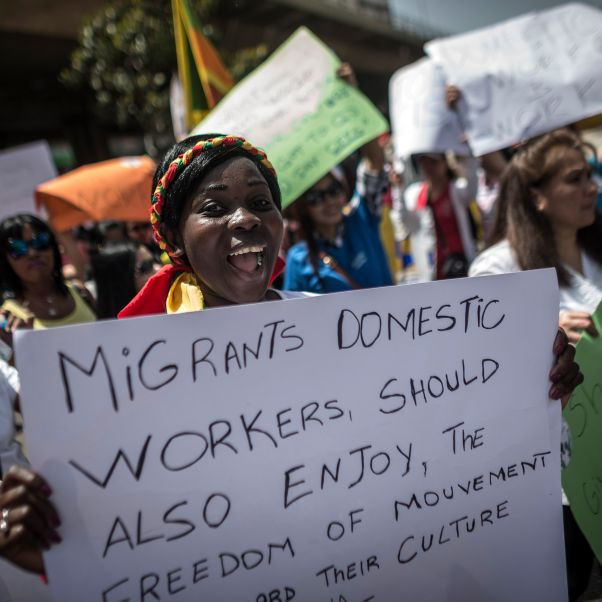
The Committee on Migrant Workers this afternoon concluded its consideration of the initial report of the Gambia on how it implements the provisions of the International Convention on the Protection of the Rights of All Migrant Workers and Members of Their Families. Committee Experts praised the Gambia’s submission of the immigration bill to the parliament while raising questions on how the State was combatting trafficking in persons and the ways that workers were protected under bilateral agreements.
Prasad Kariyawasam, Committee Chair and Country Rapporteur, said it was positive that the immigration bill had been presented on 4 June to the parliament, asking how the State could ensure its adoption was accelerated.
Jasminka Dzumhur, Committee Expert and Country Rapporteur, asked what measures had been taken to strengthen border control, keeping in mind that a porous border facilitated the smuggling of migrants and trafficking in persons? Mr. Kariyawasam said it was clear that illegal smuggling in the Gambia was on the rise. What were the three key pillars that the State had used to successfully combat human smuggling? Another Expert asked what had been done to combat a rise in trafficking in persons?
Mr. Kariyawasam also said that the circular agreements, including with Spain, were positive and enshrined a rights-based approach. However, the State had significant numbers of domestic workers engaged in low paid work in these countries, many of whom faced major challenges, including a lack of access to justice and redress. What special measures had been implemented to address these issues? What kind of consular representation was provided? Were there trained officers deployed for these purposes?
Introducing the report, Mod K. Ceesay, Minister of Trade, Industry, Regional Integration and Employment of the Gambia and head of the delegation, said for the Gambia, migration was part of the lived reality of many families and communities, reflected in both the positives and painful realities which guided the State’s approach to migration governance. While the Gambia did not yet have a standalone law dedicated exclusively to migrant workers and members of their families, their protection was addressed through a combination of constitutional guarantees, labour legislation, immigration laws, anti-trafficking legislation, child protection laws, access to justice mechanisms, and relevant policy frameworks, which the Government was continuing to align with the Convention.
Responding to questions, the delegation said the Gambia had adopted combined legislative, operational, institutional and regional measures to prevent smuggling and trafficking. The Government had adopted an integrated border-management approach aimed at strengthening border surveillance, focusing on combatting transnational crime and protecting vulnerable migrants. Collaboration had been increased with neighbouring countries, particularly Mauritania and Senegal, including on cross-border investigations when it came to smuggling migrants
The delegation also said that the Gambia had bilateral agreements with Saudi Arabia, Spain and other countries, overseen by the bilateral agreement committees. Private agencies had been engaged to conduct the recruitment of both domestic and non-domestic workers. Employees had the right to receive their employment contract, which specified their working conditions. If these were violated, workers could raise this under the labour act.
In concluding remarks, Ms. Dzumhur said she had been pleased to serve as Rapporteur of the dialogue due to the delegation’s open and honest approach. The Convention could not be upheld by one institution alone but needed support from all of the Government, as well as civil society. The Committee understood the challenges faced by the country and encouraged the State to apply for technical support.
In his concluding remarks, Mr. Ceesay expressed gratitude to the Committee for the dialogue, which was an important starting point for the Gambia in its work with the Committee. The exchange with the Committee had shown the State what needed to be strengthened, including access to remedies, protection of children, and safeguards for Gambian migrants abroad, among other factors.
The delegation of the Gambia was comprised of representatives of the Ministry of Trade, Industry, Regional Integration and Employment; Immigration; the Human Rights Unit; the Gambia Labour Department; and the Permanent Mission of the Gambia to the United Nations Office at Geneva.
The Committee on Migrant Workers’ forty-second session is being held from 28 May to 12 June 2026. All documents relating to the Committee’s work, including reports submitted by States parties, can be found on the session’s webpage. Meeting summary releases can be found here. Webcasts of the Committee’s public meetings can be accessed via the UN Web TV webpage.
The Committee will next meet in public on Friday, 12 June at 5:30 p.m. to adopt its concluding observations on the reports of Ecuador, Ghana and the Gambia, and close its forty-second session.
Report
The Committee has before it the initial report of the Gambia (CMW/C/GMB/1)
Presentation of Report
MOD K. CEESAY, Minister of Trade, Industry, Regional Integration and Employment of the Gambia and head of the delegation, said for the Gambia, migration was part of the lived reality of many families and communities, reflected in both the positives and painful realities which guided the State’s approach to migration governance. While the Gambia did not yet have a standalone law dedicated exclusively to migrant workers and members of their families, their protection was addressed through a combination of constitutional guarantees, labour legislation, immigration laws, anti-trafficking legislation, child protection laws, access to justice mechanisms, and relevant policy frameworks, which the Government was continuing to align with the Convention. The Government continued to strengthen these frameworks to better align national law and practice with the Convention.
Recently adopted acts included the reform of the labour act 2023, the persons with disabilities act 2021, and the prevention and prohibition of torture act 2023, with all laws relevant to the protection of migrant workers and their families. The Gambia had also adopted several policy instruments relevant to migration governance, including the national migration policy 2020-2030, the labour migration strategy and action plan 2022-2026, the national action plan against trafficking in persons 2026-2030, the national return and reintegration strategy, and the migration communication strategy which was phased out in 2025. The National Coordination Mechanism on Migration, established on 6 November 2019, served as a government-led inter-agency platform for coordinating migration governance in the Gambia, addressing all issues on this topic.
Recently, the Government finalised the 2026 Gambia immigration bill, which marked a major step in modernising the country’s immigration framework. It sought to repeal the immigration act of 1965 and replace it with a more comprehensive legal framework; it also introduced provisions on the protection and assistance of smuggled migrants, as well as important safeguards.
The Government continued to pursue regular labour migration pathways through bilateral cooperation, including with Spain and Saudi Arabia. Diplomatic and consular services assisted Gambian nationals in destination countries, including the issuance of travel documents, liaison with host authorities, and facilitation of voluntary return where necessary. A recent mobile biometric passport enrolment exercise enabled 1,823 Gambian applicants in Spain and Italy to access passport enrolment services between April and May 2026, without having to travel to the Gambia.
The Government also cooperated with international partners to support voluntary return, reintegration and migrant protection, enabling Gambian migrants returning from difficult situations in transit countries to receive assistance for safe return and reintegration. With support from the International Organization on Migration, the labour migration strategy, the ethical recruitment guidelines, and the pre-departure training manual were developed and validated in 2021 to prepare Gambian workers before departure. However, monitoring the status of Gambian migrant workers abroad remained a challenge.
The Gambia continued to strengthen its legal, institutional and policy framework on trafficking, including through the trafficking in persons act, the national agency against trafficking in persons, and the national action plan against trafficking in persons 2026-2030. The Government had also taken steps to strengthen the protection of unaccompanied and separated migrant children, including through standard operating procedures to support identification, referral, temporary care, psychosocial support, case management, family tracing, and reunification where appropriate.
The national migration policy committed the State to rights-based and non-discriminatory migration governance, meaning that migrants should be treated with dignity when they interacted with public institutions, including immigration, labour, law enforcement, health, education and justice services. The Government was focused on clearer referral pathways, better guidance for frontline officers, stronger public information for migrants, and improved disaggregated data. The Gambia had also taken steps to address historical violations involving migrants. In the context of the Truth, Reconciliation and Reparations Commission, the unlawful killing of West African migrants in July 2005 was recognised as a grave violation, with the Commission determining that 54 West African migrants qualified for final reparations.
Moving forward, the Gambia would continue to focus on efforts, including modernising the legal framework of migration, strengthening coordination, and improving migration data collection. While the Gambia faced limitations in financial resources, institutional capacity, data systems, consular reach, and implementation consistency, the Government was committed to using the dialogue as an opportunity to strengthen protection for migrant workers and members of their families.
Questions by Committee Experts
JASMINKA DZUMHUR, Committee Expert and Country Rapporteur, said the Gambia’s geographical elements were very relevant for immigration, particularly in the context of smuggling. The Gambia was a state of origin, transit and destination for many countries and regions. Migrant workers in the Gambia were primarily connected to sectors involving informal work. Key steps taken by the State included the adoption of key legislation and policy frameworks, national action plans and immigration strategies, and the establishment of the National Coordination Mechanism on Migration. Could more information be provided on the documents adopted this year? How did the strategies define human rights based and gender responsive implementation? What resources were allocated for these documents? Why had the Gambia not adopted standalone legislation for the protection of migrant workers and members of their families? What activities had been taken based on the Global Compact on Migration?
Under which piece of legislation were the bodies for migrants established and how was their work governed? How was the process of consultation with civil society organised for the report? Which organizations participated in this process? How was the systematic consolidation of data ensured? Which measures had been taken to incorporate the grounds of discrimination into national laws? Which measures had been taken to eliminate discrimination aggravated by gender stereotypes affecting women migrant workers? What measures had been taken to strengthen border control, keeping in mind that a porous border facilitated the smuggling of migrants and trafficking in persons? Could information on the immigration detention centre in Tahni be provided? What measures had been taken to prevent the detention of children? Were figures available on training for Government officials to increase knowledge on the Convention?
What were the capacities of inspection organs, particularly labour inspectors? What education was provided to judges on international standards, particularly the Convention? Which institutions were responsible for this? How often had migrants addressed the courts since the Convention was ratified? What measures had been taken to increase awareness of migrants on the right to remedy? It was only a short period since the Gambia had ratified the Convention, but it was important to have a strategic approach.
PRASAD KARIYAWASAM, Committee Chair and Country Rapporteur, said the Gambia was a unique country which gave rise to special challenges. Were there plans to incorporate the provisions of the Convention into the body of law? It was positive that the immigration bill had been presented on 4 June to the parliament. How could the State ensure its adoption was accelerated? It was understood that irregular migration was criminalised under Gambian law. Did the State intend to decriminalise this, in line with the Convention? How would the State finance their regulations?
Corruption could occur at all levels. What were the specific measures taken to eradicate corruption at all levels, including in employment agencies? What justice mechanisms were available for migrant workers? How did the State overcome language barriers; for example, being surrounded by Senegal which was French speaking, while the Gambia was English speaking?
The circular agreements, including with Spain, were positive and enshrined a rights-based approach. However, the State had significant numbers of domestic workers engaged in low paid work in these countries, many of whom faced major challenges, including a lack of access to justice and redress. What special measures had been implemented to address these issues? What kind of consular representation was provided? Were there trained officers deployed for these purposes?
Detention at the border was a key issue. What were the facilities in these spaces? Were there special facilities for children and females? The Gambia was surrounded by Senegal and opened into the Atlantic Ocean, which had been used by traffickers and illegal operators. The Committee was aware that the State was making efforts not to let these incidents happen, but reports showed that thousands of people had died enroute to Europe on these routes, mainly travelling for work. What measures had been taken by the Gambia and in collaboration with European countries to prevent the deaths of migrant workers in the Atlantic?
A Committee Expert said it was very positive that the Gambia was presenting its first report, albeit with a slight delay in submission. What did the State do to bring about family reunification? Were there statistics available on family reunification? It was understood that a working group had been created to undertake search and reunification. A document had been developed on standards in the operational procedures for handling illegal human smuggling, addressing not just migrants but those conducting the smuggling. It would be beneficial to see how the State ended up weighing these two situations. How was consular assistance implemented in this regard?
It was clear that illegal smuggling in the Gambia was on the rise. What were the three key pillars that the State had used to successfully combat human smuggling? Although the State had ratified the Convention, those provisions were not directly applicable as there had to be implementing legislation. What was needed for the Convention to be directly reflected in legislation?
Another Expert said immigration was part of the history and the future of the Gambia. The Expert welcomed the 2030 national immigration policy. What did the National Coordination Mechanism on Migration do? It was commendable that migration had been integrated into the national development plan. The diaspora made enormous contributions to the public coffers through remittances and foreign currency flowing into the country. The State had tried to leverage the diaspora and held dialogues in this regard. What had been the results in integrating the migrant population that had returned from abroad? What had been the results in breaking down networks of traffic smugglers and how many people had been arrested? How were civil society organizations involved in all these projects?
Another Committee Expert asked if the Government entity tasked with drafting the report was created by legislation? Could more information be provided about the entity, including its resources and how it operated? Could the entity follow-up on recommendations of human rights protection mechanisms? What was the scope and scale of trafficking in the Gambia, particularly of women and children? What measures were in place to identify victims?
A Committee Expert said the Gambia was party to Convention 182 on the worst forms of child labour; what was the status of the list which was required to be published on hazardous professions incompatible with children? Did it take the sexual exploitation of children into account? Was the whole country covered when labour inspections were undertaken? Were migrant workers able to join trade union organizations? Did the Gambia have a law on compulsory schooling, obliging parents to keep children in schools? Migratory routes were shifting; what measures was the Gambia taking to ensure that care could be provided for repatriated migrants? What measures had been taken to combat a rise in trafficking in persons?
Another Expert was delighted to see that the Gambia had a National Human Rights Commission ranked with A status. The Gambia was a country of origin of migration, particularly for young people. What measures was the country taking to better protect the rights of this category of migrants? What was being done to ensure they were more interested in carrying out activities in the Gambia, or to transfer funds and invest, to contribute to the sustainable development of the country?
A Committee Expert commended the State party for the submission of the report. The Gambia had a reference mechanism when it came to non-discrimination, which included the protection of children, including those of migrants. How did that mechanism work? Was birth registration accessible for the children of migrant workers? Huge progress had been made in the area of female genital mutilation, including its prohibition by the Government, which should be congratulated. What had been done at different levels to protect Gambian girls abroad? What did consular services do to protect children of citizens?
An Expert asked if the Government of the Gambia had set up any kind of mechanism to ensure any resources received from workers abroad were well used? Was there any kind of proposal from the Government to translate those remittances towards investment?
Another Expert asked how extensive the Government’s cooperation was with the parliament on migration issues?
Responses by the Delegation
The delegation said the Gambia had not yet made a declaration accepting the Committee’s competence to receive individual communications, but this would be looked into. The National Human Rights Commission had a broad mandate, including receiving and investigating complaints, monitoring the human rights situation, and reporting to relevant national authorities. It covered all persons within the Gambia, including migrant workers. A migrant worker or a member of their family could bring a complaint to the Commission. The Commission received a dedicated allocation from the national budget.
Irregular migration could attract immigration-related consequences but there were important legal safeguards. A bill supported a migrant trust fund, which would also pay court fees for migrants involved in smuggling cases. Implementation would not rely only on donor support, but also on partner resources, and a dedicated monitoring mechanism. Migration governance depended heavily on trust in frontline institutions, including labour and law enforcement officials. The Gambia had enacted an anti-corruption act in 2023 and appointed an Anti-Corruption Commission in 2025.
Capacity building and continuous legal training was provided to judges and legal practitioners, including on how to enforce international treaties in the courts. Civil society organizations often worked directly with communities, vulnerable migrants, and victims of trafficking, making the reporting process more grounded and practical. The Government recognised the need to continue strengthening civic space, including through working with migrant workers and their families.
Existing laws provided important protection but were spread across a variety of sectors; there was no single migrant workers framework that brought all these issues together. The issue was not that migrant workers had no protection but that the protection was fragmented. A standalone law would need to be submitted to a national consultation process with the outcome to guide authorities on what was to follow.
Migrants were not detained at the border. As a last resort when they were intercepted, they could sometimes be kept at a reception centre to have their identification validated. This was not a closed space; it was semi open and accessible to relatives. They were not treated as criminals, apart from those suspected to be part of smuggling networks.
There had been a shift in migration patterns, which could be due to a lack of smuggling laws in other countries, leading the Gambia to become a transit point in migration.
The Labour Inspection Unit was a standalone unit which carried out inspections across the country, in any place there were workers. Migrant workers were treated the same as any other employee in the Gambia. The Gambia had already ratified the eight core conventions of the International Labour Organizations and was working on ratifying the remaining 14.
The Gambia had bilateral agreements with Saudi Arabia, Spain and other countries, overseen by the bilateral agreement committees. Private agencies had been engaged to conduct the recruitment of both domestic and non-domestic workers. Employees had the right to receive their employment contract, which specified their working conditions. If these were violated, workers could raise this under the labour act.
The Gambia had been recognised as a champion of the Global Compact on Safe and Orderly Migration, as the State had made efforts to implement all 23 elements of the Compact. Officials at different levels had been designated to serve as focal points on migration matters, and had conducted consular visits to different countries to ensure that migrants were enlightened and empowered on various interventions.
Responses by the Delegation
The delegation said the introduction of a migration data analysis system had modernised the State’s migration management and data collection. National institutions had received technical assistance, including from the International Organization on Migration, to improve data gathering and reporting.
The Gambia had adopted combined legislative, operational, institutional and regional measures to prevent smuggling and trafficking. The Government had adopted an integrated border management approach aimed at strengthening border surveillance, focusing on combatting transnational crime and protecting vulnerable migrants. Collaboration had been increased with neighbouring countries, particularly Mauritania and Senegal, including on cross-border investigations when it came to smuggling migrants.
Migration data was disaggregated by age, sex and nationality. Irregular migrants were not criminalised; however, the facilitators were categorised in a criminal aspect. If migrants had valid documents, the Government would ask them to regularise their state. Most migrants coming from West African countries were Senegalese. There were no barriers regarding language as there were consulate staff who spoke the same language.
Recently, there had been an interception of 126 migrants, which exceeded the State’s facilities. The facilities were not adequate in this regard, as they could only host around 40 people. In 2025, the State had processed more than 2,000 migrants in cases of smuggling. The current law on smuggling was not adequate to address the issue; people were using the Gambia as a passage of transit.
Migrant workers had protections under the 2023 labour act. Any dispute could be settled through the industry tribunal, among other mechanisms. The Gambia had ratified key instruments on child labour and had developed a child labour policy. Inspections of workplaces were regularly conducted, and issues of child labour had been discovered in the informal sector.
Not much had been done to disseminate the Convention in the Gambia. Due to inadequate resources, the Government had not been able to roll out training for officials and key stakeholders on the Convention. It would be appreciated if the Committee could facilitate the resources for the State to be able to conduct this training. The immigration act of 1965 was archaic and did not reflect current human rights standards, which was why a new immigration law had been developed.
A national agency on legal aid provided legal advice to all courts of the Gambia, but was limited to felonies and capital offences, and could only represent migrants in these kinds of cases. As of today, they had offered services to 30 migrants. The immigration bill was tabled before the parliament on 1 June 2026. While it was not possible to say when the bill would be passed, it was positive that members were already engaged on the issue.
The fight against female genital mutilation was ongoing, with some members of the national assembly still wanting the law prohibiting female genital mutilation to be set aside. The political will of the Government aimed to have this harmful practice criminalised in the Gambia.
There had been an instance where a minor was trafficked to the Gambia, and family reunification had been able to be carried out with their family in Nigeria.
Remittance flows had been increasing in the Gambia since 2022, making up more than 62 per cent of gross domestic product. The Central Bank was introducing a mechanism which targeted Gambians abroad to enable them to invest and hold shares, to realise this national initiative.
Questions by Committee Experts
JASMINKA DZUMHUR, Committee Expert and Country Rapporteur, said it was important that the interministerial taskforce had accepted the ad hoc method of reporting. The Committee needed more clarification relating to the transit centre. How were migrants working in the irregular sector able to access complaints mechanisms? Did migrants involved in the informal sector have access to social security? Could examples of domestic servitude, including madrasas, forced begging and sex tourism, be provided? What measures had been taken to prevent these practices?
Were there any figures on the number of cases where labour inspectors had intervened for migrant workers? Did migrant workers have access to a hotline to report abuse? What was the procedure to sign an employment contract with migrant domestic workers in the Gambia? What were the working conditions of migrant domestic workers? How could migrant children in an irregular status access basic education? How did migrants have access to health, taking into account the national health insurance scheme?
How were citizens provided with their rights if there were not enough diplomatic offices? What was being done to improve the diplomatic network? What measures had been taken to prevent irregular migrant smuggling and trafficking in persons? Could data be provided on expulsion cases of migrants? Children born to Gambian migrants abroad were required to undergo complicated procedures to obtain Gambian citizenship. Could more information on this be provided? Could figures be provided on statelessness?
PRASAD KARIYAWASAM, Committee Chair and Country Rapporteur, asked what was being done by the Government to intervene and stop hazardous trips in the ocean? Were there any special bilateral agreements in place in this regard? Traffickers should not be allowed to win this issue. The State had an A Grade National Human Rights Commission. How much had the Commission been used in dissemination activities, including for the Convention? How were labour agencies monitored? What were their conditions? How were they registered? These agencies played an important role regarding Gambian migrant workers abroad.
Were migrant workers able to speak with special personnel who could give gender specific legal advice at consulates? There were circular agreements with Spain, among other countries. What kind of reintegration packages were offered for returning migrant workers?
A Committee Expert asked about the agreements the Gambia had with countries like Spain; what had the country gained through these agreements? What kind of cooperation did the State have with non-governmental organizations on migration?
Another Expert said there had been many changing migration crises. The State had a lot of initiatives, including the “Zero Departures” programme. What did this mean? Had there been any results? How did the State address the issue of migration with young people?
One Committee Expert said there were increasingly more migrants entering the Gambia from different countries, rather than those living abroad. What measures could the Government take to guarantee cultural and religious rights of all the migrants in the Gambia and ensure their coexistence? What measures were being taken to combat statelessness? How was the equal birth registration of girls and boys ensured? What was the Government doing to combat early marriage, particularly relating to migration?
An Expert asked what the Government was doing to channel and promote the balance of money earned by the migrant population?
Responses by the Delegation
The delegation said remittance flows went to family support, but the Government was trying to redirect them to the banking system. All related charges had been reduced to support this. Migrant workers and their families in the Gambia had access to schools and health facilities without discrimination, once registration processes were complete. The cost of accessing these facilities was very low. The issues concerning domestic servitude had been noted but the delegation was unaware of a prevalence of these issues.
The interministerial committee brought together multiple stakeholders, including civil society organizations, to compile and validate the report; the committee would then review the Committee’s recommendations. Hotlines were available for migrant workers, including children, to enable them to report complaints. These networks were available 24/7 and could be accessed by everyone in the Gambia. There were specific hotlines for children, gender-based violence victims, and victims of trafficking.
Awareness on the Convention was being disseminated but not to the level the State wished. The State had partnered with the Human Rights Commission on disseminating all international treaties and worked on engaging the community. Training had been given to diplomats, lawyers and border staff on the Convention, but this was holistic and not as detailed as it should be.
The birth registration of a person was needed for that person to have a legal identity. Everyone within the country was given the opportunity to register and was provided with a birth certificate. One parent needed to be Gambian for a person to have a Gambian nationality, but if someone was in the country for more than 15 years or married a Gambian, they could receive naturalisation.
There were 24 resident Gambian diplomatic missions around the globe, available to support Gambians abroad in emergency situations. Irregular migration could still have immigration-related consequences, but the reform aimed to ensure that victims were identified and protected, rather than punished for exploitative or smuggling situations. Schools had been targeted with awareness campaigns on the dangers of irregular migration. Neighbouring countries such as Senegal had the correct laws in place regarding migrant smuggling and now the pressure was on the Gambia. With the new law, it was expected that the number of deaths due to this issue would be drastically reduced.
Gambians were urged to report complaints abroad to the Gambian consulate and diplomatic services. The social security housing mechanism had been introduced, which would hopefully ensure in the future that Gambian migrants had access to housing.
A policy which did not exercise any discrimination had been designed to create more than 160,000 new jobs in the country. The Department of Labour and the bilateral committee vetted applications for people to work as domestic workers abroad. Assistance was offered to domestic workers moving to Saudi, including providing them with a sim card to contact their family back home.
The Commission of Labour was responsible for reinforcing the labour act. Officers and inspectors enforced the act on the ground. The labour act did not discriminate against migrant workers; they had access to all available facilities to lodge complaints and make claims. Sensitisation campaigns were conducted by the Labour Department, geared towards explaining to migrants their rights and their obligations, as well as support mechanisms available in their country of destination.
The State did not have challenges when it came to the protection of cultural and religious rights of migrants. Migrants celebrated their own nationalities in the country, and the Gambia strove to respect and protect their rights.
Closing Remarks
JASMINKA DZUMHUR, Committee Expert and Country Rapporteur, said she had been pleased to serve as Rapporteur of the dialogue due to the delegation’s open and honest approach. It had also been nice to see gender balance within the delegation. Immigration was part of the life and reality of many families in the Gambia. The Convention could not be upheld by one institution alone but needed support from all of the Government, as well as civil society. The delegation recognised it was not only the protection of borders at stake, but the protection of human beings. The Committee understood the challenges faced by the country and encouraged the State to apply for technical support. Ms. Dzumhur wished the delegation a safe trip home.
MOD K. CEESAY, Minister of Trade, Industry, Regional Integration and Employment of the Gambia and head of the delegation, expressed gratitude to the Committee for the dialogue, which was an important starting point for the Gambia in its work with the Committee. The exchange with the Committee had shown the State what needed to be strengthened, including access to remedies, protection of children, and safeguards for Gambian migrants abroad, among other factors. The Gambia could not do this alone, and reiterated its call for support from international partners, civil society, and other stakeholders. The Gambia would carefully study the Committee’s concluding observations.
PRASAD KARIYAWASAM, Committee Chair, said the Gambia was a country which punched above its size, due to its location and migratory context. The Committee would work with the State party to ensure the continued improvement of the rights of migrants and the economic position of all Gambians.
___________
Produced by the United Nations Information Service in Geneva for use of the media;
not an official record. English and French versions of our releases are different as they are the product of two separate coverage teams that work independently.
CMW26.004E