
Committee on the Protection of the Rights of All Migrant Workers Opens Forty-Second Session, Elects Prasad Kariyawasam of Sri Lanka as Chair, and Meets with Civil Society
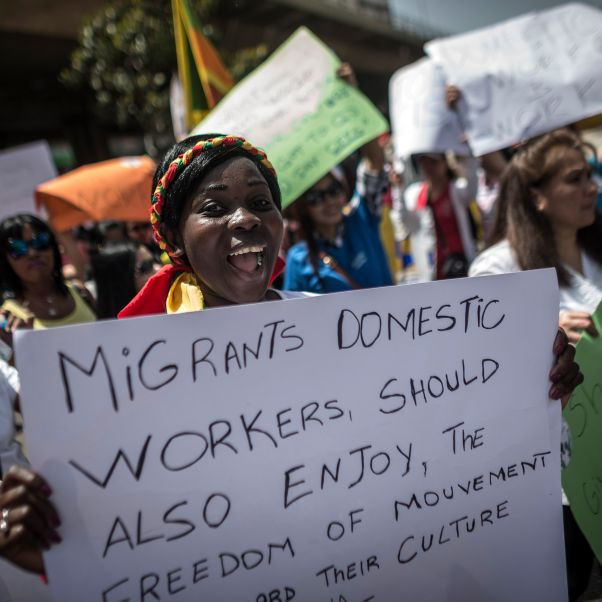
The Committee on the Protection of the Rights of All Migrant Workers and Members of their Families today opened its forty-second session, which is being held from 28 May to 12 June, during which it will consider the periodic reports of Ecuador, the Gambia and Ghana on the implementation of the International Convention on the Protection of the Rights of All Migrant Workers and Members of Their Families, and adopt a list of issues for Lesotho and a list of issues prior to reporting for Guyana and Guatemala, as well as a follow-up assessment report for Burkina Faso.
During the meeting, the Committee elected a new Chair, Prasad Kariyawasam of Sri Lanka. It also heard an address from Andreas Ori, Chief, Groups in Focus Section, Human Rights Treaties Branch, Office of the United Nations High Commissioner for Human Rights, and Representative of the Secretary-General; adopted its agenda and programme of work; and heard from national human rights institutions and non-governmental organizations on the situation of migrant workers in States under review.
Mr. Ori said the Committee was meeting at a time when multilateralism and human rights were facing serious challenges. Across all regions, migrants continued to encounter serious and systemic human rights violations at every stage of their journeys. In this context, the Convention and the work of this Committee were more relevant than ever in reaffirming that all migrants, regardless of their status, were rightsholders entitled to dignity, protection and justice. Mr. Ori presented recent developments within the United Nations system relevant to the Committee’s work, including reports submitted by the Secretary-General to the General Assembly and the Human Rights Council on the rights of migrants.
In closing, Mr. Ori expressed appreciation to all stakeholders who had actively prepared their work in advance of the session and wished the Committee success.
Three new members were elected to the Committee for the session: Francisco Carrión Mena (Ecuador), a former Chair and member of the Committee; Mireille Constance Legba Adankon (Benin); and Fabien Tombohavana (Madagascar). Four existing members were also re-elected: Jasminka Dzumhur (Bosnia and Herzegovina); Ermal Frasheri (Albania); Mamane Oumaria (Niger); and Azad Taghi-Zada (Azerbaijan).
Newly elected Committee Chair Prasad Kariyawasam addressed the Committee in the meeting, thanking it for having elected him by acclamation. He said the Committee’s work in the coming years would be challenging, given that the human rights ecosystem was going through several challenges and resources for its work were declining. It needed to be strategic in its approach, considering how best to work toward the benefit of migrant workers and members of their families, he concluded.
Next, the Committee held a dialogue with the national human rights institutions of the Gambia and Guatemala, as well as representatives of civil society and non-governmental organizations from Ecuador, the Gambia, Ghana, and Guatemala.
Regarding Ecuador, speakers addressed the 2025 reform to the human mobility law, which tightened immigration controls and expanded deportation mechanisms; wage disparities for migrant workers; weakening of the institutional framework related to migrants; and violations of the rights of migrant women and children.
For the Gambia, a speaker raised issues concerning the lack of a legal framework protecting migrant workers and their families; the lack of protections for migrants working in the informal sector and under sponsorship systems; barriers to access to justice for migrants; the situation of migrant children; and trafficking of migrants.
On Ghana, a speaker expressed concern about the State’s acceptance of third country nationals under a recent agreement with the United States, and the conditions under which the individuals transferred under this arrangement were held.
On Guatemala, speakers presented concerns regarding discrimination and xenophobia faced by migrants; their lack of access to work and basic services; the lack of protection for returned migrants and migrants in transit; budgetary constraints for institutions working with migrants; and the 2025 agreement with the United States to accept deported third-country nationals.
The following non-governmental organizations spoke on Ecuador: Mateo Juliusberger; Coalicion Nacional de Mujeres; AVOE Foundation; and a speaker representing Pastoral Social Cáritas Ecuador, La Corporación Alianza Migrante and Comité Permanente por la Defensa de los Derechos Humanos.
The National Human Rights Commission of the Gambia spoke on the country.
A speaker from the Global Detention Project, on behalf of Asian Americans Advancing Justice, Democracy Hub, and the Global Strategic Litigation Council, spoke on Ghana.
The Human Rights Ombudsman of Guatemala spoke on the country, as did the Global Detention Project on behalf of the American Friends Service Committee.
Documents relating to the Committee’s work, including reports submitted by States parties, can be found on the session’s webpage. Meeting summary releases can be found here. The webcast of the Committee’s public meetings can be accessed via the UN Web TV webpage.
The Committee will next meet in public on Monday, 1 June at 3 p.m. to begin its review of the fourth periodic report of Ecuador (CMW/C/ECU/4).
Opening Statements
ANDREA ORI, Chief, Groups in Focus Section, Human Rights Treaties Branch, Office of the United Nations High Commissioner for Human Rights, and Representative of the Secretary-General, said the Committee was at the frontline of efforts to protect one of the groups in most vulnerable situations in today’s world, and was meeting at a time when multilateralism and human rights were facing serious challenges. As the Secretary-General reminded in his remarks to the Human Rights Council on 23 February 2026, “across every front, those who are already vulnerable are being pushed further to the margins. Migrants, in particular, continue to face harassment, arrest and expulsion in flagrant disregard of their human rights and their humanity.”
Migration had always been a defining feature of human history and remained a key contributor to economic vitality, helping societies meet labour needs and fostering innovation, while also shaping social and cultural life and reflecting the movement of people for diverse and often interconnected reasons. Yet, across all regions, migrants continued to encounter serious and systemic human rights violations at every stage of their journeys - from their countries of origin, through transit to destination and return. In this context, the Convention and the work of this Committee were more relevant than ever in reaffirming that all migrants, regardless of their status, were rightsholders entitled to dignity, protection and justice.
In February 2026, ahead of the second International Migration Review Forum held in May 2026, the Secretary-General submitted to the General Assembly and the Human Rights Council a comprehensive report entitled “Human rights of migrants”. In his report, he suggested that the Forum should be used as a pivotal moment to reinvigorate collective political commitment to the vision of the Global Compact for Safe, Orderly and Regular Migration. While progress in implementing the Global Compact had been encouraging, the report noted that it had been uneven, with significant gaps persisting across regions and policy areas.
To ensure that Global Compact commitments translated into measurable improvements in the human rights of migrants, the Secretary‑General called for the development of a more robust, transparent and comparative monitoring framework to track implementation more effectively, foster peer learning among States, and identify gaps requiring additional cooperation, policy reform or capacity building. He also called for the reinforcement of the review framework through concrete tools, including robust indicators, predictable and accountable national follow‑up mechanisms, and stronger disaggregated data, including data on human rights impacts.
In February, the Secretary-General submitted another report to the General Assembly focusing on the implementation of the Global Compact. Member States, meeting in New York at the 2026 International Migration Review Forum, adopted a Progress Declaration reaffirming their commitment to the Global Compact for Migration and setting priorities through 2030. The Secretary-General also put forward key recommendations to Member States. He specifically urged for the implementation of the two most recent general comments adopted by the Committee jointly with the Committee on the Elimination of Racial Discrimination - general comments seven and eight - on eradicating xenophobia towards migrants and others perceived as such, as a means to address widespread racism, racial discrimination, xenophobia and harmful narratives targeting migrants. Mr. Ori congratulated the Committee on this important work.
Human rights needed to remain at the centre of migration governance. Migration policies were only sustainable if they were rooted in human rights and carried out in accordance with international and regional standards. In his report, the Secretary-General encouraged States to ratify and implement all international human rights instruments, including the Convention, and to ensure that legislation, policies and measures complied with international human rights law and standards. The Secretary-General had also continued emphasising the importance of strengthened international, regional and bilateral cooperation, with inclusive stakeholder engagement and multilateralism for upholding the human rights of migrants.
The Office of the High Commissioner for Human Rights was committed to building global partnerships to advance human rights. In the coming months, the High Commissioner would launch the Global Alliance for Human Rights, a large-scale, long-term initiative to put human rights back at the heart of political leadership, public debate and everyday life. The Global Alliance would bring together governments, civil society, youth, artists, scientists, businesses, philanthropic organizations, and the entire United Nations system to defend human rights, inspire collective action, and strengthen the global human rights ecosystem. Its aim was to renew the promise of the Universal Declaration of Human Rights and to build a world in which responsibility, dignity and justice defined the relationships between people and institutions. Mr. Ori said he counted on the Committee’s support for this transformative initiative, which would help ensure that human rights remained the foundation of peace, security and sustainable development.
The Convention remained profoundly relevant today, and the Committee’s work had never been more important. Yet treaty bodies were facing unprecedented constraints. In 2025, more than 30 per cent of meeting time was lost, and this caused major delays, resulting in the cancellation of State party reviews as well as pre-sessional working groups. This, coupled with a decrease in State party reports received in 2025, had serious consequences for the functioning of the treaty body system. This year, the resource situation was expected to remain extremely challenging, with further cuts in both post and non-post resources. This meant less meeting time, reduced conference services, fewer deliverables, and, ultimately, less impact.
The High Commissioner had consistently warned that if this trend continued, the system risked reaching a breaking point. He called for innovative ideas and solutions. This challenge was addressed as a matter of high importance at the Chairpersons’ informal meeting in early December 2025 and would be a topic for their formal annual meeting in June 2026. The Office was doing its utmost to support the Committee and other treaty bodies, including by highlighting the direct impact that resource limitations had on human rights protection on the ground. The messaging had been consistent. Mr. Ori expressed confidence that through collaboration, innovation and shared commitment, these constraints could be navigated to ensure that the essential work of protecting human rights moved forward.
At this session, the Committee would hold dialogues with three States parties to the Convention: Ecuador, Ghana and the Gambia. It would also adopt a list of issues for Lesotho and a list of issues prior to reporting for Guyana and Guatemala, as well as a follow-up assessment report for Burkina Faso. In closing, Mr. Ori expressed appreciation to all stakeholders who had actively prepared their work in advance of the session, and wished the Committee a successful session.
AZAD TAGHI-ZADA, Ad-Interim Committee Chair, congratulated and welcomed the three new Committee members who had been elected at the twelfth meeting of States parties, held in New York on 24 June 2025: Francisco Carrión Mena (Ecuador), a former Chair and member of the Committee; Mireille Constance Legba Adankon (Benin); and Fabien Tombohavana (Madagascar). He also congratulated the Committee members who were re-elected: Jasminka Dzumhur (Bosnia and Herzegovina); Ermal Frasheri (Albania); Mamane Oumaria (Niger); and himself, Azad Taghi-Zada (Azerbaijan).
The Committee then met in private to elect a new Chair, electing Prasad Kariyawasam (Sri Lanka). Elections of the three Vice-Chairs and Rapporteur were suspended until the afternoon due to time constraints.
PRASAD KARIYAWASAM, newly elected Committee Chair, thanked the Committee for having elected him by acclamation. The Committee’s work in the coming years would be challenging, given that the human rights ecosystem was going through several challenges, and the resources for its work were declining. This situation would not change in the short term. It made the Committee recommit itself to the protection of migrant workers worldwide. The Committee needed to be strategic in its approach, considering how best to work toward the benefit of migrant workers and members of their families. The years to come would be challenging, but the Chair expressed hope that Committee members would work together towards this aim.
Mr. Kariyawasam said the Committee had received submissions from non-governmental organizations and national human rights institutions for this session, which were extremely important for the Committee to carry out its work. The Committee also welcomed oral interventions by national and international non-governmental organizations, as well as national institutions, to highlight country-specific information on the States parties whose reports were before the Committee, as well as with regard to States parties for which lists of issues prior to reporting and evaluation follow-up reports would be adopted at this session.
Statements on Ecuador
Statements by Non-Governmental Organizations
Speakers, among other things, said Ecuador was going through a period of crisis marked by unprecedented violence, institutional weakening, the expansion of organised crime, illegal and large-scale mining, political polarisation, and economic and social deterioration in the context of states of emergency and curfews. In this context, the migrant population was increasingly the subject of discrimination and xenophobia. Speakers said tightened immigration controls, expanded deportation mechanisms, and re-entry bans through the 2025 reform of the human mobility law led to increased association between migrants and insecurity.
One speaker said 47 per cent of migrants earned less than the minimum wage, and 85 per cent worked without a contract. Many migrant professionals earned up to 40 per cent less than their peers because they were unable to register their degrees. There was a lack of access to justice for migrant workers, who often did not report labour abuse for fear of being captured by migration authorities.
Speakers also expressed concern about the weakening of the institutional framework through the absorption of the Ministry of Women and Human Rights by the Ministry of the Interior, and the loss of capacities of the Ombudsman's Office. Concerns were raised about the lack of disaggregated data on migrants, the lack of public policies with a gender and human rights approach, and impunity for crimes against migrants.
Several speakers highlighted the situation of migrant women and girls, who they said faced multiple forms of violence, discrimination, a lack of social protection, and risks of trafficking, sexual exploitation, and institutional violence. Speakers also expressed concern about the increase in xenophobic discourses against Venezuelan women, who were often hypersexualised and criminalised.
Speakers further expressed concern about the situation of migrant children, with one speaker citing the case of a migrant child who had died in a school. Another speaker said that there were barriers to university education for undocumented migrants, and that migrant children faced bullying and systemic harassment in school.
Speakers asked the Committee to call on Ecuador to adopt flexible and accessible migratory regularisation mechanisms; review the reform of the 2025 human mobility law and eliminate provisions that allowed visas to be denied and revoked and for deportations to be carried out without judicial oversight; implement comprehensive policies for the prevention and punishment of xenophobia and hate speech, including on the part of State officials; guarantee migrant women's effective access to protection from gender-based violence, health and justice; strengthen policies to prevent and respond to trafficking in persons and labour exploitation; generate and publish disaggregated data on the migrant population; make regularisation processes accessible, including for internally displaced persons; investigate all cases of enforced disappearance; promote access to higher education for migrants; and coordinate actions with civil society organizations, migrant communities, and international organizations.
Question by a Committee Expert
One Committee Expert asked for more information on the 2025 legal reform that suspended the regularisation of migration status.
Response by Civil Society
A speaker said that under the 2025 legal reform, trials were no longer carried out before persons were deported at the border. The Committee needed to review these accelerated deportations.
Statements on the Gambia
Statement by the National Human Rights Commission
National Human Rights Commission of the Gambia commended the State for several positive measures undertaken to strengthen migration governance and migrant protection, including the enactment of the labour act 2023, the persons with disabilities act 2021, and the prevention and prohibition of torture act 2023. It also welcomed the adoption of the national migration policy, the labour migration strategy and action plan, the national return and reintegration strategy, and the national plan of action on trafficking in persons. The establishment of the National Coordination Mechanism on Migration and bilateral labour agreements with countries such as Spain and Saudi Arabia were also important steps toward promoting safe labour migration.
Despite the progress, significant challenges remained, the speaker said. The Gambia still lacked a comprehensive standalone legal framework specifically protecting migrant workers and members of their families. Existing legislation, including the immigration act of 1965, contained outdated and rights-deficient provisions, while reforms to the children’s act and the trafficking in persons act remained pending.
Migrant workers, particularly those in irregular situations, continued to face discrimination, labour exploitation, barriers to justice, and limited access to healthcare, education, social security, and other essential services. Many migrants worked in the informal sector, where labour inspections were weak or absent, exposing them to abuse, underpayment, confiscation of documents, and exploitative working conditions. Gambian domestic workers abroad, especially in the Middle East, remained highly vulnerable under sponsorship systems such as kafala.
The Commission also expressed concern about gaps in due process and protection safeguards in detention, expulsion, and border management procedures. Access to legal aid remained limited, and migrants often avoided seeking remedies due to fear of detention or deportation. Furthermore, inadequate migration data systems and heavy dependence on donor support continued to undermine the effective implementation of migration policies and programmes. It was further concerned about children affected by migration, including children left behind, unaccompanied children, and children at risk of statelessness, particularly residents of “Ghana Town,” many of whom remained undocumented despite longstanding ties to Gambian society. The smuggling of migrants and trafficking in persons was also a growing challenge. While the State had strengthened border surveillance and interception measures, the absence of comprehensive legislation criminalising the smuggling of migrants continued to limit the effective prosecution of organised criminal networks.
The Commission called on the State to domesticate and effectively implement the Convention, expedite the reform of migration-related legislation, strengthen labour inspections and regulation of recruitment agencies, and guarantee migrant workers’ access to justice and basic services without discrimination. It also urged the State to address statelessness, strengthen data collection and institutional coordination, ensure sustainable national funding for migration governance, and enhance protection and consular support for Gambian migrants abroad. Finally, it encouraged stronger regional and international cooperation to combat trafficking in persons and smuggling of migrants, while ensuring that all migration governance measures remained fully human rights compliant.
Statement on Ghana
Statement by Non-Governmental Organizations
A speaker representing several non-governmental organizations expressed serious concerns regarding Ghana’s acceptance of third country nationals from the United States. Up to 100 persons had been transferred to Ghana from the United States thus far, based on an opaque agreement in which Ghana agreed to receive deportees from other West African countries. The individuals transferred under this arrangement had been held in conditions amounting to detention in a range of locations, including airport holding rooms, hotel facilities, and military camps, sometimes for days or weeks, without formal detention orders or access to legal procedures. Testimonies described unsanitary and inadequate detention conditions, and violence and threats against victims by guards. These conditions raised serious concerns regarding the prohibition of inhuman or degrading treatment and the State’s obligations towards persons deprived of liberty.
The speaker said that although Ghana’s refugee law gave domestic effect to the principle of non-refoulement, approximately 98 per cent of deportees had been removed, and in numerous documented cases, individuals were returned to countries where they faced serious risks, despite having previously been granted protection status in the United States. In some instances, individuals were sneaked across the Ghana-Togo border and abandoned without support. In others, they were forcibly placed on planes in restraints.
The speaker urged the Committee to call on Ghana to suspend the acceptance of third-country deportees from the United States pending a comprehensive legal, constitutional, and human-rights review; guarantee that any deprivation of liberty of non-nationals was based on clear, accessible legal provisions; adopt laws to prohibit the detention of vulnerable groups; end the use of informal or unregulated places of detention; ensure that all persons deprived of liberty were held in humane conditions; guarantee access to due process; establish independent monitoring and accountability mechanisms to oversee all locations where non-nationals were confined; and uphold the principle of non-refoulement.
Statements on Guatemala
Statement by the National Human Rights Institution
Human Rights Ombudsman of Guatemala said Guatemala had a legal framework that incorporated the protection of the rights of migrant workers through the Migration Code, decree 44-2016, the Labour Code, decree 1441, and through international treaties and conventions ratified by the State. The Migration Code also developed provisions related to the rights of migrants and migrant workers, while the Ministry of Labour and Social Security and the General Labour Inspectorate were mandated to ensure compliance with and respect for the labour rights of all workers, including migrant workers. The State had encouraged progress in recent years in migration matters, including through the approval of the migration policy and the implementation, since June 2025, of the return home plan for the reception of Guatemalan returnees.
However, there continued to be a significant gap between the regulatory framework and effective access to rights. The migrant population, particularly persons in transit, returnees or those in vulnerable situations, continued to face discrimination and xenophobia, precarious access to job opportunities, lack of access to basic services in their communities of origin and difficulties in accessing effective protection mechanisms, and threats or well-founded fear for their life and integrity and that of their families.
From 1 January to 17 May 2026, Guatemala had received 24,272 Guatemalan returned migrants, including 227 family units, and several unaccompanied children and adolescents. These figures reflected the need to strengthen sustainable care, protection and reintegration mechanisms. Although the return home plan constituted an important effort to receive returnees, challenges persisted in guaranteeing truly comprehensive care, economic reintegration, psychosocial care, and access to health services for migrants and prevent recidivism in irregular migration.
The Ombudsman expressed concerns related to the insufficient capacity of the State to guarantee comprehensive protection during the transit, return and reintegration of returned migrants and Guatemalans, including migrant workers and their families. It was also concerned by the vulnerability of migrants in transit and the budgetary and operational constraints of the responsible institutions.
The speaker said Guatemala needed to strengthen comprehensive care mechanisms for Guatemalan returned migrants and prevent discrimination, xenophobia and violation of the human rights of migrants. Strengthening protection measures for migrant children and adolescents, especially unaccompanied children, and guaranteeing effective mechanisms for searching for missing migrants and access to justice in the face of abuse, extortion and violence needed to be prioritised. It was also essential that the State strengthened the effective implementation of existing norms and protocols through inter-institutional coordination, budgetary strengthening, and specialised protection mechanisms for migrant workers and their families.
Statement by Non-Governmental Organizations
A speaker representing two non-governmental organizations raised concerns regarding Guatemala’s immigration enforcement policies and practices, particularly in relation to its June 2025 agreement with the United States to accept deported third-country nationals. Since establishing this agreement, the country had received more than 100 third country nationals. The agreement did not provide any guarantees that deportees would not be refouled by Guatemala or receive adequate consideration of protection requests.
Upon arrival, the speaker said, individuals were reportedly processed through reception facilities and then transferred to a detention centre in Guatemala City, where they were held pending removal. The detention centre reportedly had inadequate facilities, with families and children detained in conditions not suited to their needs, and there was an absence of defined time limits for detention.
The speaker urged the Committee to call on Guatemala to work to limit and eventually end the use of immigration detention measures and to adopt laws prohibiting the immigration detention of children; ensure that any deprivation of liberty of non-nationals was grounded on clear, accessible legal provisions, was non-automatic, and subject to individual assessment; clarify the impact and legal basis of its agreement with the United States; provide comprehensive and disaggregated data on migrant detention; describe measures taken to ensure that detention conditions met international standards; and ensure access to procedural safeguards for all detainees.
Closing Remarks
PRASAD KARIYAWASAM, Committee Chair, thanked representatives of non-governmental organizations and national human rights institutions for their valuable contributions to the meeting. These contributions, sometimes under challenging circumstances, made the Committee’s work more efficient and productive.
___________
Produced by the United Nations Information Service in Geneva for use of the media;
not an official record. English and French versions of our releases are different as they are the product of two separate coverage teams that work independently.
CMW26.001E