

Vice-Chair of the Subcommittee on Prevention of Torture Presents Annual Report to the Committee against Torture
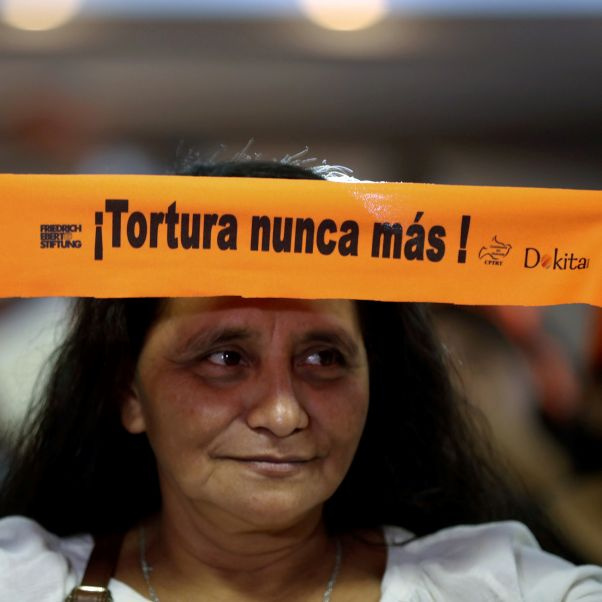
The Vice-Chair of the Subcommittee on Prevention of Torture this morning presented the Subcommittee’s nineteenth annual report to the Committee against Torture.
Elīna Šteinerte, Vice-Chairperson of the Subcommittee on Prevention of Torture, said it was deeply regrettable that due to the ongoing liquidity crisis, the Chairperson could not be at the meeting to deliver the statement. The presentation of the Subcommittee’s nineteenth annual report took place against a backdrop of armed conflict, crisis of government, forced displacement, the weakening of the rule of law, and the resurgence of discourses which fostered fear and exclusion. Despite these attacks, the fundamental tenants of international law remained unchanged, including the absolute prohibition of torture.
In the ensuing discussion, Committee Experts asked questions on persons in vulnerable situations, national preventive mechanisms self-assessment, and the Optional Protocol.
Documents relating to the Committee’s work, including reports submitted by States parties, are available on the session’s webpage. Summaries of the public meetings of the Committee can be found here, and webcasts of the public meetings can be found here.
The Committee will next meet in public on Thursday, 16 April at 3 p.m. to conclude its consideration of the seventh periodic report of Italy (CAT/C/ITA/7).
Statement by the Vice-Chair of the Subcommittee
ELĪNA ŠTEINERTE, Vice-Chairperson of the Subcommittee on the Prevention of Torture, said it was deeply regrettable that due to the ongoing liquidity crisis, the Chairperson could not be at the meeting to deliver the statement. The presentation of the Subcommittee’s nineteenth annual report took place against a backdrop of armed conflict, crisis of government, forced displacement, the weakening of the rule of law, and the resurgence of discourses which fostered fear and exclusion. Despite these attacks, the fundamental tenants of international law remained unchanged, including the absolute prohibition of torture. The prohibition of torture in international law was absolute. There were no reasons or circumstances which could justify it.
The Subcommittee’s mandate lay in the field, and visits to States parties and their places of deprivation of liberty were the main form of engagement. The Subcommittee had planned eight visits for 2025, but due to the liquidity crisis was only able to carry out four visits to Serbia, Peru, New Zealand and Mozambique. During the four visits, more than 550 interviews with more than 900 people were conducted, including persons deprived of their liberty, and visited more than 100 places of deprivation of liberty. Prison overcrowding, non-existent alternatives to detention, and mistreatment of juveniles in the justice system were common themes across all four visits. The national preventive mechanisms faced challenges in exercising their functions.
In Serbia, the Subcommittee observed that many people, including children, spent prolonged periods in pretrial detention. In Peru, the Subcommittee expressed concern at severe prison overcrowding and noted that building more “mega prisons” was not the solution. For New Zealand, the Subcommittee urged action to address the rise in the prison population and increase alternative measures to detention. In Mozambique, the Government was urged to capitalise on its Constitutional reform process to reform the national preventive mechanism in law.
By the end of 2025, 95 reports were presented to States parties, with 58 made public at the request of the State party. The Subcommittee welcomed and strongly encouraged the publication of its visit reports, and urged Committee members to encourage all States parties to the Optional Protocol to the Convention against Torture to request the publication of the visiting report
Last year, 2025, brought about five new national preventive mechanisms, including from Australia, Benin, Madagascar, Nigeria and South Africa. The Subcommittee was concerned that there were many States parties that were not making efforts to establish a national preventive mechanism, despite having ratified the Optional Protocol to the Convention. The Subcommittee emphasised the utmost importance of establishing this mechanism and stood ready to assist in this regard.
It was concerning that many national human rights institutions had broad mandates which made it difficult for them to carry out their national preventive mechanism functions. In 2025, the Subcommittee commenced a series of webinars on the intersections of drug policies and the prevention of torture, providing advice on this topic to the network of national preventive mechanisms.
The Committee and the Subcommittee worked closely together in 2025, and the Subcommittee continued cooperation with the European Committee on Torture, and held meetings with other bodies. The Subcommittee thanked the Committee and urged its members to continue to encourage States parties to ratify the Optional Protocol to the Convention against Torture.
Grants of more than 400,000 USD from States parties to the Optional Protocol Special Fund were awarded to support 16 torture prevention projects in 15 States. The Subcommittee greatly appreciated States parties support and contributions.
The Subcommittee had warned of significant operational challenges, mainly due to resource constraints, which had come to fruition in 2025. The liquidity crisis facing the United Nations had a particularly detrimental impact on the Subcommittee, due to visits being a core part of its mandate. Against these challenges, the Subcommittee had remained resourceful and had been able to make sufficient savings to fund the visit to Mexico in 2026. However, creativity and flexibility could not replace the financial and political commitment of States. The values that the Subcommittee strove to uphold could not be compromised.
Questions by Committee Experts
A Committee Expert asked if any analysis had been conducted regarding vulnerable groups such as women, indigenous peoples, migrants and persons with disabilities? Had the Subcommittee invited national preventive mechanisms to undertake a self-assessment and what had been the results?
Another Expert said it was positive to hear that five new countries had acceded to the Optional Protocol. What efforts did the Subcommittee make to encourage the ratification of the Optional Protocol?
CLAUDE HELLER, Committee Chairperson, said when the Committee adopted concluding observations, the State party was always asked to consider ratifying the Optional Protocol, which was generally well received.
Responses by the Vice-Chair of the Subcommittee
ELĪNA ŠTEINERTE, Vice-Chairperson of the Subcommittee on the Prevention of Torture, said persons in situations of vulnerability were of the utmost concern for the Subcommittee, and it paid particular attention to these groups during visits. If the country had a national preventive mechanism, this body was asked to fill a self-evaluation, which provided helpful additional information for the Subcommittee.
When there were approaches from civil society organizations for countries gearing up to ratify the Optional Protocol, the Subcommittee was always an active participant. Last year there had been engagement with Timor Leste and Thailand in this regard, and there was already engagement with Tajikistan this year. The Subcommittee was keen to engage and ready to offer its support, with an establishment of a national preventive mechanism being the overarching goal.
___________
Produced by the United Nations Information Service in Geneva for use of the media;
not an official record. English and French versions of our releases are different as they are the product of two separate coverage teams that work independently.
CAT26.003E