

Committee against Torture Concludes Eighty-Fourth Session after Adopting Concluding Observations on Reports of Gabon, Italy, Pakistan and Tajikistan and its Annual Report
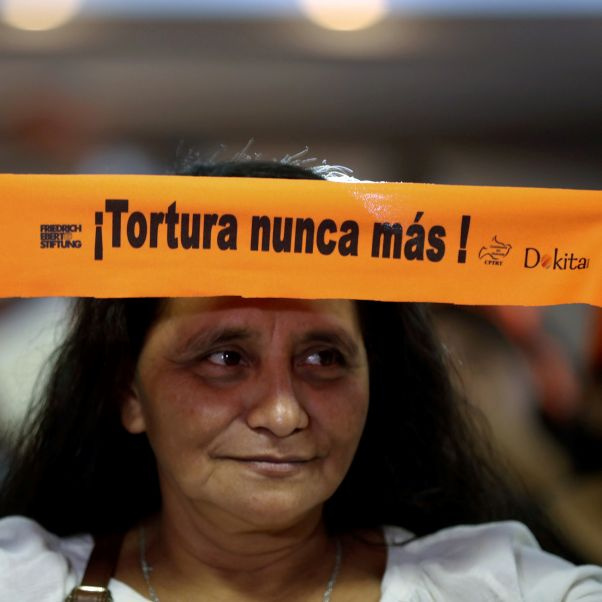
The Committee against Torture this morning closed its eighty-fourth session after adopting its annual report and concluding observations on the reports of Gabon, Italy, Pakistan and Tajikistan on their efforts to implement the provisions of the Convention against Torture and Other Cruel Inhuman or Degrading Treatment or Punishment.
In his remarks for the closing meeting, Mr. Heller presented the Committee’s concluding observations concerning the States reviewed, which will be made available on the session’s webpage in the coming days.
Concerning Gabon, Mr. Heller said the Committee, alarmed by reports indicating extremely concerning conditions in places of detention, urged the State party to intensify its efforts to bring conditions of detention into line with the Nelson Mandela Rules. It also urged the State party to take urgent measures to operationalise the National Human Rights Commission and the national preventive mechanism, in particular by amending legislation to remove legal obstacles to the establishment of the Commission and by proceeding without delay with the selection and appointment of members in a transparent process.
Regarding Italy, Mr. Heller said the Committee expressed concern over allegations of pushbacks at the State party’s borders, over the State party’s continued cooperation with the Libyan coastguard, and over its use of migration detention facilities in Albania. It recommended that the State party uphold the principle of non-refoulement and review the implementation of the memorandum of understanding with Libya to ensure full compliance with its obligations under the Convention. The Committee also called on the State party to ensure that solitary confinement was used only in exceptional circumstances, as a measure of last resort and for the shortest time possible, and establish a maximum duration of solitary confinement not exceeding 15 consecutive days.
As for Tajikistan, Mr. Heller said the Committee expressed concern about allegations of deaths in police custody reportedly linked to torture or ill treatment, coerced confessions, and the denial of medical care in penal institutions. It called on Tajikistan to ensure that all deaths in custody were promptly, thoroughly, and impartially investigated by an independent body, and to redouble its efforts to establish an independent forensic medical institution. Further, it encouraged the State to accede to the Optional Protocol to the Convention and to establish, as a matter of priority, an independent and adequately resourced national preventive mechanism.
Finally, concerning Pakistan, the Committee expressed its deep concern about the deportation of large numbers of Afghan nationals, including children, to that country following the adoption of the Illegal Foreigners’ Repatriation Plan on 26 September 2023, without any individual assessment of their protection needs and risks of refoulement, Mr. Heller said. It called on the State party to consider repealing or reviewing the Plan and to investigate all allegations of police abuse against Afghans and other actions by public authorities undertaken for the purpose of coercing them to return to their country of origin, despite the real risk of torture they faced, and discipline or criminally sanction those responsible for such abuse.
Further, Mr. Heller said the Committee urged Pakistan to take the measures necessary to ensure that human rights defenders, civil society activists, journalists, lawyers, political opponents, protesters and other critics of the Government were adequately protected from torture and ill-treatment and other forms of reprisals, that those responsible for such acts were brought to justice, and that victims or their families were provided with effective remedies. It also recommended that the State party review the situation of all persons who had allegedly been detained and imprisoned on political grounds or in retaliation for their work, including former Prime Minister Imran Khan, and ensure that they had access to adequate medical care while detained.
At the beginning of the meeting, Abderrazak Rouwane, Committee Rapporteur, presented the Committee’s annual report, which covered the period from 3 May 2025 to 1 May 2026. His report will be made available on this webpage in the coming days. Mr. Rouwane said that, as of 1 May 2026, 176 States were parties to the Convention. He noted that, owing to the United Nations’ financial situation and resulting cash-saving measures, the Committee was able to hold only two sessions over the reporting period, losing five weeks of meeting time.
He also presented elections of Committee members over the period, announcing that on 13 April 2026, the Committee re-elected Claude Heller (Mexico) as its Chair for a two-year term, and elected Ana Racu (Moldova), Liu Huawen (China), and Peter Vedel Kessing (Denmark) as Vice-Chairs, joining current Vice-Chair Naoko Maeda, and Mr. Rouwane (Morocco) as Rapporteur for a two-year term.
Summaries of the public meetings of the Committee can be found here, and webcasts of the public meetings can be found here.
Due to the current financial situation, the dates of the Committee’s next session are not yet confirmed. All information, including the proposed programme of work, will be made available on the Committee’s webpage when confirmed.
Statements
ABDERRAZAK ROUWANE, Committee Rapporteur, presenting the Committee’s annual report, said that it covered the period from 3 May 2025 to 1 May 2026. As of 1 May 2026, 176 States were parties to the Convention. Owing to the United Nations’ financial situation and resulting cash-saving measures, the Committee was able to hold only two sessions since the adoption of its previous annual report. The eighty-third session, originally scheduled for July 2025, was held from 10 to 28 November 2025, and the eighty-fourth session was held from 13 April to 1 May 2026. In addition, the duration of these sessions was reduced to three weeks each, instead of the four weeks originally planned. In total, the Committee lost five weeks of meeting time during the period under review.
Mr. Rouwane said that, following the twentieth meeting of States parties to the Convention held on 1 October 2025 in Geneva, the composition of the Committee underwent changes, with effect from 1 January 2026. On 13 April 2026, the Committee re-elected Claude Heller (Mexico) as its Chair for a two-year term. Ana Racu (Moldova), Liu Huawen (China) and Peter Vedel Kessing (Denmark) were elected Vice-Presidents and Mr. Rouwane (Morocco) as Rapporteur for a two-year term. At the end of the eighty-third session, Jorge Contesse (Chile) was appointed Rapporteur on new complaints and interim measures under article 22 of the Convention, and at the eighty-fourth session, Naoko Maeda (Japan) was appointed Rapporteur for follow-up to concluding observations and Mr. Kessing as Rapporteur on reprisals. The Working Group on Communications was composed of Mr. Contesse, Lorena González Pinto (Guatemala), Mr. Kessing, Mr. Liu and Mr. Moulaye Abdallah Moulaye Abdallah (Mauritania).
Mr. Rouwane said a joint meeting was held on 13 November 2026 between the members of the Committee and those of the Subcommittee on Prevention of Torture, which focused on strengthening cooperation between the two bodies and on addressing the challenges related to the implementation of the Convention and the Optional Protocol. On 16 April 2026, Elīna Šteinerte, Vice-Chairperson of the Subcommittee, submitted to the Committee the nineteenth annual report of the Subcommittee.
The Committee had long recognised the participation of non-governmental organizations in its work and had an established practice of meeting with them prior to the consideration of States parties' reports, Mr. Rouwane said. The Committee thanked these organizations for their participation in these meetings and expressed its deep appreciation to the World Organization Against Torture for its role in coordinating the contributions submitted by non-governmental organizations. The Committee also appreciated the commitment and contribution of national human rights institutions and national preventive mechanisms.
The cessation of hybrid meetings as of January 2024, apart from dialogues with delegations of States parties, continued to have a negative impact on the Committee's work by limiting the participation of civil society organizations, national human rights institutions and other stakeholders. Mr. Rouwane said the Committee requested that all multilingual hybrid meetings be maintained within the framework of its sessions and be provided with adequate resources. It invited States parties to support this request. He also noted that, during the reporting period, the Committee continued to adopt the precautionary measures necessary to protect anyone cooperating with it from reprisals or any other acts of intimidation.
During the period under review, Mr. Rouwane said, the Committee continued to contribute to efforts aimed at strengthening the treaty body system. It considered that the serious shortage of human and financial resources was significantly impairing the ability of treaty bodies to implement their mandates fully and that this trend risked pushing the system to the limits of its operational capacity. It urged Member States to increase the allocation of necessary resources during budget deliberations to prevent further reductions that would render the work of the Committee and the other human rights treaty bodies unsustainable.
Mr. Rouwane reported that, between 3 May 2025 and 1 May 2026, 11 reports from States parties under article 19 of the Convention were submitted by Eswatini, Liberia, Mauritania, Bolivia, Serbia, Tunisia, Belgium, Lithuania, Morocco, Portugal and Sweden. There were 25 States parties with overdue initial reports and 40 with overdue periodic reports. At its eighty-third session, the Committee adopted lists of issues prior to reporting for States parties for which periodic reports were due in November 2026: Australia, Chad, El Salvador, Malawi, Somalia and Uganda. It also adopted a list of issues prior to reporting for Nigeria. At its eighty-fourth session, the Committee adopted lists of issues prior to reporting with regard to States parties for which periodic reports were due in May or July 2027: Brazil, Colombia, Kazakhstan, Luxembourg, Slovakia, New Zealand, Romania, Spain and Switzerland.
At its eighty-third and eighty-fourth sessions, Mr. Rouwane said, the Committee considered reports submitted by eight States parties: Albania, Argentina, Bahrain and Isreal in the eighty third session; and Gabon, Italy, Pakistan, and Tajikistan in its eighty fourth session. As of 1 May 2026, 52 States party reports were awaiting consideration. The Committee’s backlog in reviewing reports had been exacerbated by the COVID-19 pandemic and recent cancellations of meeting time owing to the United Nations’ financial situation.
Between 3 May 2025 and 1 May 2026, follow-up reports were received from North Macedonia, Finland, Austria, Honduras, Liechtenstein, Ecuador, Türkiye, Republic of Korea, Kuwait, Azerbaijan, Colombia, Jordan, Spain and Turkmenistan. The Rapporteurs for follow-up to concluding observations communicated with States parties under the follow-up procedure, presenting their analyses and pending issues. During the period under review, such communications were sent in letters to Egypt, Finland, Liechtenstein, Honduras, North Macedonia, Austria, Ecuador, Republic of Korea, Türkiye, Azerbaijan and Kuwait. The Committee’s work under article 20 of the Convention also continued during the period under review, Mr. Rouwane said.
Mr. Rouwane said 71 States parties to the Convention had declared that they recognise the competence of the Committee to receive and consider complaints under article 22 of the Convention. As of 1 May 2026, the Committee had registered, since 1989, 1,335 complaints concerning 45 States parties, 459 of them had been discontinued, and 163 had been declared inadmissible. The Committee had adopted final decisions on the merits in 541 complaints and found violations of the Convention in 230 of them. Some 176 complaints were pending consideration. All the Committee’s decisions could be found in the treaty body case law database and in the Official Document System of the United Nations. During the reporting period, the Committee adopted 21 decisions on the merits, declared 10 communications inadmissible and discontinued the consideration of nine communications.
The Committee’s workload under article 22 remained significant, with some cases remaining in the backlog of the Committee. The Committee noted that some States parties had failed to implement the decisions adopted on complaints. It continued to seek to ensure implementation of its decisions through its Rapporteur for follow-up on decisions adopted under article 22, Mr. Rouwane concluded.
CLAUDE HELLER, Committee Chairperson, said the eighty-fourth session was held from 13 April to 1 May 2026. The concluding observations on the States reviewed would be available on the session’s webpage in the coming days.
Presenting concluding observations concerning Gabon, Mr. Heller said the Committee was alarmed by reports indicating extremely concerning conditions in places of detention, including excessive and chronic prison overcrowding, resulting from the abusive and prolonged use of pretrial detention and the limited application of alternatives to imprisonment. Libreville prison, for example, recorded in 2026 an overcrowding rate of between 400 and 700 per cent. The Committee urged the State party to intensify its efforts to bring conditions of detention into line with the Nelson Mandela Rules, in particular by allocating additional resources to these efforts and strengthening its international cooperation to benefit from technical and financial support commensurate with the reforms required. The Committee further urged the State party, as a matter of urgency, to reduce prison overcrowding by making greater use of alternatives to detention, and to ensure that pretrial detention was imposed only as an exceptional measure. In this connection, it took note of the delegation’s confirmation that the report of the 2024 visit by the Subcommittee on Prevention of Torture would be published.
The Committee took note of the designation of the National Human Rights Commission as the national preventive mechanism in the November 2024 reorganising the Commission, Mr. Heller said. However, the Committee regretted that the necessary measures for the operationalisation of the Commission and the mechanism had not yet been taken, in particular with regard to the appointment of their members and the effective allocation of sufficient human and material resources. The Committee urged the State party to take urgent measures to operationalise the Commission and the national preventive mechanism, in particular by amending legislation to remove legal obstacles to the establishment of the Commission and by proceeding without delay with the selection and appointment of members, ensuring their independence and impartiality through a transparent selection process, as well as their proven expertise in the field of torture prevention and a multidisciplinary composition.
Regarding Italy, Mr. Heller said the Committee took note of the challenges faced by the State party in responding to fluctuating migration flows, with intermittent increases in arrivals during the period under review. However, it expressed its concern over allegations of pushbacks at the State party’s borders, over the State party’s continued cooperation with the Libyan coastguard within the framework of its memorandum of understanding with Libya, and over its use of migration detention facilities in Albania. It recommended that the State party uphold the principle of non-refoulement, review the implementation of the memorandum of understanding to ensure full compliance with its obligations under the Convention, and ensure legal clarity regarding the its responsibilities under the Convention in respect of detainees held abroad, including in relation to investigating allegations of torture, receiving complaints, ensuring redress, and responding to individual communications under article 22 of the Convention.
The Committee also expressed concerns, Mr. Heller said, over restrictive detention regimes in place in the State party. It pointed to conditions which could amount to prolonged solitary confinement, extending well beyond the 15-day maximum permitted by international standards, and recommended that the State party strictly limit the use of special detention regimes to situations where they were necessary, and ensure that any restrictive measures were individualised, proportionate and regularly re-evaluated. Mr. Heller said the Committee also called on the State party to ensure that solitary confinement, whether de jure or de facto, was used only in exceptional circumstances, as a measure of last resort and for the shortest time possible, and establish a maximum duration of solitary confinement not exceeding 15 consecutive days, in law and in practice, in line with international standards.
As for Tajikistan, the Committee expressed concern about allegations of deaths in police custody reportedly linked to torture or ill treatment, coerced confessions, and the denial of medical care in penal institutions, as well as about the lack of effective investigations and thorough explanations of the causes of those deaths, Mr. Heller said. It further observed that the forensic medical institute operated under State authority, which raised concerns regarding the independence of forensic documentation in such cases. The Committee called on Tajikistan to ensure that all deaths in custody were promptly, thoroughly, and impartially investigated by an independent body, including through independent forensic examinations conducted in accordance with the Minnesota Protocol, and to redouble its efforts to establish an independent forensic medical institution.
Mr. Heller said the Committee noted several measures undertaken by Tajikistan to monitor places of deprivation of liberty, including the activities of the Monitoring Group established within the Office of the Commissioner for Human Rights to conduct monitoring visits, as well as the high level international conference held by the State party in February 2026, which aimed at exploring avenues for ratification of the Optional Protocol to the Convention. It encouraged Tajikistan to accede to this international instrument and to establish, as a matter of priority, an independent and adequately resourced national preventive mechanism. In the meantime, it urged Tajikistan to ensure periodic independent monitoring of all places of deprivation of liberty, in line with international standards, including by civil society organizations and relevant public authorities.
Concerning Pakistan, the Committee expressed its deep concern about the deportation of large numbers of Afghan nationals, including children, to that country following the adoption of the Illegal Foreigners’ Repatriation Plan on 26 September 2023, without any individual assessment of their protection needs and risks of refoulement, Mr. Heller said. It further raised its serious concern about reports of coercion, including harassment and intimidation, threats of deportation and police abuse, extortion, raids and arbitrary detention. The Committee called on the State party to consider repealing or reviewing the Illegal Foreigners’ Repatriation Plan, which posed serious risks for non-citizens, in particular Afghan nationals, and to investigate all allegations of police abuse against Afghans and other actions by public authorities undertaken for the purpose of coercing them to return to their country of origin, despite the real risk of torture they faced, and discipline or criminally sanction those responsible for such abuse.
The Committee also raised concern about reports according to which human rights defenders, civil society activists, journalists, lawyers, political opponents, protesters and other critics of the Government, as well as their family members, had been subjected to torture and ill-treatment and other forms of retaliation, such as intimidation, threats, harassment, physical attacks, excessive use of force, arbitrary arrest and detention, prosecution on trumped up and politically motivated charges, including before military courts, enforced disappearance and extrajudicial execution. It urged the State party to take the measures necessary to ensure that these persons were adequately protected from torture and ill-treatment and other forms of reprisals, that all human rights violations perpetrated against them were thoroughly investigated, that those responsible were brought to justice and that victims or their families were provided with effective remedies.
Further, Mr. Heller said the Committee expressed its concern about the situation of former Prime Minister Imran Khan and Idris Khattak, whose arbitrary detentions were confirmed by the United Nations Working Group on Arbitrary Detention, as well as of Bushra Bibi, Ali Wazir and Mahrang Baloch. It recommended that the State party review the situation of all persons who had allegedly been detained and imprisoned on political grounds or in retaliation for their work and ensure that they had access to adequate medical care while detained.
Mr. Heller said that during the current session, the Committee adopted list of issues prior to reporting for Brazil, Colombia, Kazakhstan, Luxembourg, New Zealand, Romania, Slovakia, Spain and Switzerland.
As of today, Mr. Heller said, the Committee had still not been informed whether the sessions scheduled for July and November 2026 would take place. Owing to the ongoing financial situation of the United Nations Secretariat, all other treaty body sessions planned for 2026 also remained unconfirmed. The Subcommittee on Prevention of Torture was scheduled to undertake visits to France in May 2026 and to Sri Lanka in June 2026; however, no further visits had been confirmed for the remainder of the year.
Future country reviews would be preceded when relevant by private United Nations briefings, private national human rights institution, national preventive mechanism and non-governmental organization briefings. The exact deadlines applicable for the submission of alternative reports would be indicated on the Committee’s webpage once the next sessions were confirmed.
At its next sessions, Mr. Heller said, the Committee would adopt list of issues prior to reporting Costa Rica, Denmark and Slovenia. The Committee welcomed information submitted by non-governmental organizations, national human rights institutions and other stakeholders to inform the preparation.
Mr. Heller reported that, during the eighty-fourth session, the Committee examined 21 individual complaints. Of the examined cases, five were deemed inadmissible and 10 cases were decided on the merits, with the Committee finding no violations in five cases and finding a violation by the State party concerned in five other cases. Further, the Committee adopted five discontinuance requests, and one communication was postponed.
At the present session, the Committee undertook its activities on follow-up under articles 19 and 22 of the Convention and in relation to reprisals, Mr. Heller said, presenting the details of the reports adopted on those activities on 27 April 2026.
Regarding other matters, Mr. Heller said that on 14 April, the Committee held a private meeting with representatives of human rights non-governmental organizations that regularly contributed to its work, which was convened on an annual basis. The meeting provided an opportunity to share updates and recent developments in the Committee’s work and to discuss ways of enhancing cooperation between the Committee and civil society. Mr. Heller said the session also included a thematic briefing by the United Against Torture Consortium focusing on legal safeguards against torture and ill-treatment in the context of demonstrations that took place on 28 April.
He also noted that Committee met with Antti Korkeakivi, Chief of the Human Rights Treaty Bodies Section of the Office of the High Commissioner for Human Rights, on 20 April 2026 concerning the financial situation of the Office and the allocation of resources to the Committee. In this meeting, the Committee expressed disagreement with the criteria used for determining the meeting time allocated to the Committee and called for an equitable and proportionate distribution of resources, bearing in mind the low number of Committee members and the high number of States parties to the Convention.
In closing, Mr. Heller thanked all relevant members of States parties, non-governmental organizations, civil society organizations, national human rights institutes, national preventive mechanisms, as well as secretariat staff and other stakeholders for their contributions to the session. He also thanked Committee members for their intense dedication to meeting the Committee’s mandate, despite the challenges faced by the treaty body system.
___________
Produced by the United Nations Information Service in Geneva for use of the media;
not an official record. English and French versions of our releases are different as they are the product of two separate coverage teams that work independently.
CAT26.009E