

Human Rights Council Concludes Sixty-First Regular Session after Adopting 38 Resolutions
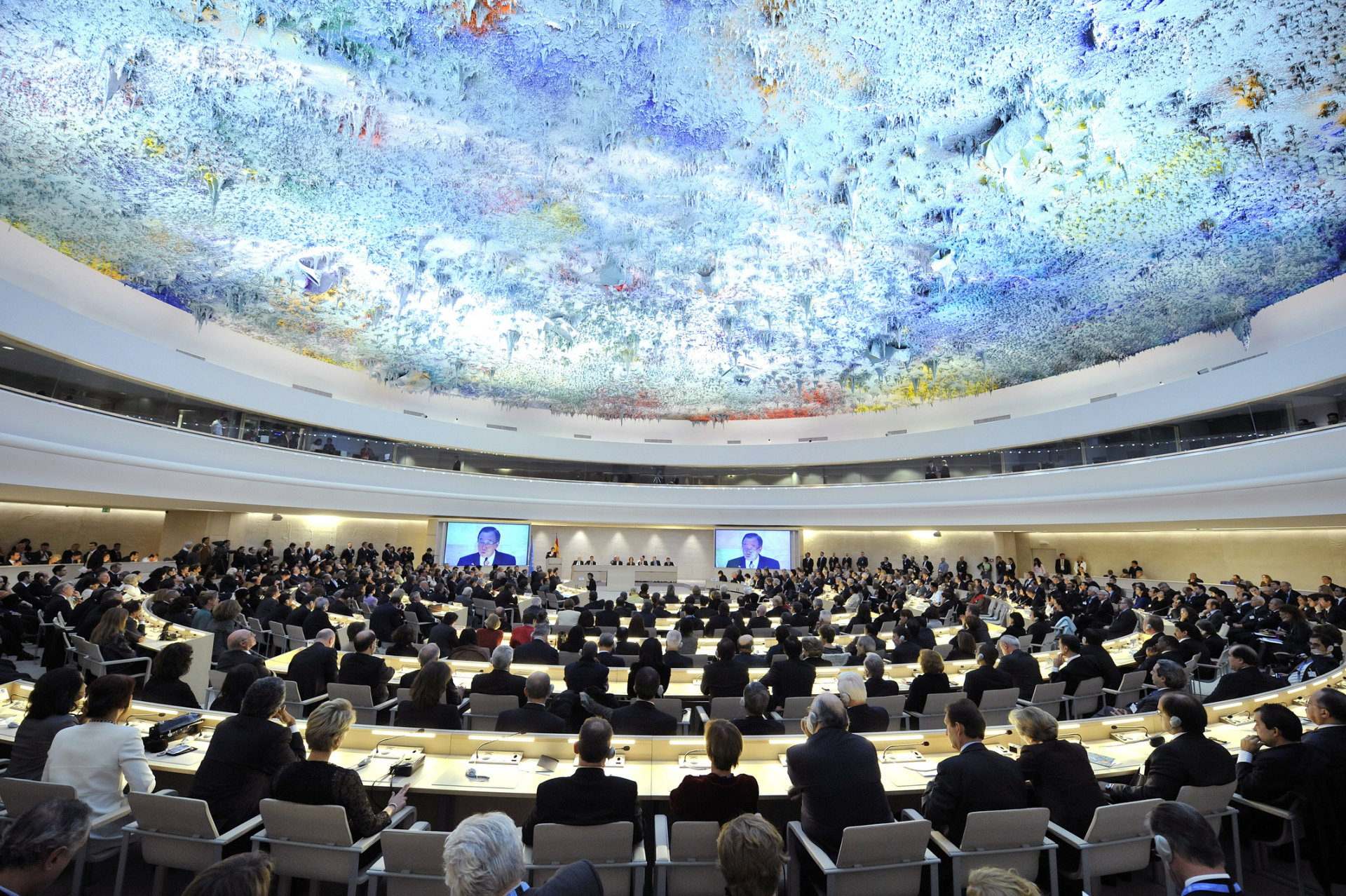
Adopts Resolution Calling on Iran to Cease Attacks on States Not Involved in Hostilities, and Another on the Human Rights of Persons in Street Situations
The Human Rights Council today concluded its sixty-first regular session after adopting 38 resolutions, in which, among other things, the Council voted to extend 19 country-specific and thematic mandates.
A key focus of the Council’s work throughout the session was the ongoing conflict in the Middle East. It adopted without a vote, as orally revised, a resolution in which it called on Iran to “immediately and unconditionally cease all unprovoked attacks, threats and provocations” against Bahrain, Kuwait, Oman, Qatar, Saudi Arabia, the United Arab Emirates and Jordan, and requested the United Nations High Commissioner for Human Rights to prepare an oral update at its sixty-second session on the human rights consequences resulting from these attacks.
Further, on 27 March, the Council held, at the request of Iran, China and Cuba, an urgent debate on “the aerial attack on Shajareh Tayyebeh Girls' School in Minab, Iran, as a grave breach of international humanitarian law and international human rights.”
A new initiative this session was a resolution, adopted without a vote, on the human rights of persons in street situations, which called on States to take all measures necessary to eliminate legislation that criminalised homelessness and to implement and strengthen nationally appropriate social protection systems and measures for all.
Another resolution called for a high-level panel discussion at the Council’s sixty-third session and commemorations at the General Assembly’s eighty-first session to mark the sixtieth anniversary of the International Covenant on Economic, Social and Cultural Rights and the International Covenant on Civil and Political Rights.
Several adopted resolutions made reference to cost-saving measures, in light of the United Nations liquidity crisis.
The Council extended nine country-specific mandates during the session. Under its second agenda item, it extended for one year the mandates of the Commission on Human Rights in South Sudan and the International Commission of Inquiry on the Syrian Arab Republic.
Additionally, under agenda item four, the Council extended, for a period of one year, the mandates of the Special Rapporteur on the situation of human rights in Belarus and the Group of Independent Experts on the Situation of Human Rights in Belarus; the Special Rapporteur on the situation of human rights in the Democratic People’s Republic of Korea; the Independent International Commission of Inquiry on Ukraine; and the Special Rapporteur on the situation of human rights in Myanmar.
Under agenda item 10, it extended, for a period of one year, the mandates of the Independent Expert on the situation of human rights in Mali and the independent human rights expert appointed by the High Commissioner for Human Rights and tasked with undertaking the monitoring of the human rights situation in Haiti.
In addition, the Council decided to extend, for a period of three years, 10 thematic mandates: those of the Special Rapporteur on the sale, sexual exploitation and sexual abuse of children; the Special Rapporteur on torture and other cruel, inhuman or degrading treatment or punishment; the Independent Expert on the effects of foreign debt and other related international financial obligations of States on the full enjoyment of all human rights, particularly economic, social and cultural rights; the Special Rapporteur on the promotion and protection of the right to freedom of opinion and expression; the Special Rapporteur on minority issues; the Special Rapporteur on adequate housing as a component of the right to an adequate standard of living, and on the right to non-discrimination in this context; the Special Rapporteur on the human rights of migrants; the Special Rapporteur on the situation of human rights defenders; the Intergovernmental Working Group on the Effective Implementation of the Durban Declaration and Programme of Action; and the Special Rapporteur on contemporary forms of racism, racial discrimination, xenophobia and related intolerance.
Further resolutions adopted concerned the human rights situation in the Occupied Palestinian Territory, including East Jerusalem; cooperation with regional human rights organizations; the negative impact of unilateral coercive measures on the enjoyment of human rights; the rights of persons with disabilities: disability-inclusive digital technologies and infrastructure, including transport and housing; the promotion of the enjoyment of the cultural rights of everyone and respect for cultural diversity; the right to food; mental health and human rights; promoting human rights and the Sustainable Development Goals through transparent, accountable and efficient public service delivery; the rights of the child: realising the rights of the child affected by armed conflict; prevention of genocide; birth registration and the right of everyone to recognition everywhere as a person before the law; freedom of religion or belief; the promotion and protection of human rights and the implementation of the 2030 Agenda for Sustainable Development; human rights in the occupied Syrian Golan; Israeli settlements in the Occupied Palestinian Territory, including East Jerusalem, and in the occupied Syrian Golan; the right of the Palestinian people to self-determination; and combatting intolerance, negative stereotyping and stigmatisation of, and discrimination, incitement to violence and violence against, persons based on religion or belief.
Also during the session, the Council adopted the outcomes of the universal periodic reviews of 13 countries, namely Belarus, Liberia, Malawi, Mongolia, Panama, Maldives, Andorra, Bulgaria, Honduras, Marshall Islands, Croatia, Jamaica and Libya.
On the final day of its sixty-first session, the Council appointed 17 mandate holders and adopted, ad referendum, the draft report of the session.
Sidharto Reza Suryodipuro, President of the Human Rights Council, presenting the session report, said in addition to adopting 38 resolutions, during the session, 110 dignitaries had participated in the Council’s high-level segment. The Council had held nine general debates, 35 interactive dialogues, seven panel discussions, two urgent debates, and adopted the outcomes of the universal periodic reviews of 13 countries.
In his concluding remarks, Mr. Suryodipuro expressed sincere gratitude to all those who had made the session possible, including the members of the Council’s Bureau and Secretariat, conference services, other United Nations staff, and Member States.
The sixty-first regular session of the Council was held from 23 February to 31 March. The sixty-second regular session of the Council is scheduled to be held from 15 June to 10 July 2026.
Action on Resolutions
Action on a Resolution Under Agenda Item One on Organizational and Procedural Matters
In a resolution (A/HRC/61/L.38) on the Human rights implications of the Islamic Republic of Iran’s unprovoked attacks against Bahrain, Kuwait, Oman, Qatar, Saudi Arabia, the United Arab Emirates and Jordan, adopted without a vote (as orally revised), the Council demands the Islamic Republic of Iran to immediately and unconditionally cease all unprovoked attacks, threats and provocations against Bahrain, Kuwait, Oman, Qatar, Saudi Arabia, the United Arab Emirates and Jordan; also demands the Islamic Republic of Iran to provide full, adequate, effective and prompt reparation for all injury and damage caused by its internationally illegal wrongful acts; and requests the High Commissioner for Human Rights to provide the Council with an oral update at its sixty-second session on the human rights consequences resulting from the unprovoked attacks by the Islamic Republic of Iran against States not involved in the hostilities.
Action on Resolutions Under Agenda Item Two on the Annual Report of the United Nations High Commissioner for Human Rights and Reports of the Office of the High Commissioner and the Secretary-General
In a resolution (A/HRC/61/L.19) on Advancing human rights in South Sudan, adopted by a vote of 25 in favour, four against and 18 abstentions, the Council decides to extend the mandate of the Commission on Human Rights in South Sudan, composed of three members, for a further period of one year; requests the Commission to present a comprehensive report on the situation of human rights in South Sudan to the Council at its sixty-fourth session, to be followed by an enhanced interactive dialogue, which should also include the participation of the High Commissioner for Human Rights and civil society, and that the report and an easy-to-read version of it be made available on the website of the Office of the High Commissioner in an accessible format; also requests the Commission to present its latest report, in combination with an oral update on its work, to the General Assembly at its eighty-first session, followed by an interactive dialogue; and requests the Secretary-General to provide all the resources necessary to enable the Office of the High Commissioner to provide the administrative, technical and logistical support necessary for the implementation of the provisions of the present resolution.
In a resolution (A/HRC/61/L.25) on Supporting human rights in the Syrian Arab Republic, adopted without a vote, the Council decides, in order to support further progress on human rights, to extend the mandate of the Independent International Commission of Inquiry on the Syrian Arab Republic for a period of one year; and to present to the Human Rights Council at its sixty-third session an oral update and a report covering the period January 2026–January 2027, with a focus on an assessment of the human rights situation in the country and priorities for technical assistance and capacity-building to support domestic efforts in the fields of human rights, accountability and transitional justice, which will further advance recommendations by the Commission of Inquiry at the sixty-fourth session of the Council, to be presented during a joint interactive dialogue with the United Nations High Commissioner for Human Rights under agenda item 2.
In a resolution (A/HRC/61/L.35/Rev.1) on the Human rights situation in the Occupied Palestinian Territory, including East Jerusalem, and the obligation to ensure accountability and justice, adopted by a vote of 24 in favour, four against and 19 abstentions, the Council reiterates its request to the Independent International Commission of Inquiry on the Occupied Palestinian Territory, including East Jerusalem, and Israel, to report on both the direct and the indirect transfer or sale of arms, munitions, parts, components and dual-use items to Israel, including those that have been used during the Israeli military operation in the Gaza Strip since 7 October 2023, and to analyse the legal consequences of these transfers, and requests that the report be submitted to the Council at its sixty-seventh session; and requests the High Commissioner for Human Rights to report on the implementation of the present resolution to the Council at its sixty-fourth session, to be followed by an interactive dialogue.
Action on Resolutions Under Agenda Item Three on the Promotion and Protection of All Human Rights, Civil, Political, Economic, Social and Cultural Rights, including the Right to Development
In a resolution (A/HRC/61/L.1) on Cooperation with regional human rights organizations, adopted without a vote, the Council requests the Secretary-General and the High Commissioner to provide the resources necessary to enable the Office of the High Commissioner to support its activities appropriately, in particular the annual meetings of the regional organizations’ focal points for cooperation and the dedicated fellowship programme; requests the High Commissioner to hold in 2028 a workshop on regional and subregional human rights organizations to take stock of developments since the workshop held in 2025, including a thematic discussion on the role of regional organizations in promoting the realisation of human rights and preventing and addressing human rights violations and abuses in the digital space; and also requests the High Commissioner to present to the Council, at its seventieth session, a report containing a summary of the discussions held at the above-mentioned workshop and the progress made towards the implementation of the present resolution.
In a resolution (A/HRC/61/L.2) on The negative impact of unilateral coercive measures on the enjoyment of human rights, adopted by a vote of 28 in favour, 17 against and one abstention, the Council calls upon the Office of the High Commissioner for Human Rights to continue to provide the necessary technical and financial support for, and ensure the operationalisation of, the monitoring tool on the negative impact of unilateral coercive measures on the enjoyment of human rights as a stable mechanism under the auspices of the mandate of the Special Rapporteur on the negative impact of unilateral coercive measures on the enjoyment of human rights, with a view to ensuring its accessibility, usability and effectiveness for all stakeholders; and reiterates the request to the Council Advisory Committee to prepare, in close cooperation with the Special Rapporteur, an in-depth study review on the negative impact of unilateral coercive measures on the right to health of individuals in vulnerable situations, and to present its comprehensive report and findings to the Council at its sixty-fourth session; requests the Office of the High Commissioner to organise a biennial panel discussion, to be held at the sixty-sixth session of the Council, on the impact of unilateral coercive measures on the rights of persons in vulnerable situations, and requests the Special Rapporteur to prepare a report thereon, and to submit and present the report to the Council at its sixty-seventh session.
In a resolution (A/HRC/61/L.3) on the Sixtieth anniversary of the adoption of the International Covenants on Human Rights, adopted by a vote of 26 in favour and 21 abstentions, the Council decides to convene at its sixty-third session a high-level panel discussion accessible for persons with disabilities on the topic “The sixtieth anniversary of the International Covenants on Human Rights: universality, indivisibility, interdependence and interrelatedness of all human rights”, in order to give the sixtieth anniversary of the International Covenants on Human Rights attention commensurate with its historical significance; and recommends that the General Assembly mark the sixtieth anniversary of the International Covenants on Human Rights during its eighty-first session.
In a resolution (A/HRC/61/L.4/Rev.1) on the Mandate of the Special Rapporteur on the sale, sexual exploitation and sexual abuse of children, adopted without a vote, the Council decides to extend the mandate of the Special Rapporteur, for a period of three years; requests the Special Rapporteur to support States in developing legal and policy frameworks and child protection strategies through a child- and gender-responsive, disability-inclusive, victim-centred and trauma-informed approach and in a child-friendly manner to effectively prevent and eradicate new and emerging forms of the online and offline sale and sexual exploitation and abuse of children, in accordance with international human rights law; and also requests the Special Rapporteur to continue to report annually on the implementation of the mandate to the Council and biennially to the General Assembly, in accordance with their respective programmes of work.
In a resolution (A/HRC/61/L.5) on The rights of persons with disabilities: disability-inclusive digital technologies and infrastructure, including transport and housing, adopted without a vote, the Council requests the Office of the High Commissioner to present an oral report to the Council on the implementation of the United Nations Disability Inclusion Strategy across its programmes and operations at its sixty-fifth and sixty-eighth sessions, with international sign interpretation and captioning, and also requests the Office to make its report to the Secretary-General on the Strategy publicly available in an easy-to-read version and in an accessible format; decides that its next annual interactive debate on the rights of persons with disabilities will be held at its sixty-fourth session, and will focus on the twentieth anniversary of the adoption of the Convention on the Rights of Persons with Disabilities: lessons learned and challenges in the development of human rights standards and norms, and will have international sign interpretation and captioning; also decides to hold, at its sixty-seventh session, an interactive debate on the rights of persons with disabilities, which will focus on measures to prevent all forms of exploitation, violence and abuse of persons with disabilities, and will have international sign interpretation and captioning.
The Council requests the Office of the High Commissioner to prepare its next annual thematic study on the rights of persons with disabilities on the twentieth anniversary of the adoption of the Convention on the Rights of Persons with Disabilities: lessons learned and challenges in the development of human rights standards and norms, and to prepare its subsequent study on measures to prevent all forms of exploitation, violence and abuse of persons with disabilities, in consultation with States and other relevant stakeholders, and requests that such stakeholder contributions, the studies themselves and an easy-to-read-version of them be made available on the website of the Office, in an accessible format, prior to the sixty-fourth and sixty-seventh sessions of the Council.
In a resolution (A/HRC/61/L.10) on Torture and other cruel, inhuman or degrading treatment or punishment: mandate of the Special Rapporteur, adopted without a vote (as orally revised), the Council decides to extend the mandate of the Special Rapporteur on torture and other cruel, inhuman or degrading treatment or punishment for a further period of three years, and to report on all of his or her activities, observations, conclusions and recommendations annually to the Council in accordance with its programme of work, and biennially on overall trends and developments with regard to his or her mandate to the General Assembly as of its eighty-second session, with a view to maximising the benefits of the reporting process; and requests the Secretary-General to ensure, from within the overall budgetary framework of the United Nations, the provision of an adequate and stable level of staffing and the facilities and resources necessary for the Special Rapporteur.
In a resolution (A/HRC/61/L.11) on the Mandate of the Independent Expert on the effects of foreign debt and other related international financial obligations of States on the full enjoyment of all human rights, particularly economic, social and cultural rights, adopted by a vote of 29 in favour, 10 against and eight abstentions, the Council decides to extend the mandate of the Independent Expert on the effects of foreign debt and other related international financial obligations of States on the full enjoyment of all human rights, particularly economic, social and cultural rights, for a period of three years; requests the Independent Expert to report annually on the implementation of the mandate to the Council and the General Assembly, in accordance with their respective programmes of work; and requests the Secretary-General and the High Commissioner for Human Rights to continue to provide the Independent Expert with all the necessary assistance.
In a resolution (A/HRC/61/L.12) on the Promotion of the enjoyment of the cultural rights of everyone and respect for cultural diversity, adopted without a vote, the Council requests the High Commissioner for Human Rights to provide the Special Rapporteur in the field of cultural rights with all the resources necessary for the effective fulfilment of the mandate; and requests the Special Rapporteur to continue to work with all relevant stakeholders towards the comprehensive promotion and protection of cultural rights, and to report regularly to the Council and the General Assembly, in accordance with their respective programmes of work.
In a resolution (A/HRC/61/L.13) on The right to food, adopted without a vote, the Council encourages the Special Rapporteur on the right to food to continue to take into account the links between human rights and trade policy perspectives, agriculture, artisanal and small-scale fisheries, food systems and global governance, and to cooperate with relevant international organizations to ensure that the international trade regime and the global economic architecture are geared to respecting, protecting and fulfilling the right to food; also encourages the Special Rapporteur to continue to mainstream a gender, age and disability perspective in the fulfilment of his mandate; requests the Secretary-General and the High Commissioner for Human Rights to continue to provide all the resources necessary for the effective fulfilment of the mandate of the Special Rapporteur; and requests the Special Rapporteur to report annually on the implementation of the mandate to the Council and the General Assembly in accordance with their programmes of work.
In a resolution (A/HRC/61/L.16/Rev.1) on Freedom of opinion and expression: mandate of the Special Rapporteur on the promotion and protection of the right to freedom of opinion and expression, adopted without a vote, the Council decides to extend the mandate of the Special Rapporteur on the promotion and protection of the right to freedom of opinion and expression for a further period of three years; and requests the Special Rapporteur to submit an annual report to the Council and to the General Assembly at its eighty-second and eighty-third sessions covering all activities relating to the mandate, with a view to maximising the benefits of the reporting process.
In a resolution (A/HRC/61/L.20/Rev.1) on the Rights of persons belonging to national or ethnic, religious and linguistic minorities: mandate of the Special Rapporteur on minority issues, adopted without a vote, the Council decides to extend the mandate of the Special Rapporteur on minority issues for a period of three years; and requests the Secretary-General and the High Commissioner for Human Rights to provide all the human, technical and financial assistance necessary for the effective fulfilment of the mandate of the Special Rapporteur.
In a resolution (A/HRC/61/L.21) on Adequate housing as a component of the right to an adequate standard of living, and the right to non-discrimination in this context, adopted without a vote, the Council decides to extend, for a period of three years, the mandate of the Special Rapporteur on adequate housing as a component of the right to an adequate standard of living, and on the right to non-discrimination in this context; requests the Special Rapporteur to continue to engage with States with a view to progressively achieving the full realisation of the right to adequate housing, and to submit proposals and recommendations thereto; further requests the Special Rapporteur to mainstream a gender, age and disability perspective in the performance of the mandate; requests the Secretary-General and the High Commissioner for Human Rights to continue to provide all the resources necessary for the effective fulfilment of the mandate; and requests the Special Rapporteur to continue to report, on an annual basis, to the Council and, on a biennial basis, to the General Assembly, as of its eighty-second session.
In a resolution (A/HRC/61/L.22) on the Human rights of migrants: mandate of the Special Rapporteur on the human rights of migrants, adopted without a vote, the Council decides to extend, for a period of three years, effective from the end of its sixty-second session, the mandate of the Special Rapporteur on the human rights of migrants; and requests the Special Rapporteur, as part of his or her activities, to continue his or her programme of visits, which contribute to improving the protection afforded to the human rights of migrants and to the broad and full implementation of all aspects of the mandate.
In a resolution (A/HRC/61/L.23/Rev.1) on Mental health and human rights, adopted without a vote, the Council requests the High Commissioner for human rights to organise in 2027 a one-day consultation, accessible to persons with disabilities and open to the participation of States and all other stakeholders, on tailored, person-centred and recovery-oriented public policies, programmes and strategies across government sectors to protect and promote mental health and well-being; and further requests the High Commissioner to prepare a comprehensive report, accessible to persons with disabilities, on the outcome of the consultation, including a baseline study of the current state of the realisation of the human rights of persons with psychosocial disabilities and current or potential users of mental health services, and to present the report to the Council at its sixty-seventh session.
In a resolution (A/HRC/61/L.18) on Promoting human rights and the Sustainable Development Goals through transparent, accountable and efficient public service delivery, adopted without a vote, the Council decides to convene, at its sixty-fifth session, a panel discussion on the role of public service delivery in the promotion and protection of human rights and in the achievement of the Sustainable Development Goals, including in the contexts of disaster preparedness, response and recovery, which will be accessible to persons with disabilities and open to participation by States, local governments, relevant treaty bodies and special procedures of the Council, academia, civil society and other relevant stakeholders.
In a resolution (A/HRC/61/L.26) on The human rights of persons in street situations, adopted without a vote, the Council calls upon States to take all measures necessary to eliminate legislation that criminalises homelessness, and to refrain from measures that re-victimise persons in street situations and perpetuate the vicious circle of extreme poverty; also calls upon States to implement and strengthen nationally appropriate social protection systems and measures for all, including social protection floors, as an important contribution to preventive efforts to promote and protect the human rights of persons in street situations; encourages the Office of the High Commissioner for Human Rights to take into consideration the rights of persons in street situations in its technical assistance, capacity-building activities and advisory services; and encourages the human rights treaty bodies and the special procedures of the Council to address the rights of persons in street situations in their debates, reports and work.
In a resolution (A/HRC/61/L.27/Rev.1) on the Rights of the child: realising the rights of the child affected by armed conflict, adopted without a vote (as orally revised), the Council decides to continue its consideration of the question of the rights of the child, and requests the Office of the High Commissioner to organise its annual full-day meeting on the rights of the child in 2027 on the theme of the promotion of children’s mental health and well-being, to facilitate the participation of children, and to make the discussion fully accessible to children and to persons with disabilities; requests the High Commissioner to prepare a report on the rights of the child and artificial intelligence, in close cooperation with all relevant stakeholders, to make the report available in an accessible and child-friendly format, and to present the report to the Council at its sixty-sixth session, and requests the Office of the High Commissioner to organise the annual full-day meeting on the rights of the child in 2028 on the theme of the rights of the child and artificial intelligence, to ensure appropriate resources to support the participation of children, and to make the discussion fully accessible to children and to persons with disabilities.
In a resolution (A/HRC/61/L.29/Rev.1) on the Mandate of the Special Rapporteur on the situation of human rights defenders, adopted without a vote, the Council decides to extend the mandate of the Special Rapporteur on the situation of human rights defenders for a period of three years; urges all States to cooperate with and assist the Special Rapporteur in the performance of his or her tasks; requests the Secretary-General and the High Commissioner for Human Rights to provide the Special Rapporteur with all the assistance necessary for the effective fulfilment of his or her mandate; requests the Special Rapporteur to continue to report on an annual basis to the Council and to the General Assembly at its eighty-first and eighty-third session, and strongly encourages that any financial efficiency savings made in relation to this change in reporting frequency be used to support the wider activities of the mandate; and decides to continue consideration of this issue in accordance with its annual programme of work.
In a resolution (A/HRC/61/L.30) on Prevention of genocide, adopted without a vote, the Council invites the Special Adviser on the Prevention of Genocide to continue to execute the activities under his mandate; requests the Secretary-General to draw up a roster of focal points and networks on the prevention of genocide with updated information from States; invites the General Assembly to consider the adoption of a resolution on convening a high-level event in 2028 dedicated to commemorating the eightieth anniversary of the Convention on the Prevention and Punishment of the Crime of Genocide; also invites the Special Adviser to an interactive dialogue with the Council at its sixty-fifth session on the progress made in discharging his duties; and decides to continue its consideration of this issue in accordance with its programme of work.
In a resolution (A/HRC/61/L.32/Rev.1) on Birth registration and the right of everyone to recognition everywhere as a person before the law, adopted without a vote , the Council calls upon States to identify and reform laws and policies in order to enable immediate birth registration for all; invites the High Commissioner for Human Rights to identify and actively pursue opportunities to collaborate with relevant United Nations agencies, funds and programmes, as well as other relevant stakeholders, to strengthen existing policies and programmes aimed at universal birth registration and vital statistics development; encourages business enterprises providing or involved in digitalising civil registration to conduct a human rights due diligence process to identify, prevent, mitigate and account for how they address their adverse human rights impacts, and to have in place processes to enable the remediation of any adverse human rights impacts; and decides to remain seized of the matter.
In a resolution (A/HRC/61/L.33) on Freedom of religion or belief, adopted without a vote, the Council takes note of the work of the Special Rapporteur on freedom of religion or belief, and concludes that there is a need for the continued contribution of the Special Rapporteur to the promotion, protection and universal implementation of the right to freedom of religion or belief; requests the Secretary-General and the High Commissioner for Human Rights to provide the Special Rapporteur with all the human, technical and financial assistance necessary for the effective fulfilment of the mandate; requests the Special Rapporteur to report annually to the Council and to the General Assembly in accordance with their respective programmes of work; and decides to remain seized of this question under the same agenda item and to continue its consideration of measures to implement the Declaration on the Elimination of All Forms of Intolerance and of Discrimination Based on Religion or Belief.
In a resolution (A/HRC/61/L.28) on the Promotion and protection of human rights and the implementation of the 2030 Agenda for Sustainable Development, adopted without a vote (as orally revised), the Council decides to organise two full-day intersessional meetings for dialogue and cooperation on human rights and the 2030 Agenda for Sustainable Development; also decides that the intersessional meetings should be held in advance of the 2027 and 2029 meetings of the high-level political forum on sustainable development; requests the High Commissioner for Human Rights to organise the two intersessional meetings in consultation with relevant stakeholders, and to provide all the services and facilities necessary to make the discussions fully accessible to persons with disabilities, and to provide webcasting services for the meetings; further requests the President of the Council to appoint for each meeting, on the basis of regional rotation, and in consultation with regional groups, a chair for the meeting from candidates nominated by members and observers of the Council, who, together with the Office of the High Commissioner, shall be responsible for the preparation of summary reports of the discussions of the meetings, and for presenting them to the Council at its sixty-fifth and seventy-first sessions, respectively.
Action on Resolutions Under Agenda Item Four on Human Rights Situations that Require the Council’s Attention
In a resolution (A/HRC/61/L.14) on the Situation of human rights in Belarus, adopted by a vote of 28 in favour, 4 against and 15 abstentions (as orally revised), the Council decides to extend the mandate of the Special Rapporteur on the situation of human rights in Belarus for a further period of one year, effective from the end of its sixty-second session, and requests the Special Rapporteur to submit a report on the situation of human rights in Belarus to the Council at its sixty-fifth session and to the General Assembly at its eighty-second session, including in an easy-to-read version and in an accessible format; also decides to extend the mandate of the Group of Independent Experts on the Situation of Human Rights in Belarus for a further period of one year, and requests the Group of Independent Experts to give an oral update to the Council at its sixty-third session and to present a comprehensive report at its sixty-fourth session, including in an easy-to-read version and an accessible format, both to be followed by an interactive dialogue; and requests the Secretary-General and the Office of the High Commissioner to provide the Special Rapporteur and the Group of Independent Experts with all necessary assistance and adequate resources to enable the swift renewal and the effective fulfilment of their mandates.
In a resolution (A/HRC/61/L.15) on the Situation of human rights in the Democratic People’s Republic of Korea, adopted without a vote (as orally revised), the Council decides to extend the mandate of the Special Rapporteur on the situation of human rights in the Democratic People’s Republic of Korea, in accordance with Human Rights Council resolution 37/28, for a period of one year; requests the Office of the High Commissioner to report on its follow-up efforts in the regular annual report of the Secretary-General submitted to the General Assembly on the situation of human rights in the Democratic People’s Republic of Korea; and requests the Special Rapporteur to submit regular reports to the Human Rights Council and to the General Assembly on the implementation of the mandate, including on the follow-up efforts made in the implementation of the recommendations of the commission of inquiry.
In a resolution (A/HRC/61/L.17) on the Situation of human rights in Ukraine stemming from the Russian aggression, adopted by a vote of 25 in favour, 4 against and 18 abstentions, the Council calls for the swift and verifiable withdrawal of Russian Federation troops and Russian-backed armed groups from the entire territory of Ukraine; decides to extend the mandate of the Independent International Commission of Inquiry on Ukraine for a further period of one year; requests the Commission of Inquiry to give an oral update to the Council at its sixty-third session, to be followed by an interactive dialogue, to submit a comprehensive report to the Council at its sixty-fourth session, to be followed by an interactive dialogue, and to submit a report to the General Assembly at its eighty-first session, also to be followed by an interactive dialogue; requests the Secretary-General to ensure the availability of all the resources necessary to enable the Commission of Inquiry to carry out its mandate, and the Office of the High Commissioner to provide the administrative, technical and logistical support that is essential to implement the provisions of the present resolution; and decides to remain actively seized of the matter.
In a resolution (A/HRC/61/L.24/Rev.1) on the Situation of human rights in Myanmar, adopted without a vote, the Council decides to extend the mandate of the Special Rapporteur on the situation of human rights in Myanmar for a further period of one year, requests the Special Rapporteur to submit a report to the Third Committee of the General Assembly at its eighty-first session and to the Council at its sixty-fourth session, and also requests the Special Rapporteur to continue to monitor the situation of human rights in Myanmar and to make recommendations on additional steps necessary to address the ongoing crisis; requests the High Commissioner for Human Rights to continue to monitor and assess the overall situation of human rights in Myanmar, and to continue and strengthen technical assistance to pro-democracy actors and civil society groups in order to increase their protection capacities, and to present updates in the context of his regular reporting to the Council; requests the Secretary-General to provide the Special Rapporteur, the High Commissioner and the Independent Investigative Mechanism for Myanmar with the increased assistance, resources and expertise necessary to enable them to discharge their mandates fully; and decides to remain actively seized of the matter.
Action on Resolutions Under Agenda Item Seven on the Human Rights Situation in Palestine and Other Occupied Arab Territories
In a resolution (A/HRC/61/L.8) on Human rights in the occupied Syrian Golan, adopted by a vote of 28 in favour, 3 against and 16 abstentions, the Council calls upon Israel, the occupying power, to comply with the relevant resolutions of the General Assembly, the Security Council and the Human Rights Council, in particular Security Council resolution 497 (1981), in which the Council decided, inter alia, that the decision of Israel to impose its laws, jurisdiction and administration on the occupied Syrian Golan was null and void and without international legal effect, and demanded that Israel rescind forthwith its decision; requests the Secretary-General to bring the present resolution to the attention of all Governments, the competent United Nations organs, specialised agencies, international and regional intergovernmental organizations and international humanitarian organizations, to disseminate it as widely as possible and to report on this matter to the Human Rights Council at its sixty-fourth session; and decides to continue its consideration of the human rights violations in the occupied Syrian Golan at its sixty-fourth session.
In a resolution (A/HRC/61/L.36) on Israeli settlements in the Occupied Palestinian Territory, including East Jerusalem, and in the occupied Syrian Golan, adopted by a vote of 34 in favour, 3 against and 10 abstentions (as orally revised), the Council reiterates its request to the Independent International Commission of Inquiry on the Occupied Palestinian Territory, including East Jerusalem, and Israel to prepare a report on the identities of settlers, as well as settler groups and their members, that have engaged in or continue to engage in acts of violence, intimidation, harassment or terror against Palestinian civilians and the actions taken by Israel, the occupying power, and by third States to ensure accountability for violations or abuses of international law in this regard, and requests that the report be submitted to the Council at its sixty-seventh session; requests the High Commissioner for Human Rights to report on the implementation of the provisions of the present resolution to the Council at its sixty-fourth session; and decides to remain seized of the matter.
In a resolution (A/HRC/61/L.37) on the Right of the Palestinian people to self-determination, adopted by a vote of 42 in favour, none against and five abstentions, the Council calls upon Israel, the occupying power, to end immediately its unlawful presence in the Occupied Palestinian Territory, including East Jerusalem, and to reverse and redress any impediments to the political independence, sovereignty and territorial integrity of Palestine; calls upon all States to ensure respect for their obligations of non-recognition, non-aid and non-assistance with regard to the serious breaches of peremptory norms of international law by Israel, and also calls upon them to cooperate further to bring, through lawful means, an end to these serious breaches; urges all States to adopt measures as required to promote the realisation of the right to self-determination of the Palestinian people, and to render assistance to the United Nations in carrying out the responsibilities entrusted to it by the Charter regarding the implementation of this right; and decides to remain seized of the matter.
Action on Resolutions Under Agenda Item Nine on Racism, Racial Discrimination, Xenophobia and Related Forms of Intolerance, Follow-Up to and Implementation of the Durban Declaration and Programme of Action
In a resolution (A/HRC/61/L.6/Rev.1) on the Mandate of the Intergovernmental Working Group on the Effective Implementation of the Durban Declaration and Programme of Action, adopted without a vote, the Council decides to renew the mandate of the Intergovernmental Working Group on the Effective Implementation of the Durban Declaration and Programme of Action for a further period of three years; requests the Chair of the Working Group to submit an annual report on its sessions to the Human Rights Council; and requests the Chair of the Working Group to orally update and engage in an interactive dialogue with the General Assembly under the item entitled “Elimination of racism, racial discrimination, xenophobia and related intolerance” annually.
In a resolution (A/HRC/61/L.7) on the Mandate of the Special Rapporteur on contemporary forms of racism, racial discrimination, xenophobia and related intolerance, adopted without a vote , the Council decides to renew the mandate of the Special Rapporteur on contemporary forms of racism, racial discrimination, xenophobia and related intolerance for a further period of three years, in accordance with the terms of reference contained in Human Rights Council resolution 7/34; and requests the Special Rapporteur to submit an annual report to the Human Rights Council and to the General Assembly on all activities relating to the mandate with a view to maximising the benefits of the reporting process.
In a resolution (A/HRC/61/L.9) on Combatting intolerance, negative stereotyping and stigmatisation of, and discrimination, incitement to violence and violence against, persons based on religion or belief, adopted without a vote, the Council notes the speech given by the Secretary-General of the Organization of the Islamic Conference at the fifteenth session of the Human Rights Council, and draws upon his call upon States to take actions to foster a domestic environment of religious tolerance, peace and respect; and requests the High Commissioner to prepare and submit to the Human Rights Council at its sixty-fourth session a comprehensive follow-up report with elaborated conclusions based upon information provided by States on the efforts and measures taken for the implementation of the action plan, and views on potential follow-up measures for further improvement of the implementation of that plan.
Action on Resolutions Under Agenda Item 10 on Technical Assistance and Capacity Building
In a resolution (A/HRC/61/L.31) on Technical assistance and capacity-building for Mali in the field of human rights, adopted without a vote, the Council decides to extend the mandate of the Independent Expert on the situation of human rights in Mali for a period of one year in order to permit the mandate holder to continue to evaluate the situation of human rights in Mali and to provide his assistance in ensuring the promotion, protection and implementation of human rights and strengthening the rule of law; requests the Independent Expert to submit a report to the Human Rights Council at its sixty-fourth session; and decides to hold a dialogue at its sixty-fourth session, in the presence of the Independent Expert and representatives of the Government of Mali, to assess the changes in the situation of human rights in the country, with a particular focus on the issue of nonjudicial protection of human rights in times of armed conflict.
In a resolution (A/HRC/61/L.34) on Technical assistance and capacity-building to improve the situation of human rights in Haiti, in connection with a request from the authorities of Haiti for coordinated and targeted international action, adopted without a vote, the Council decides to extend, for a renewable period of one year, the mandate of the independent human rights expert appointed by the High Commissioner for Human Rights and tasked with undertaking the monitoring of the human rights situation in Haiti; requests the independent expert to devote greater attention to the situation of children, women and girls and to trafficking in persons, to monitor the impact of illicit arms trafficking on the human rights situation in Haiti and to formulate recommendations to consolidate national, regional and international responses on this issue; requests the High Commissioner to provide to the Council, within the framework of an interactive dialogue with the participation of the independent human rights expert, an oral update on the situation of human rights in Haiti at its sixty-third session and a report on the subject at its sixty-fourth session; requests the Secretary-General to make available to the Office of the High Commissioner the financial, technical and logistical support required for the establishment of an office of the High Commissioner in Haiti; and decides to remain seized of the matter.
Other Matters
The Council appointed 17 mandate holders: the Special Rapporteur on the situation of human rights in Cambodia, Thomas Andrews (United States of America); the Working Group of Experts on People of African Descent, member from Asia-Pacific States, John Phillip Binondo (Philippines); the Special Rapporteur on the situation of human rights in Myanmar, Kelley Anne Eckels-Currie (United States of America); the Expert Mechanism on the Right to Development, member from African States, Serges Alain Djoyou Kamga (South Africa); the Expert Mechanism on the Right to Development, member from Asia-Pacific States, Xiaohui Liang (China); the Expert Mechanism on the Right to Development, member from Eastern European States, Ramona Biholar (Romania); the Expert Mechanism on the Right to Development, member from Western European and other States, Brian Keane (United States of America); the Expert Mechanism on the Rights of Indigenous Peoples, member from Asia, Gam Awungshi Shimray (India); the Expert Mechanism on the Rights of Indigenous Peoples, member from the Arctic, Dalee Sambo Dorough (United States of America); the Independent Expert on the enjoyment of all human rights by older persons, Zvezdan Pirtošek (Slovenia); the Special Rapporteur on adequate housing as a component of the right to an adequate standard of living, and on the right to non-discrimination in this context, Koldo Andoni Casla Salazar (United Kingdom of Great Britain and Northern Ireland); the Special Rapporteur on contemporary forms of slavery and trafficking in persons, Katarina Schwarz (New Zealand); the Special Rapporteur on extreme poverty and human rights, Elena Carolina Diaz Galan (Spain); the Special Rapporteur on the negative impact of unilateral coercive measures on the enjoyment of human rights, Zeina Jallad (State of Palestine); the Special Rapporteur on the right to food, Sofia Monsalve Suarez (Colombia); the Special Rapporteur on the sale, sexual exploitation and sexual abuse of children, Ai Kihara-Hunt (Japan); and the Special Rapporteur on the situation of human rights defenders, Andrea Bolaños Vargas (Colombia).
In addition, the Council adopted its draft report ad referendum for the sixty-first session.
___________
Produced by the United Nations Information Service in Geneva for use of the media;
not an official record. English and French versions of our releases are different as they are the product of two separate coverage teams that work independently.
HRC26.005E