

Experts of the Committee on Enforced Disappearances Praise Ecuador's Strong Response to the Malvinas Case, Raise Questions on the Repeated Use of States of Emergency and on Locating Disappeared Children
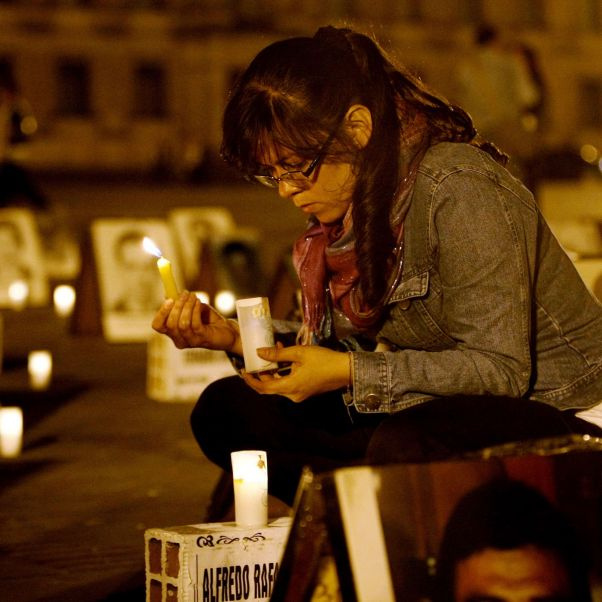
The Committee on Enforced Disappearances today concluded its review of additional information from Ecuador on its implementation of the provisions of the International Convention on the Protection of All Persons from Enforced Disappearance. Committee Experts praised Ecuador’s strong response to the Malvinas case, while raising questions about the State’s repeated use of states of emergency and how disappeared children were located.
Paulo De Tarso Vannuchi, Committee Expert and Country Rapporteur, said Ecuador had demonstrated a swift, strong response during the Malvinas case, resulting in a positive outcome. This showed that Ecuador had the ability, as well as a duty to do the same thing for those people who were invisible.
Mr. De Tarso noted that states of emergency had to be compatible with InterAmerican standards, and human rights needed to be respected. If armed forces were currently engaged in operations with police forces in states of emergencies, the armed forces needed to eventually be removed from this role. Was there any risk that there might be an unlimited renewal of states of emergency?
Carmen Rosa Villa Quintana, Committee Vice Chair and Country Rapporteur, said Ecuador maintained the existence of the domestic armed conflict, referred to as the CANI, but this narrative was questioned by the Constitutional Court; it was not justified in the declaration of a state of emergency. The Constitutional Court ordered the Ombudsman's Office to follow up on the actions derived from the declaration of states of emergency. Under this mandate, had possible violations of rights been identified?
Ms. Villa Quintana also asked if more information could be provided about the protocol to protect the rights of children and adolescents? Was the best interests of the child applied? What was the current prevention policy to prevent child recruitment? Was there a related verification mechanism? Had civil society organizations been included in its development? How did specialised children police units respond when they received an allegation that a child had been recruited or disappeared? Did they have sufficient resources to launch searches?
Introducing the report, Leonardo Thimoty Alvear Ruíz, Captain, Legal Advisor of the Ministry of National Defence of Ecuador and head of the delegation, said Ecuador reaffirmed its unrestricted commitment to the promotion and protection of human rights, as well as to its determination to comply with its international obligations to prevent, investigate and punish this serious crime. Enforced disappearance was fully incompatible with Ecuador’s institutional, constitutional and legal framework, and was in no way a State policy.
The delegation said Ecuador needed to engage the army to restore order and social peace in the country. The Armed Forces had a zero tolerance of abuse. The state of emergency was not used as a permanent and widespread tool. In 2024, the country was confronted with a domestic armed conflict and now it applied the period of proportionality. Ecuador did not apply unlimited renewals; this was strictly governed by the Constitution and by international law. The state of emergency lasted 60 days and could be renewed for a maximum of 30 days, only if the original conditions for the emergency remained in place. Legal guarantees remained in place during the state of emergency.
The delegation said the national police had specialised units for children and adolescents and training was being undertaken to ensure their rights were embedded within all police work. A system focused on searching for children and adolescents under risky conditions disseminated information widely within the first 72 hours of disappearance, which had proven to be successful. Of the 28 cases using this mechanism, 27 had been solved.
In concluding remarks, Mr. Alvear Ruíz reiterated that enforced disappearance was not compatible with Ecuador’s Constitutional and legal framework. Ecuador recognised that the strengthening of the rule of law and justice required a commitment by the State, and in that context, stood ready to cooperate with the Committee and the wider international human rights system.
Olivier De Frouville, Committee Vice Chair, thanked the members of the delegation of Ecuador for their participation in the dialogue, which had been very valuable to the Committee.
The delegation of Ecuador consisted of representatives from the Ministry of National Defence; the Ministry of Government; the Joint Command of the Armed Forces; the Ministry of the Interior; the National Service for Comprehensive Care for Adults Deprived of Liberty and Adolescent Offenders; Ministry of Foreign Affairs and Human Mobility; and the Permanent Representative of Ecuador to the United Nations Office at Geneva.
All the documents relating to the Committee’s work, including reports submitted by States parties, can be found on the session’s webpage. Webcasts of the meetings of the session can be found here, and meetings summaries can be found here.
The Committee will next meet in public at 5:30 p.m. on Thursday, 19 March, to close its thirtieth session.
Report
The Committee has before it additional information on the report of Ecuador (CED/C/ECU/A1/1).
Presentation by the Delegation
LEONARDO THIMOTY ALVEAR RUÍZ, Captain, Legal Advisor of the Ministry of National Defence of Ecuador and head of the delegation, said Ecuador reaffirmed its unrestricted commitment to the promotion and protection of human rights, as well as to its determination to comply with its international obligations to prevent, investigate and punish this serious crime. Enforced disappearance was fully incompatible with Ecuador’s institutional, constitutional and legal framework, and was in no way a State policy.
The delegation said that in the context of the declaration of states of emergency, Ecuador had strengthened the normative, operative and training framework that regulated the actions of public agents, including law enforcement agents. The organic law that regulated the legitimate use of force had been in force since 2022. It was complemented by specialised instruments such as the 2024 handbook on human rights and legitimate use of force in police operations procedures, and guidelines on apprehension, accountability and administration in places of deprivation of liberty.
During a state of emergency, provisions were issued to ensure that any intervention was legal, proportionate and motivated, and the directive on police action in emergencies was adopted. Since 2020, the National Police had provided rigorous monitoring of the upholding of human rights standards. Military conduct was regulated by the Comprehensive Criminal Code, which required respect for the principles governing the legitimate use of force, with penalties of 22 to 26 years of imprisonment outlined for enforced disappearance.
Ecuador had instigated 130 training courses reaching 25,346 personnel in 2025 and eight online courses were rolled out in the same year to train 18,000 public servants on preventing torture and enforced disappearance. Between 2024 and 2025, 34 technical visits to military units and nine visits to detention centres were conducted to verify compliance with custody standards. Operational guidelines also required detailed documentation of all operations and prohibited the use of students in combat missions, consolidating a robust accountability regime focused on the protection of human dignity.
The delegation said that in the current states of emergency, State action was based on serious domestic disorder as stipulated under the Constitution, allowing for the activation of security protocols consistent with international human rights law. Public security had been seriously under threat given spiralling levels of violence which were outside the ordinary capacity of the law enforcement forces to control, and more serious action had needed to be taken. Organised armed groups were identified as targets that needed to be neutralised under the principles of distinction, precaution and proportionality. The Armed Forces were prohibited from operating their own detention centres; any apprehended person must be registered and immediately handed over to the competent authority to guarantee judicial oversight of the detention. Families were guaranteed access to information regarding detainees, in accordance with the Convention.
The states of emergency had enabled the Armed Forces to support the National Police in neutralising 22 criminal networks classified as terrorist groups. All apprehensions were registered in the Prosecutor’s Office information system. Between January 2022 and January 2026, 52 criminal trials relating to disappearances were resolved under the relevant national laws, with ordinary courts maintaining jurisdiction over any alleged abuses by public forces.
Military intervention was strictly limited by the principles of subsidiarity, exceptionality, civilian oversight and accountability; it was restricted to the timeframes and territories defined in emergency decrees and functioned as complementary support to the National Police. The military did not conduct criminal investigations or exercise judicial police powers.
Civilian authorities oversaw military operations through the President of the Republic and the Ministry of National Defence. The Constitutional Court monitored compliance of the states of emergency, while the Ombudsman’s Office provided external oversight. The Armed Forces did not administer detention centres, and their role was limited to external security or justified support. Any alleged misconduct by military personnel was prosecuted in the courts. Between 2024 and 2025, 34 technical visits to military units were conducted to verify compliance, reinforcing Ecuador’s commitment to transparency and the rule of law.
The delegation said current states of emergency were territorially limited rather than national in scope, targeting provinces, cantons or parishes where violence exceeded the capacity of ordinary security mechanisms, with decisions based on operational data from the National Police. Renewals of emergency decrees now included technical information demonstrating the absolute necessity and proportionality of such measures. Ecuador was implementing several measures to reduce reliance on states of emergencies, including strengthening national security policies and institutional capacities, and continuous training for police and Armed Forces on human rights and the legitimate use of force, among others.
Ecuador recognised that the recruitment, use and exploitation of children and adolescents was one of the most serious crimes. A Committee had been created in this regard, and a strategy was established focusing on prevention, protection, reintegration, investigation and punishment. The Committee for the Prevention and Eradication of Recruitment approved a draft reform law in January 2026; it was later submitted to the National Assembly to strengthen criminal sanctions and protection mechanisms. Prevention efforts included 16 specialised training sessions for 825 officials and community awareness activities reaching 3,632 people in vulnerable areas.
The organic law on national solidarity and the organic law on public integrity, both issued in June 2025, were declared unconstitutional by the Constitutional Court in September 2025. Ecuador’s National Service for the Comprehensive Care of Adults Deprived of Liberty and Adolescent Offenders implemented a tool which allowed for a detailed register of those in the prison system, including biometrics, reducing the risk of identity issues. Family members and non-governmental organizations could check the whereabouts of a person deprived of their liberty in a transparent manner. Any person deprived of their liberty was duly documented and able to be traced, preventing enforced disappearance within the penitentiary system.
The delegation said the investigation of the Truth Commission was reserved. Victims and family members had full access to files and their rights to truth and active participation in the process was guaranteed. The Attorney General's Office was currently managing 16 cases involving 21 victims. Obstacles were faced in terms of the antiquity of facts and their technical complexity, among others. Due diligence measures were adopted, including the creation of specialised prosecutorial units and the application of exhaustive search protocols.
Official, technical and operational management was centralised in the National Directorate for Crimes against Life, Violent Deaths, Disappearances, Kidnappings and Extortion of the National Police, coordinated with the Directorate of Disappeared Persons of the Ministry of the Interior. The Ministry of the Interior was in the process of building the National Registry of Disappeared, Missing, Located, Identified, Unidentified and Persons with no identity.
Ecuador maintained a consolidated historical record of 30,096 persons reported as disappeared; however, these records did not qualify as enforced disappearance within the framework of the Convention. Rather these events were derived from causes beyond the control of the security forces, falling under the category of “involuntary disappearance”. In the period between 1 January 2022 and 31 December 2025, a total of 30,096 people had been reported as missing with the due opening of a prior investigation under the criminal category of involuntary disappearance. As of 5 February 2026, 26,321 people had been located alive; 1,627 people had been found dead; and 2,148 cases were currently under active investigation by the specialised units of the National Police.
Questions by Committee Experts
PAULO DE TARSO VANNUCHI, Committee Expert and Country Rapporteur, thanked Ecuador for its replies which reflected the State’s respect for the United Nations treaty bodies system. How did the State identify organised terrorist groups within organised crimes groups? Since 1997, there had been standards for police operations; was this adhered to in Ecuador? States of emergency had to be compatible with InterAmerican standards, and human rights needed to be respected. If the Armed Forces were currently engaged in operations with police forces in states of emergencies, the Armed Forces needed to eventually be removed from this role. Was there any risk that there might be an unlimited renewal of states of emergency? Was the “Phoenix” plan publicly available?
Regarding organised crime, was this mainly due to turf wars or land clashes, or was it more about money laundering activities? What was the route of the organised criminal wave and the State’s approach? It was vital to ensure specialised training for the police and the Armed Forces. War was very different from a security operation at the domestic level. A few years ago, Ecuador was an oasis of peace, but this situation seemed to have flipped, primarily due to the rise of cartels. While going in hard with the military seemed like the right approach, it could be counterproductive as seen in Mexico.
CARMEN ROSA VILLA QUINTANA, Committee Vice Chair and Country Rapporteur, asked what safeguards had been enacted by the State party to prevent enforced disappearances? What civilian controls were in force against the actions of the Armed Forces? Were there protocols and training for members of the Armed Forces on human rights, and how did these protocols regulate their behaviour in practice? How did the State prevent the narrative of the internal enemy and the criminalisation of protest from being used for illegal practices of deprivation of liberty? What guidelines existed for the practice of searches to prevent the criminalisation of children and adolescents, and to ensure the exercise of their rights?
How did the so-called “Humanitarian Convoy”, in which more than 2,000 military operations were carried out during the national strike protests, comply with human rights standards, including forced disappearances? If the actions had been accounted for, who was responsible? How did the Phoenix Plan, which was understood as a security strategy and was cited as a justification for the State's actions, explicitly include the protection of human rights? Was the plan public? And if not, what was the reason? How did Ecuador explain the complaints of forced disappearance made against members of the Armed Forces and the National Police? What concrete measures did the State take to prevent and investigate these events?
Ecuador maintained the existence of the domestic armed conflict, referred to as the CANI, but this narrative was questioned by the Constitutional Court for not complying with international standards, and in cases in which this cause of internal armed conflict was invoked, it was not justified in the declaration of a state of emergency. Other treaty bodies as well as international organizations had also expressed concern about the continued use of states of emergency. The Constitutional Court ordered the Ombudsman's Office to follow up on the actions derived from the declaration of states of emergency. Under this mandate, had possible violations of rights been identified? Had the mechanisms and actions provided for in the legal system been activated, and with what result?
Was the organic law on the legitimate use of force complied with, including by the Armed Forces? The Committee had received information that interventions by the Armed Forces operated under racial profiling; what was being done in response to this by the State? How was it ensured that the curfew being implemented was strictly necessary and proportional?
Could more information be provided about the protocol to protect the rights of children and adolescents? Was the best interests of the child applied? What was the current prevention policy to prevent child recruitment? Was there a related verification mechanism? Had civil society organizations been included in its development? A report by the United Nations Children’s Fund stated that there had been a 627.5 per cent increase in homicides of children and adolescents in Ecuador between 2019 and 2024. What resources were available to determine the protection of children? How did specialised children police units respond when they received an allegation that a child had been recruited or disappeared? Did they have sufficient resources to launch searches?
What measures had been adopted by the State to ensure any legislative measures were based on human rights under the Constitution? The Committee had received allegations that people were detained without registration and without being able to contact their families, as well as vulnerable people being detained and their bank accounts being shut down. Could the delegation comment on this? How was this compatible with the exercise of human rights? The Committee was concerned about the information received about the unlawful, excessive and arbitrary use of force, physical attacks, the practice of forced stripping through intimidation, and the use of firearms by the security forces. What concrete measures were being taken by the State party to prevent the above-mentioned actions? Were registers in places of deprivation of liberty open for anyone to view?
Responses by the Delegation
The delegation said Ecuador needed to engage the army to restore order and social peace in the country. The Armed Forces had a zero tolerance of abuse. When a civil servant working in the Armed Forces strayed from their duty, the organics law which regulated the legitimate use of force came into play. The Comprehensive Criminal Code was based on action and in this context, the public forces could not make decisions based on stereotypes. The Armed Forces were constantly training their staff in line with human rights rules. The non-international armed conflict was not put forward as a justification for the state of emergency. Definitions of organised crime and terrorism were provided under law and legislation provided legal security with clear public norms and standards pertaining to these types of crime.
The state of emergency was not used as a permanent and widespread tool. In 2024, the country was confronted with a domestic armed conflict and now it applied the period of proportionality. Ecuador did not apply unlimited renewals; this was strictly governed by the Constitution and by international law. The state of emergency lasted 60 days and could be renewed for a maximum of 30 days, only if the original conditions for the emergency remained in place. Legal guarantees remained in place during the state of emergency. Habeus corpus still applied during a state of emergency, if a person was missing or disappeared.
All established protocols were followed for deaths which occurred in penitentiary settings to ensure they were appropriately investigated. The penitentiary system carried out necessary activities to locate the families of someone who died in custody, inform them of their death and arrange for their remains to be handed over in a dignified manner. Work was being done to further update this process.
Ecuador was striving to become an oasis of peace once again. The Armed Forces worked consistently to uphold the rights and freedoms of the people. The State was not fighting against each other; the presence of military officers at the dialogue today spoke of a country which was striving for improvement. Faced with an unparalleled wave of organised crime, the Armed Forces were seeking to uphold peace and wellbeing and protect the rights and freedoms of all citizens. The professionalism of the police and the Armed Forces had been harnessed to ensure unfettered enjoyment of human rights. The civilian oversight tool further emphasised the willingness of the Armed Forces to be scrutinised.
The national police had specialised units for children and adolescents and training was being undertaken to ensure their rights were embedded within all police work. The political and strategic guidelines for defence were the Armed Forces’ overarching document. Should an enforced disappearance occur, the Armed Forces were fully prepared to work with the State to bring perpetrators to justice.
Questions by Committee Experts
CARMEN ROSA VILLA QUINTANA, Committee Vice Chair and Country Rapporteur, noted that there was no member of the national police present at the dialogue. When did “exceptionality” for state of emergencies end; it had been ongoing for more than a year now? Was the practice of habeus corpus effective in preventing enforced disappearances? How long would it take to prosecute cases of enforced disappearances?
Many cases had not been sent by the Ombudsperson; what was the delay? What sentences had been received by those who had been convicted? Under what grounds were people acquitted? Was the State still engaged in concrete search operations, including for cases from 1984 to 2008? What measures had been adopted to ensure that State officials engaged in a crime of enforced disappearance were suspended from office? How could the State tell if they were dealing with a case of missing person, a disappeared person or an involuntarily disappeared person? Who was being held accountable for military operations dubbed “the Humanitarian Convoy” during the protests?
PAULO DE TARSO VANNUCHI, Committee Expert and Country Rapporteur, asked if the Pheonix plan was a publicly available document, or was it a general idea that was not really cemented into a plan? Did the National Service for Adolescents Deprived of their Liberty have the ability to register all cases? There had been information received that hundreds of people who were unregistered in prisons had died from tuberculosis. What was the Ecuadorian State doing in regard to the cases of 26 persons disappeared?
Responses by the Delegation
The delegation said the State wished to obtain coherence between the National Register for Disappeared Persons and other registers in the country. The monthly dispatch of information of the disappeared to the open portal was another useful level of oversight. A sentence had been imposed on 11 State agents for 34 years, regarding the deaths of four children. As part of measures for reparations, the court ordered symbolic reparation, including changing the name of the bridge, so it was officially called “the Bridge of the Children of Malvinas”. Financial compensation was also provided to family members, and a ceremony was held recognising the responsibility of the State and the Armed Forces.
The power of the justice system stemmed from the people and was completely independent. Legal decisions could only be reviewed through a legal challenge. Meetings were held with families of victims of enforced disappearance and the national police, looking at the appropriate definition of enforced disappearance, among other issues. The Department of Human Rights was created, comprising of specialised agents who answered directly to the Attorney General. Staff needed to receive continued training on international humanitarian law and human rights law.
The organic act on solidarity had been declared unconstitutional. There was no legal basis in force which would allow for the pardon of those responsible for enforced disappearance. The Attorney General’s Office ensured that these crimes could be dealt with, and it had also implemented an instrument protecting human rights defenders, investigating any acts against them. The policy had been broadly shared in territories where there was a high level of crime. These efforts enabled the training of more than 1,400 officials, creating a core group of justice operators trained in standards of protection.
The Council of the Judiciary ensured that legal proceedings were an effective way to seek justice under the principles of good faith. A new organic statute had been adopted for trial management, enabling the judiciary to eradicate impunity and strengthen transparency.
Responses by the Delegation
The delegation said the State’s priority was to ensure that families of victims could receive comprehensive reparations. Under the Constitution, the State could not refuse to provide information in the face of human rights violations, and this had been witnessed in rulings from the Constitutional Court.
The Attorney General’s Office consistently used warrant mechanisms and judicial oversight to obtain information when necessary. Obtaining data in the context of security operations was complex, but there were technical tools available to overcome these challenges. Between 2021 and 2026, six requests of de-classification from security organizations had been received.
The State prioritised the use of technological tools for an immediate response in the face of disappearances. A mobile app was created in 2020 to assist police units in locating people who had disappeared. However, the tool had some technical limitations, restricting the new submissions of reports. A system focused on searching for children and adolescents under risky conditions disseminated information widely within the first 72 hours of disappearance, which had proven to be successful. Of the 28 cases using this mechanism, 27 had been solved.
Between January 2022 and December 2025, there was a total of 30,096 involuntary disappearance, with 16,033 cases relating to children and adolescents; 13,463 adolescents and more than 1,000 children had been found alive thanks to geolocation efforts.
The Ministry for Foreign Affairs had an evolving normative framework operation that guaranteed traceability for Ecuadorians who had disappeared outside of the country. From 2022, an instrument made it possible for documents generated in embassies to be transposed into an online portal, allowing for greater coordination. Ecuador was committed to modernising its tools to greater respond to the issue of disappearance in a migratory context.
The State was working to consolidate the registers on missing persons to ensure they were in line with the Convention. The most systematised register had launched last year and the State aimed to continue to strengthen systems to ensure that victims of enforced disappearance could have access to comprehensive reparations. The Ombudsman had complied with the transfer of files relating to enforced disappearance. The results depended on the will of interested parties to submit their requests and follow up on offers. The Ombudsman was technically, operationally and professionally resourced.
The process of comprehensive reparations was based on the findings of the Truth Commission which documented violations that occurred between 1984 and 2008, specifically identifying 17 victims of enforced disappearance. Priority was given to material reparation, with the State providing compensation to 194 victims.
Questions by Committee Experts
CARMEN ROSA VILLA QUINTANA, Committee Vice Chair and Country Rapporteur, said a Constitutional reform stated that complementary exceptional action by the Armed Forces could take place for six months; were there safeguards to prevent human rights violations by the members of the Armed Forces in states of emergency? What happened when a member of the armed forces was accused of participating in an act of enforced disappearance? Was it ensured that they were suspended from their function for the duration of the investigation? Why were the operational orders of the Armed Forces not complied with? Were they publicly available? How did the State ensure that those responsible for registering cases did so without interference?
There had been a 102 per cent increase of disappearances in the country, and 164 people had been found dead. How was it ensured that none of them pertained to enforced disappearance? Had there been an investigation into each of these cases to ensure this was not the case? What happened when an enforced disappearance case was flagged and when it was believed a member of the police or the Armed Forces was responsible? What was the role of the police in these kinds of cases? What elements did the Attorney General’s Office feel needed to be met before a case of enforced disappearance could be opened?
What measures had been enacted in Ecuador to investigate any cases committed under article 3 of the Convention by a non-State actor? How did the State respond when a disappearance was that by a non-State actor? What had the State done to prosecute perpetrators and search for the disappeared? Were the Committee’s guiding principles on search used in Ecuador?
What steps did the State take to ensure that victims’ rights were fully upheld throughout an investigation, including women and children? What were concrete examples taken to ensure the best interests of the child? Why did the State wait 24 hours after a child was missing? What resources could the State deploy in response to the disappearance of the child, other than simply interviewing their parents?
How effective were the searches for missing and disappeared persons? The Committee was concerned about a pattern of harassments and threats targeting the wives of disappeared persons, as well as female searches. This had sown an atmosphere of terror and had an emotional impact on families. It was concerning that authorities publicly criticised and stigmatised victims and their families, which led to a fear of reporting of enforced disappearances.
How did the State carry out diligent investigations? How was it was ensured that cases were investigated as enforced disappearance, rather than another classification, such as the case of the children in Las Malvinas? How were families of disappeared ensured the right to participate in the search process?
What was the role of the Attorney General’s Office and its related institutions, and could they act free of any bias if the police or the Armed Forces were involved in cases of enforced disappearance? How many prosecutors were there? How did they carry out their duties across the country? The Committee had information that people were released in the night and without notice from the El Encuentro prison, which was isolated and located in the middle of a forest. This could expose them to disappearance. Did the State ensure their rights were upheld? What did the State do to ensure these people did not become victims of enforced disappearance?
The Committee was concerned about threats made against judges, particularly in sensitive cases involving disappearance, to influence a judicial decision. For example, this had occurred during the Las Malvinas case of the disappeared children. What had the State done to punish anyone threatening or intimidating judges or prosecutors? What programmes were in place to assist those who were being threatened? How many people were currently covered by a protection order? What needed to be taken into account when a protection order was issued?
PAULO DE TARSO VANNUCHI, Committee Expert and Country Rapporteur, asked for information on the Pheonix plan. Was there any discussion or debate within the State to try and comply with the recommendation from the court to gradually revert to non-exceptional constitutional ways of operating? Were the activities of the cartels happening just within the country, or was it broader?
Responses by the Delegation
The delegation said the participation of the Armed Forces in security related tasks in no way implied a subordination of the police, but rather these bodies worked complementarily. This had been voted on by the Ecuadorian public in 2023. Any State action had to be carried out in line with human rights standards and any military action abided by the principle of legality. The operational orders of the Armed Forces were formally issued and published by the military command chain, outlining the standards expected from all military staff. In isolated cases, where procedures were not carried out as outlined, this had led to criminal trials. The Armed Forces did not publish information only if it was believed to be detrimental to national security, and they rejected allegations that the Armed Forces had failed to provide information in certain cases.
The Armed Forces had a duty to abide by the organic law on the use of force. Whenever there was a legitimate use of force by the Armed Forces, this triggered the internal warning and review system, guaranteeing that the Armed Forces were held accountable for the legitimate use of force. The National Assembly was the ultimate oversight body and exercised oversight over the Armed Forces. The Ombudsperson and the national human rights institution also played a critical role in oversight.
A draft law outlined that the National Police had tactical command and the Armed Forces were required as support. Joint operations needed to respect principles of complementarity and transparency.
A disappearance could be involuntary if a person disappeared due to pressure from others, but voluntary disappearance occurred if a person disappeared under their own free will. Due to the difference in contexts, the State was strengthening mechanisms to ensure a coherent approach to enforced disappearance. A hotline was available to report information on disappeared persons. Within the national registry for disappeared persons, there was systematic cross-checking at the institutional level, as all entities had access to the registry. All public law enforcement bodies had the technical ability to ensure automatic updates of details to this registry.
Reasons for disappearance in Ecuador varied, and people were often found within a few months. Many people disappeared for reasons not connected to crime. A system was in place to ensure a timely, comprehensive and effective response from the time a disappearance was reported. Its main functions included triggering search protocols, guaranteeing care to families, and strengthening the institutional State response, among others.
Questions by Committee Experts
CARMEN ROSA VILLA QUINTANA, Committee Vice Chair and Country Rapporteur, said perpetrators of enforced disappearance needed to be investigated and if found responsible, they would receive a penalty. There should not be security for those behind the crimes. How could decree 218 on exceptional circumstances be tackled under the umbrella of complementarity and exceptionality? Regarding the cases of enforced disappearance in racialised regions, how was light shed on this taking into account the Malvinas cases?
According to information received, the former Ministry of Women had become a subsector of the Human Rights Ministry. This raised several points of concern; what resources were allocated to the reparations programme? What priorities had been defined by the Executive? How many victims had received reparations to date? How could agreements for non-material reparations be cemented? What measures of satisfaction were there for memory which had been implemented and by which institutions? Was there a plan in place for reparations? What programme was in place to comply with measures issued by the InterAmerican Court on Ecuador?
Had the State envisaged providing any support to women looking for their family members, including psychological and economic support? How was the State protecting women from threats? Why had no one been appointed to the role the Ombudsperson for more than six years? When would this post be filled appropriately? Could information be provided on those who threatened judges and prosecutors? Were there specific actions taken by those who had threatened the courts? How did Ecuador ensure non-interference from criminal groups within the justice process?
PAULO DE TARSO VANNUCHI, Committee Expert and Country Rapporteur, said Ecuador had demonstrated a swift, strong response during the Malvinas case, resulting in a positive outcome. This showed that Ecuador had the ability, as well as a duty to do the same thing for those people who were invisible.
An Expert said 17 people had received reparations from the Truth Commission. Were these individuals from 17 separate cases or were they 17 victims? Had the perpetrators involved in these disappearances been prosecuted? Or were they subject to the law on amnesty?
Responses by the Delegation
The delegation said the violent events in the country had overwhelmed the local authority’s ability to respond. All executive decrees first underwent an analysis by the Constitutional Court before they were adopted. The court also established the need to set up security strategies, to move towards the standardised regime. A plan was drawn up in this regard in conjunction with civil society and international partners. The security plan 2026 to 2029 aimed to improve the security situation and focused on lessons from past events. There had been core training on the excessive use of force since 2025. A programme on holistic development for young children and mothers in poverty aimed to avert them off paths which led to violence.
A project was in place to combat school abandonment, and steps were taken to reintegrate children into school quickly, to stop them from being at risk of criminal gangs. More than 4,000 people had been trained to work with at-risk youth at schools. Ecuador would have a transition period away from the state of emergency to return to an ordinary State, which would involve training for law enforcement in line with human rights standards. The Ministry of Government ensured that non-material and material reparations were available for victims of enforced disappearance. Agreements were signed on what forms reparations could take, which as well as financial could include places of memory, and other non-material forms of reparation. The State had requested an increased budget to address the reparations provided by the Truth Commission.
A Unit was informed any time there was a case of enforced disappearance, and nine prosecutors spread across the country dealt with these cases. There was an oversight chain for this Unit which acted only on order from the Office of the Attorney General. The structuralised capacity of this Unit had also been reinforced. Work had been done with the United Nations Children’s Fund to create a plan addressing grave violations of human rights against children and adolescents. Criminal information was integrated into the online system as soon as it was received. In any case involving a disappeared or missing person, the relevant protocols were enacted. The State did not always initially categorise crimes correctly, which was why cases sometimes were initially investigated as cases of abduction, rather than of enforced disappearance.
A technical assistance mechanism ensured that any evidence in cases of enforced disappearance was properly identified and tagged. Once the actors within the case were identified, for example as State agents, this helped determine if the case was one of enforced disappearance. In the Malvinas case, the State had been able to understand the context in which the case took place and where the State bore responsibility.
Closing Remarks
LEONARDO THIMOTY ALVEAR RUÍZ, Captain, Legal Advisor of the Ministry of National Defence of Ecuador and head of the delegation, thanked the Committee for the dialogue. Enforced disappearance was not compatible with Ecuador’s Constitutional and legal framework. Ecuador recognised that the strengthening of the rule of law and justice required a commitment by the State, and in that context, Ecuador stood ready to cooperate with the Committee and the wider international human rights system. The State was committed to accountability, transparency and protection of human rights which were the bedrock of a democratic society.
MARCELO VÁZQUEZ-BERMÚDEZ, Ambassador and Permanent Representative of Ecuador to the United Nations Office at Geneva, thanked the Committee and its members for the opportunity to respond to their questions and provide information about the State’s implementation of the Convention. Ecuador reiterated its willingness to continue cooperation with the Committee.
OLIVIER DE FROUVILLE, Committee Vice Chair, thanked the members of the delegation of Ecuador for their participation in the dialogue, which had been very valuable to the Committee. It was hoped this would form part of a long-term dialogue and interaction between Ecuador and the Committee.
___________
Produced by the United Nations Information Service in Geneva for use of the media;
not an official record. English and French versions of our releases are different as they are the product of two separate coverage teams that work independently.
CED26.005E