

Committee on the Protection of the Rights of All Migrant Workers and Members of their Families Concludes Forty-First Session after Adopting Findings on Honduras, Indonesia and Mauritania
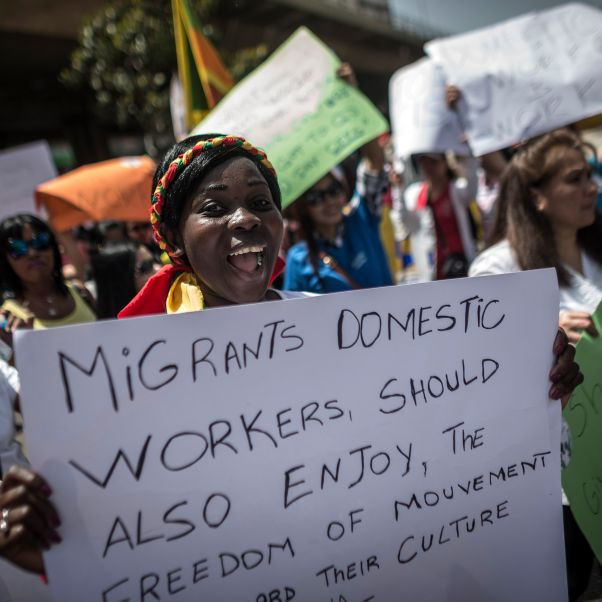
The Committee on the Protection of the Rights of All Migrant Workers and Members of their Families this afternoon concluded its forty-first session after adopting concluding observations on the reports of Honduras, Indonesia and Mauritania on their implementation of the International Convention on the Protection of the Rights of All Migrant Workers and Members of Their Families.
The concluding observations will be available on the webpage of the session in the coming days.
Fatimata Diallo, Committee Chair, in her closing remarks for the session, said xenophobia was a growing and deeply worrying problem that required a thorough and thoughtful analysis. This was why the Committee and the Committee on the Elimination of Racial Discrimination had decided to tackle this issue by developing joint general recommendations thirty-eight and thirty-nine and general comments seven and eight, which presented general and thematic guidelines on the elimination of xenophobia against migrants and persons perceived as such.
Ms. Diallo said these documents reaffirmed a central message: xenophobia was not inevitable. It could be prevented, combatted and eradicated through evidence-based public policies, inclusive and respectful discourse, the meaningful participation of migrants and affected communities, and a strong commitment to the principles of equality, non-discrimination and human dignity for all.
The Convention was currently the least ratified of the core international human rights treaties, with only 60 States parties, Ms. Diallo said. She called on all States to engage in dialogue with the Committee to explore opportunities for ratifying this essential instrument and to reaffirm their commitment to protecting the rights of all migrant workers and their families.
In closing remarks, Ms. Diallo extended thanks to all persons who cooperated with the Committee during the busy session, and to all persons who contributed to making it successful. She said that her mandate was coming to an end and she would not physically be with the Committee in its next session in May, but would always be with the Committee in her heart.
The official dates of the forty-second session of the Committee have not yet been announced; they will be available once confirmed on the Committee’s website.
Statement
FATIMATA DIALLO, Committee Chair, said xenophobia was a growing and deeply worrying problem that required a thorough and thoughtful analysis. This was why the Committee and the Committee on the Elimination of Racial Discrimination had decided to tackle this issue by developing joint general recommendations thirty-eight and thirty-nine and general comments seven and eight. These aimed to ensure that xenophobic and racist speech and practices, as well as intersecting forms of discrimination, were prevented, combatted and eliminated, and that the human rights of migrants and persons perceived as such were fully protected.
Around the world, migrants were increasingly portrayed as threats, criminals or security concerns. These narratives distorted reality, exacerbated prejudices, and obscured the humanity and economic contribution of migrants to development. It was imperative to remedy this. These narratives were being repeated by public figures and amplified by the media and digital platforms, presenting migrants as dangers rather than as members of communities.
Xenophobia and racial discrimination resulted in human rights violations, often serious and tangible, such as forced and collective expulsions, arbitrary detention, torture, ill-treatment, racial profiling, and denial of access to fundamental economic, social and cultural rights. The joint recommendations emphasised that these harms were not isolated incidents, but were rather part of a larger pattern shaped by discriminatory laws, policies and practices that restricted rights based on migration status, nationality, race, ethnicity, gender and other grounds.
The joint general recommendations and general comments reaffirmed a central message: xenophobia was not inevitable. It could be prevented, combatted and eradicated through evidence-based public policies, inclusive and respectful discourse, the meaningful participation of migrants and affected communities and a strong commitment to the principles of equality, non-discrimination and dignity for all.
The joint general recommendations and general comments also addressed how border externalisation – whereby States transferred their migration controls to other regions to prevent the arrival of migrants and refugees – affecting the human rights of people on the move. The externalisation of borders reinforced discriminatory policies and narratives that disproportionately targeted and harmed people from Africa, Central and South America and South Asia. It undermined migrants' ability to enjoy basic human rights, including the right to seek asylum and due process guarantees.
In recent decades, the hardening of safe and regular migration pathways had made irregular migration a structural reality of human mobility. For many people, irregular entry was not a choice, but one of the few means available to exercise their right to leave their country and seek asylum, to be reunited with their families, or to obtain protection from irreparable harm. Irregular status was therefore not a crime; it was an indicator of vulnerability, often linked to the deprivation of rights.
Xenophobic rhetoric and punitive migration policies were also mutually reinforcing, leading to deportations based solely on irregular status, often without due process guarantees. These measures had a devastating impact on multiple rights, including those of children, who should never be separated from their parents or primary caregivers. In cases of irregular entry or stay, States needed to prioritise alternatives to deportation, including regularisation pathways based on human rights obligations, such as family or community ties.
The Convention was currently the least ratified of the core international human rights treaties, with only 60 States parties. Increasing the number of ratifications remained a priority for the Office of the High Commissioner for Human Rights. Yet, many States that had not ratified the Convention had already committed themselves to comparable obligations under other human rights treaties, which reflected many of the fundamental rights of the Convention.
Ms. Diallo called on all States, including those that had signed but not ratified the Convention, to engage in dialogue with the Committee and the Office of the High Commissioner to explore opportunities for ratifying this essential instrument and to reaffirm their commitment to protecting the rights of all migrant workers and their families.
Reviewing the activities carried out by the Committee during the forty-first session, Ms. Diallo said that, on 1 December, Antti Korkeakivi, Head of the Treaty Bodies Branch of the Office of the High Commissioner, opened the session on behalf of the United Nations Secretary-General. The Committee also held its public meeting with civil society organizations and national human rights institutions, in connection with the consideration of the reports for Mauritania, Indonesia and Honduras as well as the adoption of the list of issues and lists of issues prior to reporting concerning Colombia, Albania and Uganda.
Ms. Diallo thanked all parties who participated in this meeting, as well as the United Nations agencies and specialised organizations that briefed the Committee in private in relation to the countries under review. She also thanked the Governments of Mauritania, Indonesia and Honduras for their participation in dialogues with the Committee during the session.
During the session, the Committee adopted, under the traditional procedure, a list of issues relating to the report of Colombia, as well as, under the simplified procedure, lists of issues prior to reporting for Albania and Uganda on the implementation of the Convention.
On 3 December, Mr. Korkeakivi and Elena Kountouri, Secretary of the Chairpersons of the treaty bodies, briefed the Committee in private on the impact of the liquidity crisis and on the treaty bodies and the status of the High Commissioner's implementation of the Secretary-General's “United Nations 80” reform. They stressed the seriousness of the crisis and the need for members of the Committee to think of innovative solutions to implement the Committee’s mandate. There was an increasingly limited number of human rights specialists, which meant that Committee Experts needed to be more involved in the drafting of concluding observations, as well as of lists of issues and lists of issues prior to reporting.
On the afternoon of 5 December, the Committee publicly launched the joint general recommendations thirty-eight and thirty-nine of the Committee on the Elimination of Racial Discrimination and its general comments seven and eight, which presented general and thematic guidelines on the elimination of xenophobia against migrants and persons perceived as such. This event was a success, with quality interventions from the panellists and participants.
Ms. Diallo said that Committee Expert Edgar Corzo Sosa had taken a relevant initiative to prepare a proposal for draft guidelines on enforced disappearances in the context of migration. She further reported that she had met with Mahamane Cissé-Guoro, Director of the Human Rights Council and Treaty Mechanism Division, Office of the High Commissioner for Human Rights, on 4 December to discuss the severe liquidity crisis, which was forcing the Committee to rely on its own advocacy and mobilise its own resources to implement its activities.
Ms. Diallo reported that the focal points of the Committee’s working groups had provided the Committee with an update on the activities they had undertaken between sessions. The Committee also discussed innovative strategies that would help increase the number of ratifications of the Convention and encourage States that were significantly behind to submit their reports. The relevant working group would spare no effort in implementing these recommendations.
Further, she said the Secretariat had presented for consideration a provisional list of States parties to be examined at the forty-second and forty-third sessions. Rapporteurs had also been identified for this purpose. This list was subject to amendment, given human resource constraints.
In closing remarks, Ms. Diallo extended thanks to all persons who had cooperated with the Committee during the busy session, and to all persons who had contributed to making it successful. She said that her mandate was coming to an end and she would not physically be with the Committee in its next session in May, but would always be with the Committee in her heart.
_______________
Produced by the United Nations Information Service in Geneva for use of the media;
not an official record. English and French versions of our releases are different as they are the product of two separate coverage teams that work independently.
CMW25.011E