

Committee on Enforced Disappearances Opens Thirty-First Session
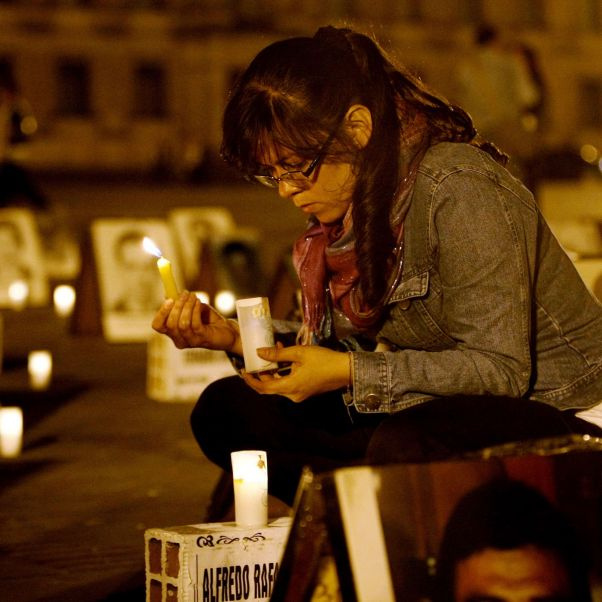
The Committee on Enforced Disappearances this morning opened its thirty-first session, during which it will examine the reports of Armenia, Belize, Lesotho and Gabon on their implementation of the provisions of the International Convention on the Protection of All Persons from Enforced Disappearance.
The Committee will also adopt lists of priority themes for Colombia, Cuba, Italy and Paraguay; consider its periodic report on urgent actions; discuss the draft of its second general comment on the impact of enforced disappearances on women and girls; and continue work with the Working Group on Enforced or Involuntary Disappearances on a joint statement concerning enforced disappearances in the context of transnational repression.
Opening the session, Wan Hea Lee, Chief of the Civil, Political, Economic, Social and Cultural Rights and Urgent Actions Section, Human Rights Treaties Branch, Office of the High Commissioner for Human Rights, and Representative of the Secretary-General, said since the last session, the Committee had registered 147 new urgent actions, bringing the total to 2,386 cases. More than 150 cases had also received follow-up during this period. The messages received by the Committee from families were a powerful reminder of the tangible impact of the Committee’s work. They spoke of the hope, strength and international oversight that the Committee provided in their search for truth and justice.
This impact was also reflected in the cases that were successfully closed. Since the last session, 28 cases had been closed, bringing the total number of disappeared persons located since the beginning of the procedure to 574, including 437 found alive. At the same time, the Committee faced a significant backlog, with around 300 urgent-action cases currently awaiting follow-up because of limited human resources. However, the continuing liquidity crisis had affected the Office of the High Commissioner’s ability to plan and support treaty body sessions and country visits, which required long-term and predictable planning. It was regretful that no country visit by the Committee could be organised this year.
Juan Pablo Albán Alencastro, Committee Chairperson, in his opening statement, said the Convention was not created simply to describe enforced disappearance, but to prevent and eradicate it. Twenty years later, it was important to ask whether it was effective in practice; whether disappearances immediately triggered searches; whether every deprivation of liberty was properly recorded; whether those searching were protected from reprisals; whether investigations identified and punished those responsible; whether victims received truth, justice and reparation; and whether new disappearances were being prevented. The gap between these commitments and the daily reality of victims remained unacceptable. Closing that gap was the task of the Committee.
Marina Eudes of France made her solemn declaration as a new Committee member, following the early resignation of Olivier de Frouville in June 2026.
During the meeting, Maria Adela Antokoletz, sister of Daniel Víctor Antokoletz, a lawyer defending political prisoners who was a victim of forced disappearance at the hands of the Argentine dictatorship in November 1976, made a video statement to the Committee.
Elias Solís González, Committee Expert, responded to the statement on behalf of the Committee.
All the documents relating to the Committee’s work, including reports submitted by States parties, can be found on the session’s webpage. Webcasts of the meetings of the session can be found here, and meetings summaries can be found here.
The Committee will next meet in public at 3 p.m. on Monday, 14 September, to review follow-up to and additional information on the periodic report of Armenia (CED/C/ARM/AI/1).
Statements
WAN HEA LEE, Chief of the Civil, Political, Economic, Social and Cultural Rights and Urgent Actions Section, Human Rights Treaties Branch, Office of the High Commissioner for Human Rights, and Representative of the Secretary-General, expressed appreciation for the Committee’s continued dedication to the implementation of the Convention. Ms. Lee acknowledged the transition within the Committee following the resignation of Olivier de Frouville last June, and the subsequent nomination of Marina Eudes of France to serve for the remainder of his term, until 30 June 2027.
The global situation today was deeply concerning. Enforced disappearance remained a widespread and evolving phenomenon, affecting individuals and communities across many parts of the world. Since the last session in March, the Committee had registered 147 new urgent actions, bringing the total to 2,386 cases. More than 150 cases had also received follow-up during this period. Behind every case was a person whose fate or whereabouts remained unknown, and a family living with uncertainty, anguish and often profound socioeconomic consequences. The messages received by the Committee from families were a powerful reminder of the tangible impact of the Committee’s work. They spoke of the hope, strength and international oversight that the Committee provided in their search for truth and justice.
This impact was also reflected in the cases that were successfully closed. Since the last session, 28 cases had been closed, bringing the total number of disappeared persons located since the beginning of the procedure to 574, including 437 found alive. At the same time, the Committee faced a significant backlog, with around 300 urgent-action cases currently awaiting follow-up because of limited human resources. While the Committee had sent follow-up notes relating to 498 registered requests since the last session, there remained an urgent need to ensure capacity within the Committee and the Secretariat to fill its mandate.
The need for additional meeting time and human resources for the Committee to fulfil its mandate was well known. However, the continuing liquidity crisis had affected the Office’s ability to plan and support treaty body sessions and country visits, which required long-term and predictable planning. It was regretful that no country visit by the Committee could be organised this year.
Treaty bodies were operating in a rapidly changing global and political environment, in which respect for international law and human rights commitments was increasingly challenged. While addressing immediate financial challenges, it was important to consider how to strengthen the treaty body system over the longer term, and the Office had put forward three proposals in this regard, with the Committee invited to consider their feasibility and potential impact.
Ultimately, meaningful reform would require Member States to provide adequate, predictable resources commensurate with the treaty bodies’ vital role in the global human rights protection architecture. The session also formed part of the activities marking the twentieth anniversary of the Convention, an opportunity to reflect on progress and renew collective commitment to preventing enforced disappearances, combating impunity, and ensuring truth, justice and reparations for victims. The Committee would hold a public event on 24 September to commemorate this anniversary. Ms. Lee wished the Committee a successful session.
JUAN PABLO ALBÁN ALENCASTRO, Committee Chairperson, said it was an honour to declare open the thirty-first session of the Committee, welcoming Marina Eudes, and expressing gratitude to Olivier de Frouville for his contributions to the Committee. Looking ahead to the June 2027 elections, Mr. Albán Alencastro appealed to States parties to put forward sufficient numbers of qualified candidates. The Convention required members of integrity and expertise who acted independently and impartially, while ensuring regional and gender balance. This year marked the twentieth anniversary of the adoption of the Convention. Yet enforced disappearances continued, used to repress and intimidate, in armed conflict and beyond, cross borders, and could involve non-State actors. Behind every case was the same reality: people removed from the protection of the law, and families condemned to uncertainty and searching.
The Convention was not created simply to describe enforced disappearance, but to prevent and eradicate it. Twenty years later, it was important to ask whether it was effective in practice; whether disappearances immediately triggered searches; whether every deprivation of liberty was properly recorded; whether those searching were protected from reprisals; whether investigations identified and punished those responsible; whether victims received truth, justice and reparation; and whether new disappearances were being prevented. The gap between these commitments and the daily reality of victims remained unacceptable. Closing that gap was the task of the Committee. The Convention provided concrete tools which needed to be used rigorously, prudently and independently.
During this session, the Committee would continue working with the Working Group on Enforced or Involuntary Disappearances, ensuring that the Convention remained effective against contemporary forms of enforced disappearance. The Committee was also expected to complete general comment no. two on the impact of enforced disappearances on women and girls. Over the next two weeks, the Committee would examine compliance by Armenia, Lesotho, Gabon and Belize; prepare for future consideration of Colombia, Cuba, Italy and Paraguay; assess developments under the urgent action procedure; follow up on the Committee’s Views; and continue reviewing its working methods and cooperation with the Working Group. All these activities served one fundamental question: 20 years later, was the Convention working for those who needed its protection? The Committee would pay tribute to victims and conclude the session on 24 September by commemorating the Convention's twentieth anniversary.
Twenty years after the Convention's adoption, the question was no longer whether it was necessary. The question was whether it was effective, through timely searches, diligent investigations, accountability, protection of those who sought justice, and, above all, the prevention of new disappearances. The challenge of the anniversary was to ensure that the legal promise made in 2006 transformed reality in 2026.
MARIA ADELA ANTOKOLETZ, sister of Daniel Víctor Antokoletz, a lawyer defending political prisoners who was a victim of enforced disappearance at the hands of the Argentine dictatorship in November 1976, provided a video statement to the Committee. Ms. Adela Antokoletz said her brother had gone missing many years ago, along with millions of people around the world. Daniel and his wife were both abducted and disappeared in November 1976 in Buenos Airies and her brother was never seen again, while his wife was released. Initially, the family had gone out searching at the morgue, universities and churches to find him. However, they had had to adopt the expression “disappeared” to describe the situation. It was a very painful situation which ignited her work to reach the truth and justice through peace and memory.
Her mother had been one of the founders of the movement Mothers of Plaza de Mayo, which had taught the family many things about being victims and searching. The family created a federation which continued to work actively until this day. Working together at the regional and international level was the only way to reduce the perpetration of enforce disappearances. It was important to call for peace, resistance and unity. Ms. Adela Antokoletz thanked the Committee for all their work. The twentieth anniversary of the Convention drove the continuation of seeking the eradication of enforced disappearance throughout the world.
In response to the statement, ELIAS SOLÍS GONZÁLEZ, Committee Expert, said 2026 marked the twentieth anniversary of the Convention, which reminded all that this was painfully present in all parts of the world. The moving testimony of the sister of Daniel Víctor Antokoletz personified the living memory of one of the pages of contemporary history. Daniel was a prominent Argentinian lawyer who was abducted by the military dictatorship who ruled in Argentina and taken to the navy mechanical school and disappeared. Maria Adela Antokoletz’s tale and succession of events since Daniel’s disappearance reminded all of the historic role of searcher families, including wives and sisters. There was no justification for the crime of enforced disappearance. The Committee reaffirmed that enforced disappearance constituted a disgrace to all humanity.
Twenty years after the adoption of the Convention, the Committee faced an alarming persistence of the scourge through new complex dynamics. This included enforced disappearance in migratory flows, organised crime, structural impunity, and the lack of registers which hindered the immediate location of victims. The United Nations’ liquidity crisis further hindered the Committee’s actions. Living up to the Committee’s recommendations should be translated into public policies to make them effective. The Committee had a crucial role as an oversight mechanism which required the support of civil society organizations. Each victim had the inalienable right to note the circumstances of disappearances, developments of the investigations and the whereabouts of the disappeared person. The Committee reaffirmed its unbreakable commitment to continue to sanction the crime of enforced disappearance.
___________
Produced by the United Nations Information Service in Geneva for use of the media;
not an official record. English and French versions of our releases are different as they are the product of two separate coverage teams that work independently.
CED26.007E