
Experts of the Committee on the Protection of the Rights of All Migrant Workers Hail Mauritania’s Efforts to Overcome Migration Challenges, Raise Questions on Bilateral Agreements on Migration and the Deportation of Irregular Migrants
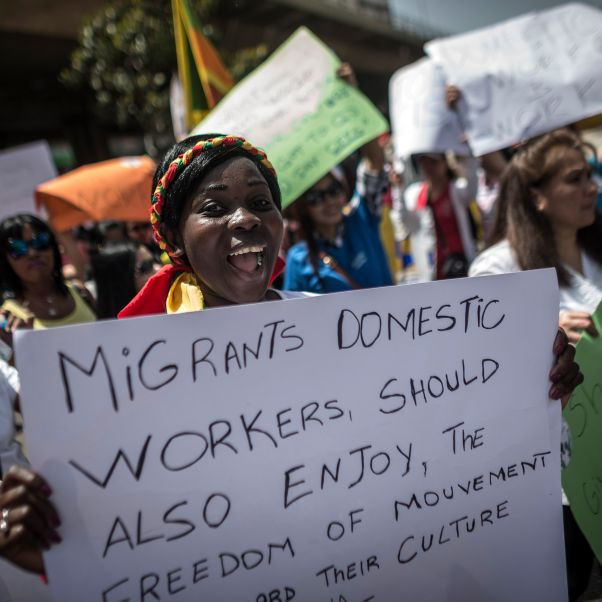
The Committee on the Protection of the Rights of All Migrant Workers and Members of their Families today concluded its consideration of the second periodic report of Mauritania. Committee Experts commended the State on efforts made to overcome challenges relating to migration, while asking questions about Mauritania’s bilateral agreements on migration and about the deportation of irregular migrants.
Fatimata Diallo, Committee Chair and Country Co-Rapporteur, hailed the efforts of the Mauritanian Government to overcome challenges relating to migration. The State had a huge coastline and was close to Western States such as Spain, which brought about specific challenges. Ms. Diallo also appreciated the adoption and reinvigoration of the national strategy on migration which was recently renewed, and acknowledged efforts in endorsing a national strategy for inclusion and a national strategy to combat gender-based violence, both in 2024.
Mamane Oumaria, Committee Expert and Country Co-Rapporteur, said Mauritania had signed an agreement with the European Union to provide for safe, orderly and regular migration, which was a positive stride. However, some claimed this was an attempt to prevent irregular migrants from crossing to the Canary Islands. Had the State party managed to assess the impact of the agreement? Was it fit for purpose? Had it resulted in the curbing of irregular migration?
Myriam Poussi, Committee Expert and Country Co-Rapporteur, said information received by the Committee suggested that Mauritania had become a central point of the externalisation of the European Union’s borders, and that illegal deportations were occurring regularly. The Committee had been informed that these had devastating impacts on individuals and human rights. Could the delegation comment on these allegations? Regarding the agreements signed with the European Union and Spain, did they apply independent oversight?
Ms. Poussi also said that according to reports, 16,000 migrants in an irregular situation had been deported in the first half of this year. What nationality were these individuals? Were their cases studied on an individual basis, as per the Convention? If this was not the case, why was Mauritania not able to comply with the Convention’s provisions?
The delegation said Mauritania had bi and multilateral agreements in place to facilitate movement, including with Spain, Senegal and the European Union. The agreements with the European Union were clear and transparent. No European Union national had been deported to Mauritania.
The delegation said Mauritania had done its utmost to facilitate the regularisation of migrants, including through distributing free of charge identification cards to over 6,000 migrants. The number of checkpoints had been increased, from more than 50 to 82. Four centres had been opened to assist migrants, and associations had been opened in larger cities. The case of each migrant was studied individually; there was no collective expulsion. During an individual interview, a migrant could ask for a defence lawyer.
Ahmed Ely Benane, Commissioner for Human Rights, Humanitarian Action and Relations with Civil Society of Mauritania and head of the delegation, presenting the report, said migration had long formed an integral part of Mauritania’s social fabric, through the waves of migration from neighbouring countries and the coexistence of migrant communities. The national migration strategy was revised in 2025, with a new plan for 2026-30 under preparation. The social protection strategy now included a dedicated migration chapter. A major regularisation campaign in 2022 resulted in nearly 147,000 foreign citizens obtaining residence permits. Despite progress, challenges remained, including pressures from irregular migration, a sharp increase in refugees due to instability in the Sahel, limited resources, and the need for stronger institutional coordination and expanded integration programmes.
In concluding remarks, Ms. Poussi said the answers had been clear, well-structured and covered all questions raised by Committee members. Mauritania faced many complex problems related to migration, but the State was doing its best to tackle these issues.
In his concluding remarks, Mr. Ely Benane thanked the Committee Experts for their flexibility and the dialogue. The Committee could be assured that Mauritania’s actions for migrants were for history and for the future.
The delegation of Mauritania was comprised of the Special Advisor to the President, the Advisor to the Prime Minister, and representatives from the Commission for Human Rights, Humanitarian Action and Relations with Civil Society; the National Authority for Combatting Trafficking in Persons; the Ministry of the Interior and Decentralisation; the Ministry of Social Affairs, Children and Family; the Ministry of Foreign Affairs, African Cooperation and Mauritanians Abroad; and the Permanent Mission of Mauritania to the United Nations Office at Geneva.
The webcast of Committee meetings can be found here. All meeting summaries can be found here. Documents and reports related to the Committee’s forty-first session can be found here.
The Committee will next meet at 10 a.m. on Wednesday, 3 December to conclude its consideration of the second periodic report of Indonesia (CMW/C/IDN/2).
Report
The Committee has before it the second periodic report of Mauritania (CMW/C/MRT/2).
Presentation of Report
AHMED ELY BENANE, Commissioner for Human Rights, Humanitarian Action and Relations with Civil Society of Mauritania and head of the delegation, said migration had long formed an integral part of Mauritania’s social fabric, through the waves of migration from neighbouring countries and the coexistence of migrant communities. The country viewed the protection of migrant workers and their families as a legal and moral obligation, as well as a shared responsibility for development. Mauritania hosted nearly 400,000 refugees, mainly from Mali, who enjoyed guarantees such as access to civil status documents, the labour market, education, health care and income-generating opportunities, in line with commitments made at the 2023 Global Refugee Forum.
In recent years, Mauritania had strengthened its legislative and institutional systems to enhance the protection provided to migrants, and had introduced harsher penalties for those who violated these rules. The Child Protection Code guaranteed all children, including migrant children, the right to education, health and protection, while labour laws ensured equal treatment, access to justice, and professional safeguards for workers. The institutional framework was further enhanced by the creation of a specialised court in 2024 to combat slavery, trafficking and migrant smuggling, as well as by expanding the capacities of the National Authority for Combatting Trafficking and Smuggling and the Office for International Legal Assistance.
The national migration strategy was revised in 2025, with a new plan for 2026-30 under preparation. The social protection strategy now included a dedicated migration chapter. A major regularisation campaign in 2022 resulted in nearly 147,000 foreign citizens obtaining residence permits. Migrant children benefited from school integration measures, preschool support, and access to public education irrespective of residence status. Between 2017 and 2024, courts had examined 183 trafficking cases, resulting in 103 convictions, with special care provided to victims. The State gave greater protection to migrant children by improving their education, especially for those who were unaccompanied.
Mauritania ensured free medical care for migrants, and was improving access to the justice system through hiring more than 30 interpreters. Training had been improved for judges and other legal professionals on the rights of migrants.
Abroad, 46 diplomatic and consular missions monitored the situation of Mauritanian communities that were represented by four members of parliament. Fifty-two polling stations enabled the Mauritanian diaspora to vote in the county’s elections.
Recognising the cross-border nature of migration, Mauritania had developed several bilateral and regional partnerships, including an agreement with Spain (2024), a mobility agreement with Senegal (2025), and a joint declaration with the European Union (2024) to encourage regular migration. The Government had also undertaken awareness campaigns on the dangers of irregular migration, involving 1,800 stakeholders, with a budget of 450 million ouguiyas dedicated to these activities.
Despite progress, challenges remained, including pressures from irregular migration, a sharp increase in refugees due to instability in the Sahel, limited resources, and the need for stronger institutional coordination and expanded integration programmes. Future priorities included strengthening labour inspection, improving reception infrastructure, enhancing cooperation with countries of origin and transit, and increasing protection for victims. The State also needed to step up efforts to combat human trafficking
The United Nations Special Rapporteur on the human rights of migrants had visited Mauritania in 2025 and recognised the State’s significant progress, highlighting its advanced legal framework, the specialised court, reception centres, and protection mechanisms. The Special Rapporteur also underscored the State’s sincere political will and urged increased international support. Concluding, Mr. Ely Benane reaffirmed Mauritania’s commitment to protecting migrant workers and their families.
Questions by Committee Experts
MAMANE OUMARIA, Committee Expert and Country Co-Rapporteur, acknowledged the efforts made by Mauritania to strengthen its legal arsenal and to implement the Convention. The State had adopted a number of laws and established various institutions and mechanisms, including the specialised court for combatting slavery. This clearly showed there was political will in Mauritania to combat and prevent these practices, and to fully implement the Convention. Had these legal and institutional reforms been evaluated? Had civil society been involved in these evaluations? What landmark rulings had been handed down by the specialised court? Could the State party comment on reports from civil society on migrants unequal access to housing loans?
Mauritania had signed an agreement with the European Union to provide for safe, orderly and regular migration, which was a positive stride. However, some claimed this was an attempt to prevent irregular migrants from crossing to the Canary Islands. Had the State party managed to assess the impact of the agreement? Was it fit for purpose? Had it resulted in the curbing of irregular migration? Were there any mechanisms in place for regular migrants? Was there a clearly defined process for those who returned?
MYRIAM POUSSI, Committee Expert and Country Co-Rapporteur, said Mauritania was facing an unprecedented migratory crisis. The Mauritanian authorities were working to try and respond appropriately to the many challenges facing the country due to migration. Ms. Poussi thanked the State for its readiness to make progress and appealed to them to further implement the Convention.
Of the five goals of the national strategy for migration management, which had been achieved? Which was facing the most issues? What solutions could be addressed to overcome these? What migration management agreements were in place with neighbouring countries such as Mali and Algeria? Could information on combatting terrorism and organised crime be provided? Could the delegation explain any activities being undertaken to combat human trafficking? What were the main bodies involved in managing migration and how did they communicate? What were the other coordination mechanisms?
How was the national database or register used to ensure protection from human trafficking? Did the State believe the budget earmarked for the fund for victims of trafficking enabled it to operate appropriately? How many people benefitted from the fund? Could regular and irregular migrant workers and their families benefit from this fund?
What was the situation regarding the registration of foreign nationals living in Mauritania? How large was the Mauritanian diaspora living abroad? A registration process would enable the Committee to have more detailed information on the diaspora. Migrant workers holding a resident’s permit were meant to be protected from deportation or refoulment. Could more information on this situation be provided?
According to reports, 16,000 migrants in an irregular situation had been deported in the first half of this year. What nationality were these individuals? Were their cases studied on an individual basis, as per the Convention? If this was not the case, why was Mauritania not able to comply with the Convention’s provisions? Could more details about regional cooperation on migration issues be provided?
Information received by the Committee suggested that Mauritania had become a central point of the externalisation of the European Union’s borders, and that illegal deportations were occurring regularly. The Committee had been informed that these had devastating impacts on individuals and human rights. Could the delegation comment on these allegations? Regarding the agreements signed with the European Union and Spain, did they apply independent oversight?
FATIMATA DIALLO, Committee Chair and Country Co-Rapporteur, hailed the efforts of the Mauritanian Government to overcome challenges relating to migration. The State had a huge coastline and was close to Western States such as Spain, which brought about specific challenges. Ms. Diallo appreciated the adoption and reinvigoration of the national strategy on migration which was recently renewed and acknowledged efforts in endorsing a national strategy for inclusion and a national strategy to combat gender-based violence, both in 2024. The country’s national human rights institution benefitted from A status, according to the Paris Principles. The Committee noted Mauritania’s efforts and appreciated them.
The State had ratified 143 of the International Labour Organization Conventions but needed to ratify Conventions 187 and 189; was the Government considering ratifying these Conventions? How many children were currently involved in the worst forms of child labour and what was in place to bring an end to this? Would the State meet the goal of eliminating the worst forms of child labour by 2025? It was prohibited to conduct a collective expulsion; there was an obligation for any deportation decision to ensure a right to appeal or to suspend the procedure when justified. How was it ensured that deportation was in line with legislation, and that the Government was taking steps to ensure that legislation was in line with the Convention?
Could more information about the contents of the agreements with France and Spain be provided? How many migrants had been able to extend their stay when they were victims of human smuggling? How was migratory status regularised in Mauritania? What procedures were in place to ensure there was full diplomatic assistance to migrants abroad? How many migrants had been the subject of deportations? Had they benefitted from consular support from Mauritania? How many court rulings concerned migrant workers or their family members? What procedures were in place to ensure migrant workers had access to justice and administrative remedies? Had Mauritania experienced the phenomena of climate migrants? What measures had the country taken to mitigate the impact of climate displacement?
What measures had been taken by the Government to protect migrants trying to reach the United States via central America, which was a dangerous route? Had the State taken any measures to facilitate the return of Mauritanian citizens to their country, following the change in United States migration policy?
A Committee Expert said Mauritania had a change in migratory routes in recent times. Mauritania had made huge efforts in strengthening its legal arsenal to react to these changes, which should be congratulated. How would the State implement all the laws which had been adopted? How did the State’s holding centres operate? How were projects integrated into local and regional developments?
Another Committee Expert thanked Mauritania for sending a large delegation, which reflected its commitment to monitoring its international obligations. Major efforts had been made to combat slavery, including the adoption of special laws and the creation of a specialised court. It seemed as though the State equated slavery to human trafficking. What results had been obtained by including slavery as one of the ways of exploiting trafficked persons?
The Expert had read the closing remarks made by the United Nations Special Rapporteur on the human rights of migrants, which contained positive comments regarding Mauritania’s governance of the issue of migration. However, a number of concerns had also been raised. The Special Rapporteur had stated that migrants were sometimes arrested at home or at work without any explanation. Their documents were destroyed and their phones taken, and they were prevented from contacting their family members. Deportation often occurred soon after arrest, without the victims being given a chance for remedies. Women migrants often suffered sexual abuse in midnight raids by police. Furthermore, on occasion, unaccompanied minors were allegedly placed in centres, which did not offer the adequate safeguards. Could Mauritania comment on these concerns, in the context of responding to the Committee and not to the Special Rapporteur?
Another Expert asked about the Mauritanian nationals in the Canary Islands, particularly unaccompanied children. How did they receive access to identity documents? What cooperation initiatives were in place? Many people who took this route disappeared or died or were subject to abuse. What rescue operations were in place? Were the agreements between Spain and Mauritania public? How were the joint unions developed? What was the responsibility of each entity? To what extent did individuals have an alternative to deportation and detention?
Where were migrants deprived of their liberty? Were children or family members also held in these centres? Could civil society organizations enter these centres to assess the conditions? Had there been any kind of investigation into complaints by deportees? What had the outcome been? What was the legal status of persons living in one of the major refugee camps? What protection mechanisms were in place for those in irregular situations in the fishing industry? How could they regularise their situation? How were migrant children ensured access to education?
Another Committee Expert asked how involved civil society organizations were in adoption processes? What was the new adoption action plan and how had civil society contributed to this plan? What was the main obstacle to ratifying the International Labour Organization Conventions? What were the results of the creation of the specialised court? How many cases had been solved? Had training for judges been organised? Was the national preventive mechanism able to visit places where migrants were detained?
It was good that Mauritania had a bilateral agreement with Spain. Had other bilateral agreements been signed with other States? How did Mauritania inform its citizens on their rights abroad? Were there statistics on those who had been repatriated from Spain? How did the State assist these people? There was information that there were around 50,000 people in refugee camps in Mauritania. What were the conditions in these places? How many people were detained for immigration reasons? What access to remedies did they have?
An Expert recognised Mauritania’s critical place in Western Africa in relation to migratory routes. There was a feeling among many stakeholders that countries in southern Europe were trying to externalise their human rights obligations with those in some African countries. What actions did the State take when they negotiated treaties with European countries to ensure that the provisions of such agreements were in line with the Convention?
Another Expert asked how many consular services had been provided, particularly in countries with a lot of migrant workers from Mauritania? How many Mauritanians were abroad and how many participated in voting? How many migrant workers returned to Mauritania and how were they able to open businesses when they returned? What kind of knowledge did they bring after working abroad?
Responses by the Delegation
AHMED ELY BENANE, Commissioner for Human Rights, Humanitarian Action and Relations with Civil Society of Mauritania and head of the delegation, said Mauritania’s geographic location put it in a strategic position at the crossroads of continents. Mauritania was at the forefront of the migration phenomenon and acted in line with human dignity. The State was currently implementing the national strategy for migration, and the majority of measures with the plan had been actioned. The plan was being updated for 2026 to 2030. Standard operating procedures had been established, including rescues at sea, disembarkation and care for migrants. The State had been treating migrants in line with its international commitments. Border control had been improved, respecting multilateral agreements.
When migrants were detained in Mauritania, they were often those who entered in a clandestine fashion, avoiding the 80 border posts in the country, and were trying to take a clandestine route to Europe. Often migrants arrived from Senegal, Gambia and other countries and started their journey to the Canary Islands. However, due to the conditions at sea, they often ended up in Mauritanian waters, where Mauritania received them and provided them with support. When these migrants arrived, they were provided with care and first aid, before going through pre-screening to ascertain analytical data. They were then referred to reception centres. Unaccompanied minors and vulnerable people such as pregnant women were given special attention.
A second, more detailed screening would allow the State to understand the status of these migrants, to determine if temporary residence needed to be granted. Centres were open to visits from the National Human Rights Commission or the Office of the High Commissioner for Human Rights at any times to assess the conditions. There was a hotline and two platforms to receive complaints from migrants. There was a special system of protection for unaccompanied children.
Migrants in Mauritania used the country as one of transit, not destination. Mauritania had welcomed them in a state of despair and rescued, housed and fed them. The State did what it could with the resources it had. In cases of deportations, migrants were taken to border posts where the country in question had security forces, and the migrants were handed over. There were no detention centres for migrants, but rather reception centres. Those in an irregular situation were also hosted in these centres. The State tried to avoid the practice of taking migrants directly to the border
Migrant workers in Mauritania had the same rights as its nationals, in terms of health care, and also had access to education and could join trade unions. They were also able to transfer money abroad, and partnerships were in place with banks to ensure migrants could send and receive money safely.
Mauritania had bi and multilateral agreements in place to facilitate movement, including with Spain, Senegal and the European Union. The agreements with the European Union were clear and transparent. No European Union national had been deported to Mauritania. Mauritania had 400,000 Malians in the country, with more arriving each day due to the insecurity in the Sahel. Mauritania welcomed these people with pleasure and helped them using its own resources.
The delegation said temporary reception centres hosted migrants and reviewed the appropriate decisions for each case. A newly created centre hosted migrants who had been victims of trafficking. The Government had a comprehensive mechanism for the protection of unaccompanied minors. The protection centres existed across the country and were used to host unaccompanied minors. A relevant decree regarding migrants ensured protection was implemented with respect to the rights of children, ensuring that minors would be provided with appropriate accommodation.
The delegation said the National Commission for Human Rights was established as per Mauritania’s Constitution and was independent and regulated by a law formulated in 2017. The Commission had an “A” rating, ensuring its commitment to the Paris Principles. It was able to verify that living conditions of migrants were in line with relevant human rights criteria and could intervene at all stages of migration. The National Mechanism against Torture had been operational since 2016. The Government of Mauritania had also established a national independent commission on the protection of the rights of women and girls.
Successive reforms regarding slavery since 2012 had strengthened the protection of victims and improved legislative harmony with international standards. Slavery had been permanently abolished within the country and was now considered to be a crime against humanity. The creation of a specialised tribunal had allowed for the treatment of trafficking and slavery together, when this had previously been treated differently. The elimination of the jury strengthened the independence of the specialised tribunal. The presence of jurors who were not specialised, and could be subject to community pressure, had brought inconsistency to the rulings. The legal framework today was clearer, more complete and better articulated with Mauritania’s international commitments.
As of January 2025, the specialised tribunal for combatting trafficking and slavery had handed down decisions on more than 140 cases. Numerous cases had been set aside due to insufficient evidence, among other reasons. A draft law on migration was currently making its way through the legislature, which set forth the legal framework governing entry, regulation and departure from the country.
The International Affairs Office was an essential link in Mauritania’s international coordination, and ensured prompt legal security, conforming with international commitments. The Office sent along requests for legal assistance and ensured follow-up. The initial training for judges and prosecutors had been provided by the school for judges and magistrates, and ensured ongoing training for these persons.
Regarding the conclusions by the Special Rapporteur, all cases which involved illegal entry to Mauritania had been detected and the perpetrators punished. A ruling handed down in 2024 condemned two civil servants to prison for involvement in migrant smuggling. Migrant workers enjoyed the same rights and guarantees as Mauritanians, and could lodge complaints before the appeals court and the Supreme Court. Legal assistance was financed under the State budget.
Standard operating procedures only related to migrants who were rescued at sea. There were different kinds of procedures and partnerships in place with the Red Crescent and Red Cross in this regard. A commission coordinated all activities regarding migrants at sea. A unit had been established to coordinate the interventions involving different players on migrants.
Mauritania could only be entered through compulsory checkpoints, of which there were 82. The main role of these check points was to facilitate the regularisation of the situation of migrants and monitor entries and exits into the country. There were several bilateral points, only open to Mauritanians and nationals of the country concerned, such as the agreement between Mali, where only Malians and Mauritania could cross the border under this agreement. A fund for the diaspora would be organised in January 2026. A free of charge census had been conducted of all foreigners in Mauritania.
In 2025, an independent expert had been recruited to assess the national strategy on migration, and had determined that the pillar devoted to the comprehensive management of borders had been the best attained. This was mainly due to adequate funds being received, including from Europe. Receiving Malian refugees remained a challenge. The pillar on education and development had made it possible to launch pilot developments, but this was still limited. These observations would be taken into account in the new action plan which was being prepared.
Mauritania had done its utmost to facilitate the regularisation of migrants, including through distributing free of charge identification cards to over 6,000 migrants. The number of checkpoints had been increased, from more than 50 to 82. Four centres had been opened to assist migrants, and associations had been opened in larger cities. The case of each migrant was studied individually; there was no collective expulsion. During an individual interview, a migrant could ask for a defence lawyer. Around 107,000 refugees were located in a camp, and the rest were spread throughout the country.
There were young people travelling the high seas who had invested a lot of money and seen their migration plans fail. Their first reflex was often to express their pain at the security forces, but they did not realise that the Mauritanian State had actually saved their lives. A group of refugees had expressed thanks to the Government for all the support they received during their time in Mauritania. The Government could not guarantee the safety of the population when they did not know who was entering the country and who was leaving.
A programme was in place which allowed Malians to live with their cattle in different places. Mauritanian migrant workers were covered by the 46 consulars and embassies around the world, which were authorised to provide assistance and support to the diaspora. Since 2019, there had been changes to the law on citizenship, with dual citizenship being accepted. Meaningful effort was underway for those living in the diaspora. Security could not be provided when migrants refused to register themselves as migrants.
The mothers of 500 Mauritanian children who had disappeared had created a forum to launch the search for the disappeared and to raise awareness of the dangers of migration. They had implored the President of the country to ensure no other mother had to endure the pain they had, and to put an end to the trafficking of Mauritanian youth. As a result, a mechanism was being developed to target these traffickers, and the information received from the mothers had enabled the dismantling of a large trafficking network in border towns. Finances had been earmarked to raise awareness of the dangers of clandestine migration.
Clandestine or illegal migration was a widespread phenomenon. The President had launched a multifaceted programme for the promotion of youth, which included the creation of 30,000 jobs and entrepreneurship, aiming to empower the youth so they did not feel compelled to emigrate. Often there were civil servants who were victims of criminal trafficking networks. These networks had a sophisticated marketing strategy which sold a dream.
The Government was committed to a new strategy in the fight against trafficking in persons. An institution had been created which aimed to coordinate and implement policies to combat against the fight against trafficking. This body had regular meetings with all stakeholders involved in trafficking and smuggling in Mauritania, including the body involved in the fights against trafficking and smuggling in migrants. Funds from the Government were allocated in this regard, including to provide lodging and legal support to migrants who were victims of trafficking. A law for these migrants covered reintegration and insertion, giving victims the opportunity to reflect on whether or not they wished to stay in Mauritania.
In Mauritania, there were mechanisms for victim support, provided through the Government as well as civil society. There was a national plan of action for the fight against migrant smuggling. Mauritania had agreements in place with many African countries, including Algeria, Gambia, Mali, Niger and Guinea Bissau, among others, and for European countries there were agreements with Spain, under which 50 agricultural workers operated, and the European Union. The partnership on migration with the European Union had many pillars, including providing assistance to the Mauritanian youth. All of these accords were public.
Questions by Committee Experts
MAMANE OUMARIA, Committee Expert and Country Co-Rapporteur, said Mauritania was a country which had migration imposed upon it due to its geography. Intra-African migration was clearly higher than migration towards Europe. This was something which needed to be taken into account by the authorities.
MYRIAM POUSSI, Committee Expert and Country Co-Rapporteur, asked about the limitation on double nationalities for certain persons; could more information be provided? What was the correct figure for those impacted by the regularisation campaign? Were stay permits renewable, and if so under what conditions?
FATIMATA DIALLO, Committee Chair and Country Co-Rapporteur, said Frontex was active in the sub-region and intervened at the borders; what was its current role in managing migration? How did the Government ensure its interventions strictly respected human rights? What was its role when it came to data collection? It seemed as though there were no court cases relating to access to social rights for migrants; could more information be provided? Could information be provided about the refugees who had been in the country for numerous years? Did they have to stay in the one refugee camp? Were the rights of other groups of migrants, including those who had been in the country for many years, protected?
A Committee Expert said the programmes for young people were very positive. Did these programmes include young people in their design? According to information received by the Committee, Mauritania was one of the rare countries which still practiced slavery to this day; was this true? What was the state of play today?
Another Committee Expert said young people were not just embarking on a voyage for money; it was more complex than that and often related to meritocracy. What was the State doing in public policies to retain Mauritanian youth who wanted to move abroad?
Another Expert asked what type of centres were the “closed centres”? Were children and families also held there? In this complex climate, how was it guaranteed that a person received legal assistance within 72 hours?
An Expert said goldminers in the north of the country used extraction techniques which put their lives at risk; could concrete information and data be provided on this? Regarding the 500 mothers seeking their disappeared children, what were the search criteria in this regard? Had any of the youth been found, alive or dead? What had been done to address these disappearances?
Responses by the Delegation
The delegation said in all criminal matters, the accused were to be provided with legal counsel. If they were unable to afford or choose their own, an attorney needed to be appointed by the court. Other countries, such as Mali and Senegal, regularly received lists of citizens who were detained in Mauritania via diplomatic consulates. The Frontex issue was under discussion; they were not currently working with Mauritania. Refugees in Mauritania could move around freely.
Unaccompanied minors were sent to appropriate support centres for children. The centres had numerous mechanisms to preserve the unity of families and ensure mothers were not separated from their children. Illegal and risky gold sites were being closed down.
The President had a holistic approach to young people, including that they were present within parliament. A mechanism had been established to hold a discussion with Mauritanians abroad. It was difficult to set out specific reasons as to why someone embarked on a migration path; everyone had their own specific reasons. The Mauritanian State was working to create an environment which enabled young people to flourish.
The topic of slavery was a social one which had occurred for decades and had been addressed definitively. It was now a crime against humanity. In Mauritania today, it was extremely rare for there to be cases of slavery. The administration was fully mobilised against slavery. Whenever there was a report or complaint, local authorities carried out an enquiry and went to far flung areas to retrieve the individual and provide them with care.
Mauritania was making tremendous efforts to meet the needs of migrants and needed to develop South-South cooperation in this respect. Mauritania would study the relevant International Labour Organization Conventions, but currently it was not the right time to ratify them.
Closing Remarks
MAMANE OUMARIA, Committee Expert and Country Co-Rapporteur, welcomed the interactive dialogue with Mauritania, which had excluded no subject. The Committee wished the delegation a safe journey home.
MYRIAM POUSSI, Committee Expert and Country Co-Rapporteur, said it had been a pleasure to carry out the fruitful dialogue with the Mauritanian delegation. The answers had been clear, well-structured and covered all questions raised by Committee members. Mauritania faced many complex problems related to migration, but the State was doing its best to tackle these issues. The Committee hoped the dialogue was useful for the State.
FATIMATA DIALLO, Committee Chair and Country Co-Rapporteur, appreciated the quality of the dialogue and the delegation, and the structured way in which the questions were tackled.
AHMED ELY BENANE, Commissioner for Human Rights, Humanitarian Action and Relations with Civil Society of Mauritania and head of the delegation, thanked the Committee Experts for their flexibility and for the dialogue. The Committee could be assured that Mauritania’s actions for migrants were for history and for the future.
___________
Produced by the United Nations Information Service in Geneva for use of the media;
not an official record. English and French versions of our releases are different as they are the product of two separate coverage teams that work independently.
CMW25.002E