

Human Rights Council Concludes Sixty-Third Regular Session after Adopting 34 Resolutions, Two Decisions and One President’s Statement
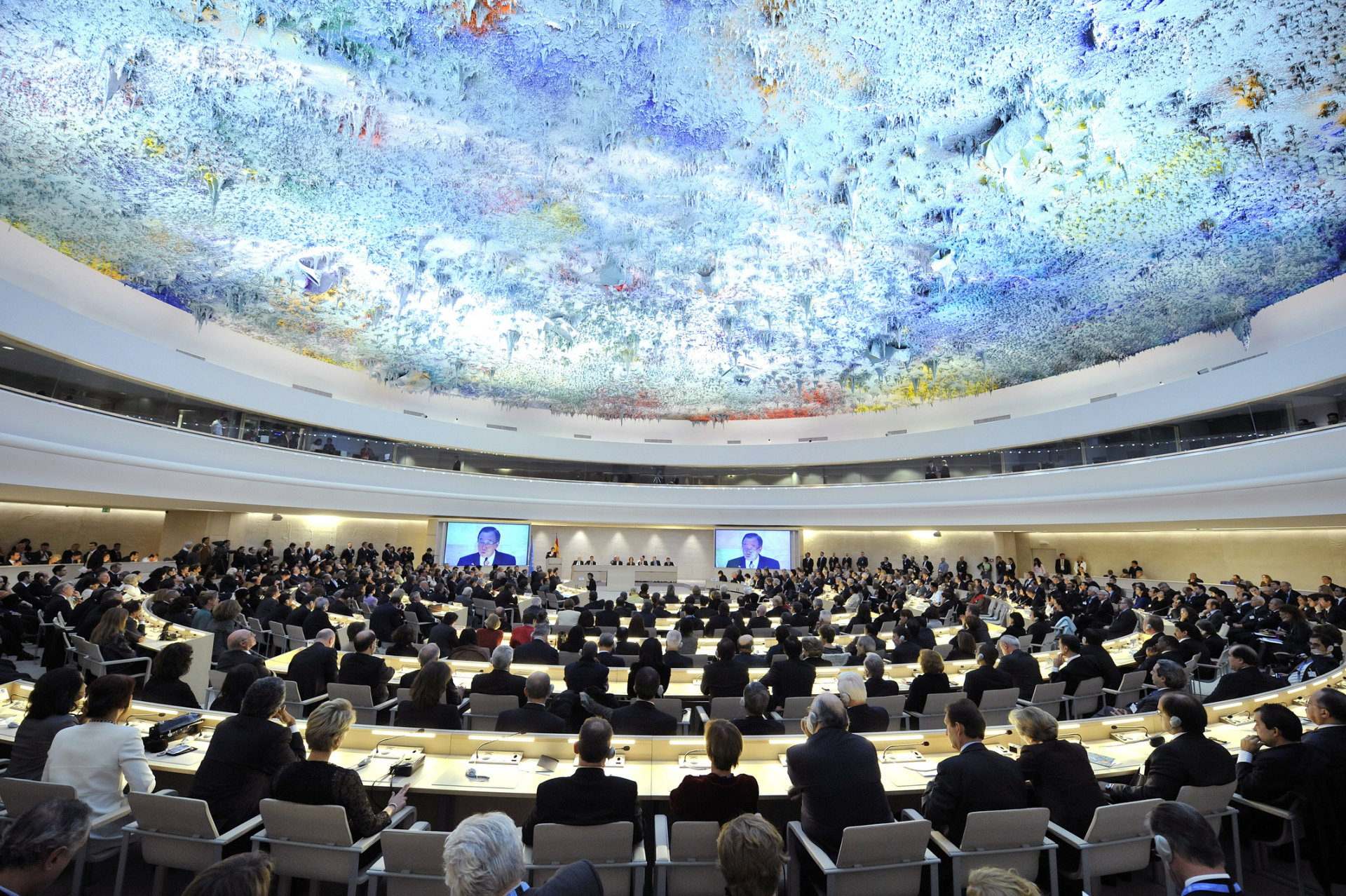
The Human Rights Council today concluded its sixty-third regular session after adopting 34 resolutions, two decisions and one president’s statement, in which, among other things, the Council voted to extend 14 country-specific and thematic mandates.
New resolutions adopted during the session focused on artificial intelligence, including one on strengthening international cooperation for promoting and protecting the rights of women and girls in the context of digital technologies, and another on the implications of artificial intelligence for the promotion and protection of human rights. The Council also adopted a new resolution on enhancing equal access of children to adequate nutritious food.
The Council extended six country-specific mandates during the session for a period of one year, including those of the Special Rapporteur on the situation of human rights in Afghanistan and the independent international fact-finding mission for the Sudan, under agenda item two. The Council also extended, for a period of one year, the mandates of the Special Rapporteur on the situation of human rights in the Russian Federation and the Special Rapporteur on the situation of human rights in Burundi; and for a period of two years, the mandate of the independent international fact-finding mission on the Bolivarian Republic of Venezuela, under agenda item four.
Under agenda item 10, the Council extended, for a period of one year, the mandate of the Independent Expert on the situation of human rights in the Central African Republic. Also under agenda item 10, the Council adopted resolutions concerning technical assistance and capacity-building in the field of human rights in the Democratic Republic of the Congo; cooperation with Georgia; technical assistance and capacity-building to address the human rights implications of the nuclear legacy in the Marshall Islands; and technical assistance and capacity-building for Yemen in the field of human rights.
In addition, the Council decided to extend, for a period of three years, eight thematic mandates: those of the Special Rapporteur on the negative impact of unilateral coercive measures on the enjoyment of human rights; the Independent Expert on the promotion of a democratic and equitable international order; the Special Rapporteur on the promotion of truth, justice, reparation and guarantees of non-recurrence; the Working Group on the rights of peasants and other people working in rural areas; the Special Rapporteur on the implications for human rights of the environmentally sound management and disposal of hazardous substances and wastes; the open-ended intergovernmental working group to elaborate the content of an international regulatory framework on the regulation, monitoring and oversight of the activities of private military and security companies; the Working Group of Experts on People of African Descent; and the Working Group on Enforced or Involuntary Disappearances.
Further resolutions adopted concerned the right to development; the use of mercenaries as a means of violating human rights and impeding the exercise of the right of peoples to self-determination; youth and human rights; countering cyberbullying; promoting accessibility for the full enjoyment of all human rights by all; the role of good governance in the promotion and protection of human rights; human rights and Indigenous Peoples; the human rights to safe drinking water and sanitation; the impact of anti-personnel mines on the full enjoyment of all human rights: strengthening victim assistance; the human rights of migrants; national human rights institutions; human rights and transitional justice; and from rhetoric to reality: a global call for concrete action against racism, racial discrimination, xenophobia and related intolerance.
The Council also adopted two decisions: one on the open-ended intergovernmental working group on an optional protocol to the Convention on the Rights of the Child on the rights to early childhood education, free pre-primary education and free secondary education, established by Human Rights Council resolution 56/5; and the other with regards to continued non-cooperation of a State under review with the universal periodic review mechanism. It also adopted one Presidential Statement on the report of the Advisory Committee.
Additionally, during the session, the Council adopted the outcomes of the Universal Periodic Reviews of 14 countries, namely Namibia, Niger, Mozambique, Estonia, Paraguay, Belgium, Denmark, Palau, Somalia, Seychelles, Solomon Islands, Latvia, Sierra Leone and Singapore.
On the final day of its sixty-third session, the Council elected six members of the Advisory Committee§, appointed seven mandate holders and adopted, ad referendum, the draft report of the session.
Marcos Gómez Martínez, Vice-President and Rapporteur of the Human Rights Council, presenting the session report, said in addition to adopting 34 resolutions, two decisions and one president’s statement during the session, the Council had held 39 interactive dialogues, four enhanced interactive dialogues, six panel discussions, one closed meeting under the complaint’s procedure, and adopted the Universal Periodic Review outcomes of 14 countries.
In his concluding remarks, Sidharto Reza Suryodipuro, President of the Human Rights Council expressed profound gratitude to all those who had made the session possible, including the members of the Council’s Bureau and Secretariat, conference services, other United Nations staff, Member States and civil society.
All information concerning resolutions, including full resolutions and the voting results can be found on the Human Rights Council extranet.
The sixty-third regular session of the Council was held from 7 September to 7 October 2026. The sixty fourth regular session of the Council is expected to take place from 22 February to 2 April 2027.
Action on Resolutions
Action on Text Under Agenda Item One on Organizational and Procedural Matters
In a presidential statement (A/HRC/63/L.23) on the Report of the Advisory Committee, adopted without a vote, the Council, recalling its resolutions 5/1 of 18 June 2007 and 16/21 of 25 March 2011, in particular section III of the annexes thereto, including on the functions of the Advisory Committee, takes note of the report of the Advisory Committee on its thirty-fourth session.
Action on Resolutions Under Agenda Item Two on the Annual Report of the United Nations High Commissioner for Human Rights and Reports of the Office of the High Commissioner and the Secretary-General
In a resolution (A/HRC/63/L.8) on the Situation of human rights in Afghanistan, adopted without a vote, the Council decides that the independent investigative mechanism for Afghanistan’s presentation of its reporting on its main activities on an annual basis to the Council will take place in an interactive dialogue, instead of an enhanced interactive dialogue; requests the Secretary-General to appoint the staff of the mechanism as expeditiously as possible; decides to extend the mandate of the Special Rapporteur on the situation of human rights in Afghanistan for a period of one year, and requests the Special Rapporteur to present a report to the Council at its sixty-sixth session, together with a study on the human rights situation of persons belonging to national or ethnic, religious and linguistic minorities in Afghanistan, and to present that report, in combination with an oral update, to the General Assembly at its eighty-second session; requests the Special Rapporteur to present to the Council at its sixty-fifth session an oral update on the situation of women and girls in Afghanistan, adopting an intersectional approach, to be followed by an enhanced interactive dialogue; also requests the Office of the High Commissioner to present at the sixty-fourth session of the Council a comprehensive report with a focus on the impact of the Taliban’s dismantling and replacement of the legal and judicial framework of Afghanistan.
In a resolution (A/HRC/63/L.26) on Responding to the human rights and humanitarian crisis caused by the ongoing armed conflict in the Sudan, adopted by a vote of 28 in favour, 10 against and 9 abstentions, the Council decides to extend the mandate of the independent international fact-finding mission for the Sudan for a period of one year; requests the United Nations fact-finding mission to provide the Council with an oral update on its work at its sixty-fifth session, to be followed by an enhanced interactive dialogue with the participation of a representative of civil society, and a comprehensive report at its sixty-sixth session, to be followed by an interactive dialogue, and to present the report to the General Assembly at its eighty-second session, to be followed by an interactive dialogue; and requests the High Commissioner for Human Rights, with the assistance of the designated Expert on human rights in the Sudan, to submit to the Council at its sixty-seventh session a comprehensive report on the situation of human rights in the Sudan and on violations and abuses committed by all parties to the conflict, to be followed by an interactive dialogue with the participation of the High Commissioner and the Expert.
Action on Resolutions Under Agenda Item Three on the Promotion and Protection of All Human Rights, Civil, Political, Economic, Social and Cultural Rights, including the Right to Development
In a resolution (A/HRC/63/L.1) on The right to development, adopted by a vote of 28 in favour, 14 against and 5 abstentions, the Council requests the High Commissioner for Human Rights to continue to submit to the Council an annual report on the activities of the Office of the High Commissioner and to provide an analysis, taking into account existing challenges to the realisation of the right to development, and to make recommendations on how to overcome them and concrete proposals for supporting the Working Group on the Right to Development in fulfilling its mandate; and requests the Office to organise the next biennial panel discussion on the right to development, to be held at its sixty-ninth session, in a format that is fully accessible to persons with disabilities, and also requests the Office to prepare a report on the panel discussion and to submit it to the Council at its seventy-second session.
In a resolution (A/HRC/63/L.2) on the Mandate of the Special Rapporteur on the negative impact of unilateral coercive measures on the enjoyment of human rights, adopted by a vote of 27 in favour, 16 against and 4 abstentions, the Council decides to extend for a period of three years the mandate of the Special Rapporteur on the negative impact of unilateral coercive measures on the enjoyment of human rights; and requests the Secretary-General and the High Commissioner for Human Rights to provide all the human, technical and financial assistance necessary for the effective fulfilment of the mandate of the Special Rapporteur.
In a resolution (A/HRC/63/L.3) on the Use of mercenaries as a means of violating human rights and impeding the exercise of the right of peoples to self-determination, adopted by a vote of 26 in favour, 17 against and 3 abstentions, the Council requests the Secretary-General and the High Commissioner for Human Rights to provide the Working Group with all the assistance and support necessary for the fulfilment of its mandate; requests the Working Group to continue to report its findings on the use of mercenaries as a means of violating human rights and impeding the exercise of the right of peoples to self-determination to the Council and to the General Assembly in accordance with their respective programmes of work; and decides to continue its consideration of this matter under the same agenda item at its sixty-sixth session.
In a resolution (A/HRC/63/L.4) on the Mandate of the Independent Expert on the promotion of a democratic and equitable international order, adopted by a vote of 26 in favour, 16 against and 5 abstentions, the Council decides to renew the mandate of the Independent Expert on the promotion of a democratic and equitable international order for a period of three years; requests the High Commissioner for Human Rights to provide all the human and financial resources necessary for the effective fulfilment of the mandate by the Independent Expert; and requests the Independent Expert to report regularly to the Council and the General Assembly in accordance with their respective programmes of work.
In a resolution (A/HRC/63/L.6) on the Special Rapporteur on the promotion of truth, justice, reparation and guarantees of non-recurrence, adopted without a vote, the Council decides to extend for a period of three years the mandate of the Special Rapporteur on the promotion of truth, justice, reparation and guarantees of non-recurrence; requests the Special Rapporteur to continue to report annually to the Council and to the General Assembly; and requests the Secretary-General and the High Commissioner for Human Rights to provide the Special Rapporteur with all the human, technical and financial assistance necessary for the effective fulfilment of his mandate.
In a resolution (A/HRC/63/L.9) on Youth and human rights, adopted without a vote, the Council decides that the theme of the next biennial panel discussion, to be held during the sixty-sixth session of the Council, will be youth and the right to an adequate standard of living, with a particular focus on the systemic challenges and barriers faced by young people in accessing affordable housing, and requests the Office of the High Commissioner to organise the panel discussion following consultations with youth and youth-led organizations; requests the Office of the High Commissioner, in consultation with States and relevant stakeholders, to conduct a detailed study on youth and the right to an adequate standard of living, with a particular focus on the systemic challenges and barriers faced by young people in accessing affordable housing, drawing also on the discussions and outcomes of the panel discussion to be held at the sixty-sixth session, and to submit the study to the Council for consideration prior to its sixty-ninth session.
In a resolution (A/HRC/63/L.11) on Countering cyberbullying, adopted without a vote, the Council reiterates its request to the Office of the High Commissioner for Human Rights to prepare a report, in consultation with all relevant stakeholders, and to make it available in an accessible and Easy Read format, on countering cyberbullying against older persons, identifying recent trends and challenges, as well as applicable human rights principles, safeguards and best practices, and to present the report to the Council at its sixty-fifth session.
In a resolution (A/HRC/63/L.21) on Promoting accessibility for the full enjoyment of all human rights by all, adopted without a vote, the Council requests its Advisory Committee, drawing on existing available resources, to prepare a study to identify remaining implementation gaps and practical measures on promoting accessibility for the full enjoyment of all human rights by all, in accordance with existing international human rights instruments, in close cooperation with relevant stakeholders, including States, United Nations agencies, funds and programmes within their respective mandates, international and regional organizations, the Office of the High Commissioner, the special procedures of the Council, the treaty bodies, national human rights institutions, civil society, the private sector and academia, and to present the study to the Council at its sixty-ninth session.
In a resolution (A/HRC/63/L.22) on the Working Group on the rights of peasants and other people working in rural areas, adopted by a vote of 33 in favour, 0 against and 14 abstentions, the Council decides to extend, for a further period of three years, the mandate of the Working Group on the rights of peasants and other people working in rural areas, on the same terms as set out in Council resolution 54/9.
In a resolution (A/HRC/63/L.10) on The role of good governance in the promotion and protection of human rights, adopted without a vote (as orally revised), the Council requests the Office of the High Commissioner for Human Rights to develop practical guidance on the procurement, deployment and use of artificial intelligence systems at all levels in public administration, informed by meaningful consultation with States and other relevant stakeholders, and to present a comprehensive report, including the practical guidance, to the Council at its sixty-ninth session.
In a resolution (A/HRC/63/L.17) on Strengthening international cooperation for promoting and protecting the rights of women and girls in the context of digital technologies, adopted without a vote (as orally revised), the Council decides to dedicate the annual full-day panel discussion, at the sixty-eighth session of the Council, to the human rights of women and girls in the context of digital technologies, with the participation of experts in human rights, gender equality and digital technologies and representatives of relevant United Nations entities, as well as representatives of human rights mechanisms, civil society, academia, the private sector, youth and the technical community, and invites the Independent International Scientific Panel on Artificial Intelligence to contribute to the panel discussion; and requests the Office of the High Commissioner to prepare a report that takes into account the panel’s discussions, key findings, experiences, good practices and lessons learned, as well as opportunities for strengthened international and cross-sectoral cooperation, and, in consultation with relevant United Nations entities and human rights mechanisms, to include in the report concise and action-oriented recommendations for States and other relevant stakeholders on promoting and protecting women’s and girls’ full enjoyment of human rights in the context of digital technologies, and to present the report to the Council at its seventy-first session.
In a resolution (A/HRC/63/L.20/Rev.1) on Human rights and Indigenous Peoples, adopted without a vote, the Council decides that the theme of the annual panel discussion on the rights of Indigenous Peoples, to be held during the sixty-sixth session of the Council, will be “Taking stock of the twentieth anniversary of the United Nations Declaration on the Rights of Indigenous Peoples: celebrating key achievements and addressing emerging challenges”, also decides that the theme of the annual panel discussion to be held during the sixty-ninth session of the Council will be communicated in 2027, taking into consideration the recommendation by the Expert Mechanism, and requests the Office of the High Commissioner to encourage and facilitate the participation of Indigenous women and youth in the panel discussions, to make the discussions fully accessible to and inclusive of persons with disabilities and to prepare a summary report of each discussion for submission to the Council at its sixty-eighth and seventy-first sessions, respectively.
In a resolution (A/HRC/63/L.25) on the Implications of artificial intelligence for the promotion and protection of human rights, adopted without a vote, the Council decides to convene, at its sixty-fifth session, a panel discussion on the theme “Placing human rights at the centre of artificial intelligence: artificial intelligence capacity-building and bridging the artificial intelligence divide”, with the participation of States, the Office of the High Commissioner, relevant United Nations entities and mechanisms, national human rights institutions, civil society, academia, the technical community, business enterprises and other relevant stakeholders, ensuring, to the extent possible, balanced geographical and gender representation, including meaningful participation of representatives and experts from developing countries; and also requests the Office to prepare a report on the theme of the panel discussion, informed by the outcome of the panel discussion and by meaningful consultations with States, relevant United Nations entities and mechanisms, national human rights institutions, civil society, academia, the technical community, business enterprises, including at the margins of the Second Global Dialogue on Artificial Intelligence Governance, to be held in May 2027, and to submit the report to the Council at its sixty-sixth session.
In a resolution (A/HRC/63/L.27) on the Mandate of the Special Rapporteur on the implications for human rights of the environmentally sound management and disposal of hazardous substances and wastes, adopted without a vote, the Council decides to extend the mandate of the Special Rapporteur on the implications for human rights of the environmentally sound management and disposal of hazardous substances and wastes for a period of three years, and invites the mandate holder to report annually to the Human Rights Council in accordance with its programme of work and to the General Assembly at its eighty-first and eighty-third session.
In a resolution (A/HRC/63/L.28) on the Mandate of the open-ended intergovernmental working group to elaborate the content of an international regulatory framework on the regulation, monitoring and oversight of the activities of private military and security companies, adopted without a vote, the Council decides to renew the mandate of the open-ended intergovernmental working group for a period of three years, with a mandate to continue to elaborate the content of an international regulatory framework, without prejudging the nature thereof, in efforts to protect human rights and ensure accountability for violations and abuses relating to the activities of private military and private security companies, informed by the revised fifth draft instrument on an international regulatory framework on the regulation, monitoring of and oversight over the activities of private military and security companies, as prepared by the Chair-Rapporteur, and further inputs from Member States and other stakeholders, and factoring in the work done under the previous mandate; and also decides that the open-ended intergovernmental working group shall meet for five working days each year, in hybrid format, and submit an annual progress report to the Human Rights Council in conformity with its annual programme of work.
In a resolution (A/HRC/63/L.32) on Enhancing equal access of children to adequate nutritious food, adopted without a vote, the Council encourages the relevant treaty bodies and the special procedure mandate holders to provide recommendations aimed at supporting States in enhancing equal access to adequate nutritious food for all children; invites the Office of the High Commissioner for Human Rights, the United Nations Children’s Fund, the World Health Organization, the Food and Agriculture Organization of the United Nations and the World Food Programme, as well as other relevant United Nations entities, to support States, upon their request and in consultation with them, in the design, implementation and evaluation of relevant national programmes that enhance equal access of children to adequate nutritious food.
In a resolution (A/HRC/63/L.34) on The human rights to safe drinking water and sanitation, adopted without a vote, the Council calls upon States to take measures to ensure the progressive realisation of the human rights to safe drinking water and sanitation, including in contexts of armed conflict, occupation and disaster; and requests the Secretary-General and the High Commissioner for Human Rights to provide the Special Rapporteur on the human rights to safe drinking water and sanitation with all the resources and assistance necessary for the effective fulfilment of the mandate.
In a resolution (A/HRC/63/L.24) on The impact of anti-personnel mines on the full enjoyment of all human rights: strengthening victim assistance, adopted without a vote, the Council decides to convene, during its sixty-sixth session, a panel discussion accessible to persons with disabilities, on the importance of strengthening victim assistance in addressing the impact of anti-personnel mines on the full enjoyment of all human rights, with the participation of persons with disabilities resulting from anti-personnel mine explosions; and requests the Office of the United Nations High Commissioner for Human Rights to organize the panel discussion and to liaise with States and other stakeholders with a view to ensuring their participation, while taking into account geographical representation.
In a resolution (A/HRC/63/L.36) on Human rights of migrants, adopted without a vote, the Council requests the Office of the High Commissioner for Human Rights to prepare a study on human rights violations and other challenges affecting migrants in the context of immigration detention, deportations, third-country removals and other return processes, as well as alternatives to detention, accountability, access to justice and effective remedy for human rights violations and for patterns of systemic abuse, in consultation with States and other relevant stakeholders, and to submit the study to the Council before its sixty-eighth session; and to convene a one-day intersessional panel discussion, on contemporary human rights violations and other challenges affecting migrants, and on accountability mechanisms, access to justice, remedies and measures aimed at preventing recurrence, to ensure the meaningful participation of migrants and their family members, to prepare a summary report on the panel discussion and the recommendations resulting from it, and to submit the report to the Council at its sixty-sixth session and to the General Assembly at its eighty-second session.
In a resolution (A/HRC/63/L.35) on Human rights and transitional justice, adopted without a vote (as orally revised), the Council requests the Office of the High Commissioner for Human Rights to prepare a report on how transitional justice efforts can inform sustainable, inclusive and rights-based recovery, reconstruction and rebuilding efforts, informed by prior consultative meetings, and to present it to the Council at its sixty-ninth session during an enhanced interactive dialogue; also requests the Office, in preparing the above-mentioned consultative meetings and report, to consult with States, the Special Rapporteur on the promotion of truth, justice, reparation and guarantees of non-recurrence, and other relevant stakeholders, including practitioners.
In a decision (A/HRC/63/L.37) on the Open-ended intergovernmental working group on an optional protocol to the Convention on the Rights of the Child on the rights to early childhood education, free pre-primary education and free secondary education, established by Human Rights Council resolution 56/5, adopted without a vote (as orally revised), the Council requests the open-ended intergovernmental working group to submit annual progress reports to the Council at its June sessions, starting at its sixty-fifth session, and to make the reports available in an accessible and child-friendly format.
In a resolution (A/HRC/63/L.5) on Enforced or involuntary disappearances, adopted without a vote, the Council requests the Working Group on Enforced or Involuntary Disappearances to continue to submit reports to the Council, in accordance with its mandate, which should be made available in all official languages to facilitate their dissemination; decides to extend the mandate of the Working Group for a further period of three years; requests the Secretary-General to continue to provide the Working Group with all financial and human resources necessary to enable it to carry out fully its mandate, and requests the Working Group to address and reduce the backlog of submissions concerning allegations of enforced disappearances and to continue to process all new cases in a timely and efficient manner so as to avoid future backlogs.
Action on Resolutions Under Agenda Item Four on Human Rights Situations that Require the Council’s Attention
In a resolution (A/HRC/63/L.12) on the Situation of human rights in the Russian Federation, adopted by a vote of 21 in favour, 5 against and 21 abstentions, the Council decides to extend the mandate of the Special Rapporteur on the situation of human rights in the Russian Federation for a period of one year, and requests the mandate holder to hold consultations with all partners and stakeholders, including Indigenous Peoples and civil society inside and outside the Russian Federation, and to present a comprehensive report to the Council at its sixty-sixth session and to the General Assembly at its eighty-second session; and requests the Secretary-General and the High Commissioner for Human Rights to provide the Special Rapporteur with all the assistance and adequate human, technical and financial resources necessary to enable the effective fulfilment of the mandate.
In a resolution (A/HRC/63/L.13) on the Situation of human rights in Burundi, adopted by a vote of 22 in favour, 7 against and 17 abstentions, the Council decides to extend the mandate of the Special Rapporteur on the situation of human rights in Burundi for a further period of one year, and requests the Special Rapporteur to submit a comprehensive report on the situation of human rights in Burundi to the Council at its sixty-sixth session and to the General Assembly at its eighty-second session; encourages the Government of Burundi to present a timeline for the reopening of the country office of the Office of the High Commissioner in Burundi, and to continue to engage with the Office of the High Commissioner so that it may provide technical assistance and capacity-building; and requests the Secretary-General to provide the Special Rapporteur with the assistance and all resources necessary to fulfil the mandate with all its functions.
In a resolution (A/HRC/63/L.18) on the Situation of human rights in the Bolivarian Republic of Venezuela, adopted by a vote of 25 in favour, 5 against and 17 abstentions, the Council decides to extend for a period of two years the mandate of the independent international fact-finding mission on the Bolivarian Republic of Venezuela, as set out in Council resolutions 42/25, 45/20 and 57/36; and requests the fact-finding mission to present to the Council oral updates on its work at the Council’s sixty-fourth and sixty-seventh sessions, each to be followed by an interactive dialogue, and to submit to the Council reports on its findings and recommendations for future action by the Council at its sixty-sixth and sixty-ninth sessions, each to be followed by an interactive dialogue.
Action on Decision Under Agenda Item Six on the Universal Periodic Review
In a decision (A/HRC/63/L.44) on Continued non-cooperation of a State under review with the universal periodic review mechanism, adopted without a vote, the Council calls upon the State under review to resume its cooperation with the universal periodic review mechanism; requests the President of the Human Rights Council to continue to take all appropriate steps and measures, in accordance with his mandate, to urge the State under review to resume its cooperation with the universal periodic review mechanism and to report on the results of his efforts to the Council at its regular session; decides to postpone the consideration and adoption of the outcome document of the universal periodic review of Nicaragua until its sixty-fifth session, while leaving open the possibility for it to be scheduled sooner; and also decides to consider at its sixty-fifth session any steps that may be deemed appropriate in the light of the provisions of General Assembly resolution 60/251 and Human Rights Council resolution 5/1, taking into account that the fourth cycle of the universal periodic review is scheduled to conclude during its sixty-fifth regular session.
Action on Resolution Under Agenda Item Eight on Follow-up and implementation of the Vienna Declaration and Programme of Action:
In a resolution (A/HRC/63/L.15) on National human rights institutions, adopted without a vote (as orally revised), the Council urges the High Commissioner for Human Rights to ensure that appropriate arrangements are made and budgetary resources are provided to continue and further extend activities in support of national human rights institutions; requests the Secretary-General and the High Commissioner to provide the Office of the High Commissioner with the financial and human resources necessary for the servicing of the sessions of the Subcommittee on Accreditation of the Global Alliance of National Human Rights Institutions; requests the Secretary-General to submit to the Council, at its sixty-ninth session, a report on the implementation of the present resolution that includes examples of best practices among national human rights institutions, published in accessible formats, and a report on the activities of the Global Alliance of National Human Rights Institutions in accrediting national institutions in compliance with the Paris Principles.
Action on Resolutions Under Agenda Item Nine on Racism, Racial Discrimination, Xenophobia and Related Forms of Intolerance: Follow-up to and Implementation of the Durban Declaration and Programme of Action
In a resolution (A/HRC/63/L.29) on the Mandate of the Working Group of Experts on People of African Descent, adopted without a vote (as orally revised), the Council decides to extend the mandate of the Working Group of Experts on People of African Descent for a further period of three years, in accordance with the terms of reference contained in Human Rights Council resolution 9/14; also decides that one of the two annual sessions of the Working Group may be held in New York or another location of relevance to the mandate, to facilitate the wide participation of people of African descent; and requests the Working Group to submit an annual report to the Human Rights Council on all activities relating to its mandate, and, in the context of the Second International Decade for People of African Descent, to submit reports to the General Assembly on alternating years when it does not hold one of its two annual sessions.
In a resolution (A/HRC/63/L.30) on From rhetoric to reality: a global call for concrete action against racism, racial discrimination, xenophobia and related intolerance, adopted by a vote of 30 in favour, 0 against and 17 abstentions (as orally revised), the Council requests the Office of the United Nations High Commissioner for Human Rights to continue to organize an information campaign for the twenty-fifth anniversary of the adoption of the Durban Declaration and Programme of Action and beyond, including through the preparation of public information and outreach material that is to be widely disseminated through various channels, including through United Nations information centres, by the Office of the High Commissioner, including through its regional offices, and by other United Nations entities; requests the United Nations system to strengthen its awareness-raising campaigns to increase the visibility of the message of the Durban Declaration and Programme of Action, its follow-up mechanisms and the work of the United Nations in the fight against racism; requests the Office of the High Commissioner to publish an updated version of United against Racism, Racial Discrimination, Xenophobia and Related Intolerance in an easily accessible booklet format, containing also the political declaration approved at the General Assembly high-level meeting to commemorate the twenty-fifth anniversary of the adoption of the Durban Declaration and Programme of Action, and to issue it in all official languages of the United Nations, for wide dissemination; and requests the High Commissioner to continue to provide the resources necessary for the effective functioning of Durban follow-up mechanisms, and to give high priority to the issue of preventing and combating racism, racial discrimination, xenophobia and related intolerance in the work of the Office of the High Commissioner.
Action on Resolutions Under Agenda Item 10 on Technical Assistance and Capacity-Building
In a resolution (A/HRC/63/L.7) on Technical assistance and capacity-building in the field of human rights in the Democratic Republic of the Congo, adopted without a vote, the Council invites the High Commissioner for Human Rights to provide the necessary technical support to the Government in its effective implementation of the national transitional justice policy, in support of the country’s judicial authorities in their investigations into allegations of serious human rights violations, and in the development and strengthening of forensic medicine capacities; requests the Office of the High Commissioner to organise, before its sixty-sixth session, a meeting to evaluate the implementation of the present resolution; requests the High Commissioner to present the Council with an oral update on the situation of human rights in the Democratic Republic of the Congo, in the framework of an enhanced dialogue, at its sixty-fourth session; and also requests the High Commissioner to prepare a comprehensive report on the situation of human rights in the Democratic Republic of the Congo and to submit it to the Council, in the framework of an enhanced interactive dialogue, at its sixty-sixth session.
In a resolution (A/HRC/63/L.14) on Cooperation with Georgia, adopted without a vote, the Council demands that immediate and unimpeded access be given to the Office of the High Commissioner for Human Rights and other international and regional human rights mechanisms to Abkhazia, Georgia, and the Tskhinvali region/South Ossetia, Georgia; requests the High Commissioner for Human Rights to present to the Council, in accordance with its resolution 5/1 of 18 June 2007, an oral update on the follow-up to the present resolution at its sixty-fourth session and to present a report on developments relating to and the implementation of the present resolution at its sixty-fifth session; and also requests the High Commissioner to continue to provide technical assistance through the Office of the High Commissioner in Tbilisi.
In a resolution (A/HRC/63/L.16) on Technical assistance and capacity-building to address the human rights implications of the nuclear legacy in the Marshall Islands, adopted without a vote, the Council requests the Office of the High Commissioner for Human Rights to cooperate with the Government of the Marshall Islands in the field of human rights and to provide technical assistance and capacity-building to the National Nuclear Commission of the Marshall Islands in advancing its national strategy for nuclear justice and determining its technical assistance and capacity-building needs to pursue transitional justice in its efforts to address the nuclear legacy; also requests the Office to prepare a report on addressing the challenges and barriers to the full realisation and enjoyment of the human rights of the people of the Marshall Islands, stemming from the State’s nuclear legacy, and to submit it to the Council at its sixty-ninth session, to be followed by an enhanced interactive dialogue, with the participation of the National Nuclear Commission of the Marshall Islands; and further requests the Office of the High Commissioner, in preparing the above-mentioned report, to collaborate with the Government of the Marshall Islands and its National Nuclear Commission, and seek the views of States and other relevant stakeholders, including civil society, the Marshallese diaspora, Indigenous Peoples, youth representatives and affected communities.
In a resolution (A/HRC/63/L.31) on Technical assistance and capacity-building in the field of human rights in the Central African Republic, adopted without a vote, the Council decides to extend for one year the mandate of the Independent Expert on the situation of human rights in the Central African Republic, which is to assess, monitor and report on the situation of human rights in the Central African Republic, in close consultation with the Central African authorities, with a view to formulating recommendations on technical assistance and capacity-building in the field of human rights, taking into account the progress made, the persistent challenges and the priorities identified by the Central African authorities; and decides to organize, at its sixty-fourth session, a high-level dialogue devoted to assessing the evolution of the human rights situation on the ground, with particular emphasis on better coordination of technical assistance and capacity-building in the field of human rights, in accordance with the needs and priorities identified in consultation with the Central African authorities.
In a resolution (A/HRC/63/L.33) on Technical assistance and capacity-building for Yemen in the field of human rights, adopted without a vote, the Council requests all parties to the conflict in Yemen to fully implement Security Council resolution 2216 (2015), which will contribute to an improvement in the situation of human rights, and encourages all parties to the conflict to reach a comprehensive agreement to end the conflict while ensuring the full and effective participation of women in the political and peace-making process; requests the High Commissioner to present a report on the implementation of technical assistance, as stipulated in the present resolution, to the Human Rights Council at its sixty-sixth session; and requests the Secretary-General to ensure that the Office of the High Commissioner is provided with all the resources necessary to enable the full and timely delivery of technical assistance and capacity-building to Yemen.
Other Matters
The Human Rights Council elected, in accordance with its annual programme of work, Advisory Committee members for the six vacant seats. The Council elected Akouavi Inès L. Hadonou-Toffoun (Benin) and Josephine Ndagire (Uganda) for the Group of African States; Mohammad Sufiur Rahman (Bangladesh) and Riva Ganguly Das (India) for the Group of Asia-Pacific States; Jorge Barrera-Rojas (Chile) for the Group of Latin American and Caribbean States; and Anikó Szalai (Hungary) for the Group of Eastern European States. The election for the Group of Western European and other States was deferred until the Council’s sixty-fourth session.
The Council also appointed seven mandate holders: the Special Rapporteur on the human rights to safe drinking water and sanitation, Juliet Willetts (Australia); the Special Rapporteur on the situation of human rights in Eritrea, Sihaka Tsemo (Cameroon); the Working Group on Arbitrary Detention, member from African States, Sabrina Mahtani (Zambia); the Working Group on Arbitrary Detention, member from Latin American and Caribbean States, Nicolás Laino (Argentina); the Working Group on discrimination against women and girls, member from Latin American and Caribbean States, Daniela Salazar Marín (Ecuador); the Working Group on Enforced or Involuntary Disappearances, member from African States, Anjli Parrin (Kenya); and the Working Group on the use of mercenaries as a means of violating human rights and impeding the exercise of the right of peoples to self-determination, member from Asia-Pacific States, Francis Tom Temprosa (Philippines).
In addition, the Council adopted its draft report ad referendum for the sixty-third session.
___________
Produced by the United Nations Information Service in Geneva for use of the media;
not an official record. English and French versions of our releases are different as they are the product of two separate coverage teams that work independently.
HRC26.008E