
Human Rights Council to Hold its Sixty-First Regular Session from 23 February to 31 March 2026
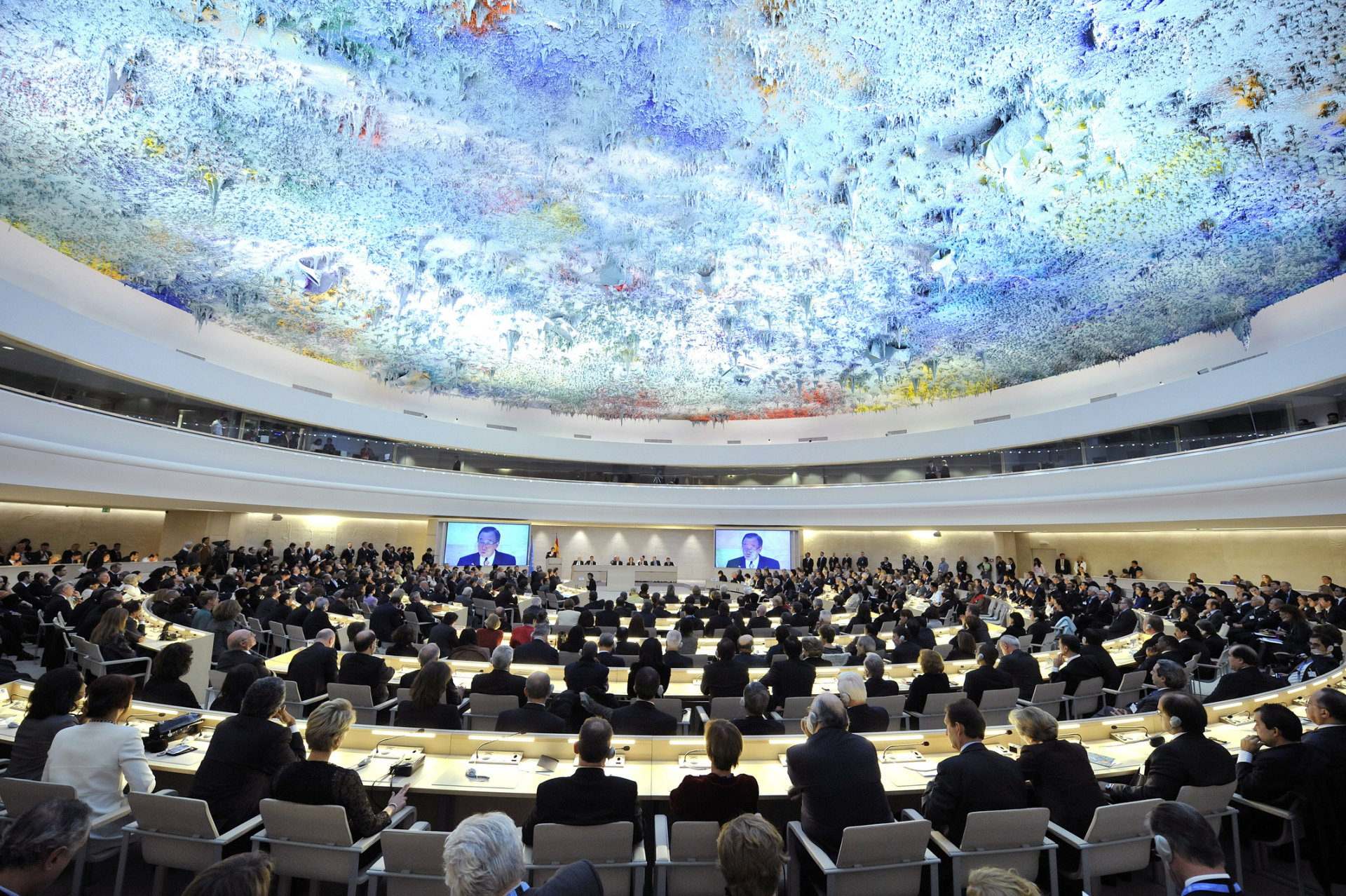
The United Nations Human Rights Council will hold its sixty-first regular session from 23 February to 31 March 2026 at the Palais des Nations in Geneva, starting with its high-level segment from 23 to 25 February when dignitaries from more than 100 States will address the Council.
The session will open at 9 a.m. on Monday, 23 February under the Presidency of Ambassador Sidharto Reza Suryodipuro of Indonesia. Delivering statements at the opening will be the Secretary-General of the United Nations, António Guterres; the President of the United Nations General Assembly, Annalena Baerbock; the United Nations High Commissioner for Human Rights, Volker Türk; as well as the Chief of the Federal Department of Foreign Affairs of Switzerland, Ignazio Cassis. The Council will be meeting in the Assembly Hall of the Palais des Nations.
On Friday, 27 February, the Council is scheduled to hear a global update by the High Commissioner for Human Rights on the situation of human rights around the world. During the session, the Council will hold 29 interactive dialogues with the High Commissioner, his Office and designated experts, with Special Procedure mandate holders and investigative mechanisms, and with Special Representatives of the Secretary-General. The Council will also hold four enhanced interactive dialogues, one joint interactive dialogue, and one high-level dialogue, as well as nine general debates.
The Council will hold its annual high-level panel discussion on human rights mainstreaming; a high-level panel discussion on the commemoration of the twenty-fifth anniversary of the adoption of the Durban Declaration and Programme of Action; a panel discussion on human rights and a culture of peace; a panel discussion on financing sustainable development in line with economic, social and cultural rights obligations; the annual interactive debate on the rights of persons with disabilities; and the annual discussion on the rights of the child.
The Council will examine the situation of human rights in a number of countries under its various agenda items, including the situation in Afghanistan, Sudan, the occupied Palestinian territory, South Sudan, Myanmar, Colombia, Guatemala, Honduras and Cyprus under agenda item two; in Ukraine, Belarus, Venezuela, Syria, Myanmar, the Democratic People’s Republic of Korea, Nicaragua and Iran under agenda item four; in the Occupied Palestinian Territory and the Occupied Syrian Golan under agenda item seven; and in the Democratic Republic of the Congo, Mali, Ukraine, Haiti, the Central African Republic and Georgia under agenda item 10.
The final outcomes of the Universal Periodic Review of 13 States will also be considered, namely those of Belarus, Liberia, Malawi, Mongolia, Panama, Maldives, Andorra, Bulgaria, Honduras, the Marshall Islands, Croatia, Jamaica and Libya.
Towards the end of the session, the Council will appoint 17 new mandate holders, including 11 special procedure positions and six expert mechanism members.
A detailed agenda and further information on the sixty-first session can be found on the session’s webpage. Reports to be presented are available here.
First Week of the Session
The sixty-first session will open at 9:30 a.m. on Monday, 23 February with a short opening meeting, followed by the start of the high-level segment, which will continue until 25 February, and during which the Council will hear addresses by dignitaries from more than 100 States. Intervening during the high-level segment will be the annual high-level panel discussion on human rights mainstreaming in the afternoon of 23 February on the role of new and emerging digital technologies in preventing and eliminating female genital mutilation; and the high-level panel on the twenty-fifth anniversary of the Durban Declaration and Programme of Action in the morning of Tuesday, 25 February.
The general segment will follow the conclusion of the high-level segment in the afternoon of Wednesday, 25 February.
On Thursday, 26 February, the Council will hold an enhanced interactive dialogue on the report of the Special Rapporteur and the report of the Office of the High Commissioner for Human Rights on Afghanistan, followed by an enhanced interactive dialogue on the Independent International Fact-Finding Mission’s report and High Commissioner’s report on Sudan, with the participation of the designated expert. Following the conclusion of the discussion on Sudan on Thursday afternoon, the Council will hold an interactive dialogue on the High Commissioner’s report on the Occupied Palestinian Territory, including East Jerusalem. The presentation of the High Commissioner’s global update taking place on Friday, 27 February at 9:30 a.m. will precede the conclusion of the dialogue on the Occupied Palestinian Territory.
After, the Council will hold an enhanced interactive dialogue on the report of the Commission on Human Rights in South Sudan, followed by an interactive dialogue on the High Commissioner’s oral update on Rohingya Muslims and other minorities in Myanmar. The first week will conclude with the presentation of reports on the activities of the Office of the High Commissioner in Colombia, Guatemala, Honduras and Cyprus, and the oral update of the Secretary-General on the establishment of the independent investigative mechanism on Afghanistan.
Second Week of the Session
At the beginning of the second week, on the morning of Monday, 2 March, the Council will begin the general debate under agenda item two, namely the annual report of the High Commissioner for Human Rights and reports of the Office of the High Commissioner and the Secretary-General, which will continue until the afternoon. The Council will subsequently begin its considerations under agenda item three on the promotion and protection of all human rights, holding an interactive dialogue with the Special Rapporteur on torture and other cruel, inhuman or degrading treatment or punishment, which will continue into the morning of Tuesday, 3 March. This will be followed by interactive dialogues with the Special Rapporteur on freedom of religion or belief, the Special Rapporteur on the situation of human rights defenders, and the Special Rapporteur in the field of cultural rights, for the rest of the day.
The dialogue on cultural rights will continue until the morning of Wednesday, 4 March, followed by an interactive dialogue with the Special Rapporteur on the right to adequate housing. In the afternoon, the Council will hold a panel discussion on human rights and a culture of peace, followed by an interactive dialogue with the Independent Expert on foreign debt.
On the morning of Thursday, 5 March, a panel on financing sustainable development and economic, social and cultural rights will precede the conclusion of the interactive dialogue on foreign debt. Following this, the Council will hold two interactive dialogues: first with the Special Rapporteur on the right to food, and after with the Independent Expert on the rights of persons with albinism. The morning of Friday, 6 March will begin with two interactive dialogues: first with the Special Rapporteur on the rights of persons with disabilities, and afterwards with the Special Rapporteur on the human right to a healthy environment, which will continue into the afternoon. The second week will conclude with the Council’s annual debate on the rights of persons with disabilities on the theme of disability-inclusive infrastructure, including transport and housing.
Third Week of the Session
The Council will start its third week on Monday, 9 March, with a focus on children, beginning with an interactive dialogue with the Special Rapporteur on the sale of children, and intervening with its annual full-day meeting on the rights of the child, before concluding the dialogue on the sale of children at the end of the day. The theme on the annual discussion will be the rights of the child and violations of the human rights of children in armed conflicts. On the morning of Tuesday, 10 March, the Council will hold two interactive dialogues with the Special Representatives of the Secretary-General on violence against children and on children and armed conflict respectively.
The Council will then hold interactive dialogues with the Special Rapporteur on the promotion and protection of human rights and fundamental freedoms while countering terrorism and the Special Rapporteur on the right to privacy, the latter of which will conclude on the morning of Wednesday, 11 March. This will be followed by the presentation of reports of the open-ended intergovernmental working group on transnational corporations and other business enterprises with respect to human rights, the Secretary-General, the High Commissioner and his Office, followed by the start of the general debate on agenda item three.
The general debate will conclude on the morning of Thursday, 12 March, and the Council will then begin its considerations under agenda item four on human rights situations that require the Council’s attention. This will commence with three separate interactive dialogues which will carry on throughout the day, namely with the Independent International Commission of Inquiry on Ukraine, the Group of Independent Experts on the Situation of Human Rights in Belarus, and the Fact-Finding Mission on Venezuela. On Friday, 13 March, the Council will begin with an interactive dialogue with the Independent International Commission of Inquiry on Syria, followed by two separate interactive dialogues with the Special Rapporteurs on the situation of human rights in Myanmar and in the Democratic People’s Republic of Korea, respectively.
Fourth Week of the Session
Continuing with its considerations under agenda item four on human rights situations that require the Council’s attention, the Council will hold two interactive dialogues on Monday, 16 March, the first on the report of the Group of Human Rights Experts on Nicaragua. The second is a joint interactive dialogue with the Special Rapporteur and the Independent International Fact-Finding Mission on the situation of human rights in Iran. There will then be the presentation of the High Commissioner’s report on the Democratic People’s Republic of Korea and his oral update on the situation of human rights in Venezuela, followed by the start of the general debate under agenda item four, which will conclude on the morning of Tuesday, 17 March.
The Council will return to agenda item three and hold an interactive dialogue with the Special Rapporteur on minority issues. It will then begin its considerations under agenda item five on human rights bodies and mechanisms. It will hear the presentation of reports by the Forum on Minority Issues, the Social Forum, the Special Procedures of the Council, the Advisory Committee, and the Forum on Democracy, Human Rights and the Rule of Law, and will then hold the general debate on agenda item five, which will run until the morning of Wednesday, 18 March.
After this, the Council will begin its considerations under agenda item six of the final outcomes of the Universal Periodic Reviews of 13 States: Belarus, Liberia, Malawi, Mongolia, Panama, Maldives, Andorra, Bulgaria, Honduras, Marshall Islands, Croatia, Jamaica and Libya. These will run until the end of the week, with Friday, 20 March being a United Nations holiday.
Fifth Week of the Session
On the morning of Monday, 23 March, the Council will conclude the outcomes of the Universal Periodic Review, and subsequently hold a general debate on the Universal Periodic Review. It will then take up agenda item seven on the human rights situation in Palestine and other occupied Arab territories, holding an interactive dialogue with the Special Rapporteur on the human rights situation in the Occupied Palestinian Territory, including East Jerusalem. On Tuesday, 24 March, the Council will hear the presentation of the reports of the High Commissioner and the Secretary-General under agenda item seven, followed by the general debate.
The general debate under agenda item eight on follow-up to and implementation of the Vienna Declaration and Programme of Action is also scheduled to commence on Tuesday morning, concluding in the afternoon. It will be followed by the presentation of the report of the intergovernmental working group on the effective implementation of the Durban Declaration and Programme of Action, the report of the High Commissioner on combatting intolerance, negative stereotyping and stigmatization of, and discrimination, incitement to violence and violence against, persons based on religion or belief, and a general debate on agenda item nine, namely racism, racial discrimination, xenophobia and related forms of intolerance, follow-up to and implementation of the Durban Declaration and Programme of Action, which will continue until the morning of Wednesday, 25 March.
After the conclusion of the general debate under agenda item nine, the Council will hold dialogues conducted under agenda item 10 on technical assistance and capacity-building, including an enhanced interactive dialogue on the oral update of the High Commissioner on the Democratic Republic of the Congo, followed by an interactive dialogue with the Independent Expert on the situation of human rights in Mali and representatives of the Government of Mali.
Thursday, 26 March will begin with two interactive dialogues with the High Commissioner. The first is on his oral update on the situation of human rights in Ukraine, followed by the second on his report on the situation of human rights in Haiti, with the participation of the independent expert on the subject. This will be followed by a high-level dialogue on the Central African Republic.
At the end of the day, the Council will hear the annual presentation of the High Commissioner on technical cooperation and his oral update on Georgia, and the presentation of the report of the Board of Trustees of the Voluntary Fund for Technical Cooperation, followed by the general debate on agenda item 10.
On Friday, 27 March, after the conclusion of the general debate, the Council will begin to take action of draft decisions and resolutions, concluding the fifth week of the session.
Sixth Week of the Session
On Monday, 30 March and Tuesday, 31 March, the Council will continue to act on draft decisions and resolutions, appoint new mandate holders, and adopt the report of the sixty-first regular session, before closing the session on Tuesday, 31 March.
The Human Rights Council
The Human Rights Council is an inter-governmental body within the United Nations system, made up of 47 States, which is responsible for strengthening the promotion and protection of human rights around the globe. The Council was created by the United Nations General Assembly on 15 March 2006 with the main purpose of addressing situations of human rights violations and making recommendations on them.
The composition of the Human Rights Council at its sixty-first session is as follows: Albania (2026); Angola (2028); Benin (2027); Bolivia (Plurinational State of) (2027); Brazil (2026); Bulgaria (2026); Burundi (2026); Chile (2028); China (2026); Colombia (2027); Côte d’Ivoire (2026); Cuba (2026); Cyprus (2027); Czechia (2027); Democratic Republic of the Congo (2027); Dominican Republic (2026); Ecuador (2028); Egypt (2028); Estonia (2028); Ethiopia (2027); France (2026); Gambia (2027); Ghana (2026); Iceland (2027); India (2028); Indonesia (2026); Iraq (2028); Italy (2028); Japan (2026); Kenya (2027); Kuwait (2026); Malawi (2026); Marshall Islands (2027); Mauritius (2028); Mexico (2027); Netherlands (Kingdom of the) (2026); North Macedonia (2027); Pakistan (2028); Qatar (2027); Republic of Korea (2027); Slovenia (2028); South Africa (2028); Spain (2027); Switzerland (2027); Thailand (2027); United Kingdom of Great Britain and Northern Ireland (2028); and Viet Nam (2028).
The term of membership of each State expires in the year indicated in parentheses.
The President of the Human Rights Council in 2026 is Sidharto Reza Suryodipuro (Indonesia). The four Vice-Presidents are Marcelo Vàzquez Bermúdez (Ecuador), Riia Salsa-Audiffren (Estonia), Tsegab Kebebew Daka (Lesotho), and Marcos Gómez Martínez (Spain). Mr. Gómez Martínez also serves as Rapporteur of the Geneva-based body.
The dates and venue of the sixty-first session are subject to change.
Information on the sixty-first session can be found here, including the annotated agenda and the reports to be presented.
For further information, please contact Pascal Sim, Human Rights Council Media Officer (simp@un.org) and Matthew Brown, Human Rights Council Public Information Officer (matthew.brown@un.org).
___________
Produced by the United Nations Information Service in Geneva for use of the media;
not an official record. English and French versions of our releases are different as they are the product of two separate coverage teams that work independently.
HRC26.003