Focus On
Can AI Predict A Crisis? | Dr. Martin Waehlisch - 19.02.25
Can AI help us better predict, respond to, and recover from crises? We’re joined by Dr. Martin Waehlisch, Associate Professor of Transformative Technologies, Innovation and Global Affairs at the University of Birmingham. He’s also part of the Research Team of the Crisis Computing Project, a global community of scholars and practitioners who are driven to put computation to better use.
80 Years of Humanity #UN80 #BetterTogether
“For 80 years, the United Nations has brought countries together with one purpose: to make the world better. Together, we advance peace and security, promote development and defend human rights. By uniting nations, we transform shared goals into collective action.
AI for Good: How the UN Is Using Artificial Intelligence
Artificial intelligence (AI) is rapidly transforming our world by providing unique opportunities for advancement, while at the same time presenting new challenges for humankind. Across United Nations system, AI is helping to improve efficiency and advance the Sustainable Development Goals by: ➡️ Anticipating food insecurity before crises emerge ➡️ Enabling faster, more effective humanitarian responses ➡️ Protecting our oceans ➡️ Creating opportunities for fairer work
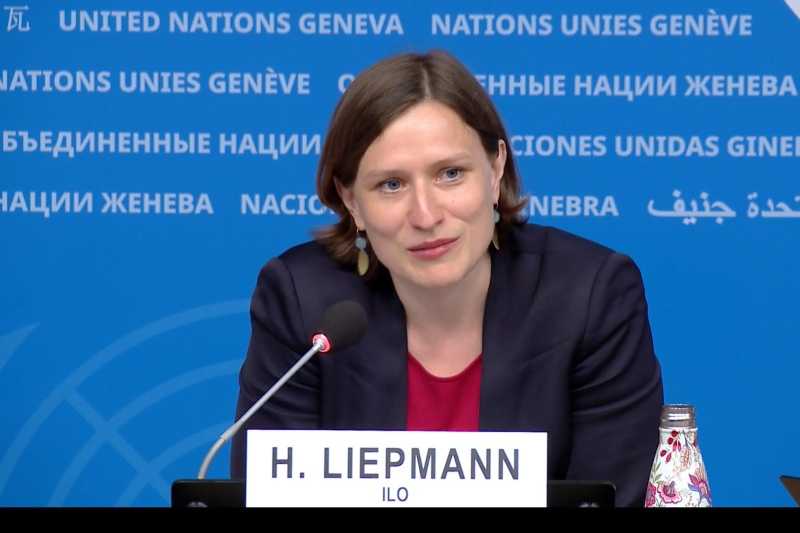
UN Press Briefing Geneva: UNICEF Giga, UNICEF, IOM, UNHCR, OHCHR, UNECE, WHO - 17.02.26
🎥 Approaching four years of full-scale invasion of Ukraine; 🎥 2026 Sudan Regional Refugee Response Plan; 🎥 Human rights violations and abuses against migrants in Libya; 🎥 Impact of Cyclone Gezani in Madagascar; 🎥 Maternal mortality in conflict; 🎥 Jordan accedes UN Water Convention.
Happening at UN Geneva
World Day of Social Justice 2026 Film Screening - 25 February 2026
Date: 25 February 2026
Time: 14h30 to 18h30
Venue: Room XIV, Palais des Nations
For its third edition, Social Justice Day 2026 will be dedicated to the figure and legacy of Frantz Fanon, the revolutionary thinker and psychiatrist whose ideas on decolonization, systemic oppression, and social justice remain profoundly relevant today.
Co-organized by UNRISD and SHAP SHAP in collaboration with the City of Geneva, Geneva Youth Service, the University of Geneva (UNIGE) SDG Solution Space and the United Nations Office at Geneva (UNOG), the day will feature an exclusive screening of the film FANON (2025) in the newly renovated UN Cinema of the iconic Palais des Nations. The screening will be followed by a panel discussion with the director Jean-Claude Barny, lead actor Alexandre Bouyer, and educator and activist Féris Barkat, exploring the relevance of Fanon’s ideas, at the intersection of decolonization, psychiatry, and social justice—and what they mean for our world today.
Innovation, automation and digitalization at UNECE’s Inland Transport Committee
Interested in innovation, automation and digitalization in inland transport? Join us at the 88th annual session of UNECE’s Inland Transport Committee (ITC), held at the Palais des Nations in Geneva from 17–20 February.
More than 20 ministers, senior officials, and leaders from international organizations, industry and civil society will take part in three ministerial panels on innovation and automation, connectivity and trade, and infrastructure and data.
A live demonstration will showcase next-generation intelligent transport systems improving cyclist and road safety. As the UN’s main regulatory body for inland transport, ITC unites all Member States and oversees more than 60 international legal instruments.
Committee on Economic, Social and Cultural Rights (CESCR)
The Committee on Economic, Social and Cultural Rights (CESCR) is the body of 18 independent experts that monitors implementation of the International Covenant on Economic, Social and Cultural Rights by its State parties. The Covenant enshrines economic, social and cultural rights such as the rights to adequate food, adequate housing, education, health, social security, water and sanitation, and work.
The Committee seeks to develop a constructive dialogue with State parties, determine whether the Covenant's norms are being applied, and assess how the implementation and enforcement of the Covenant could be improved so all people can enjoy these rights in full.
Committee on the Elimination of Discrimination against Women (CEDAW)
The Committee on the Elimination of Discrimination against Women (CEDAW) is the body of independent experts that monitors implementation of the Convention on the Elimination of All Forms of Discrimination against Women. The CEDAW Committee consists of 23 experts on women's rights from around the world.
The CEDAW treaty is a tool that helps women around the world to bring about change in their daily life. In countries that have ratified the treaty, CEDAW has proved invaluable in opposing the effects of discrimination, which include violence, poverty, and lack of legal protections, along with the denial of inheritance, property rights, and access to credit.
Topics
Website Highlights
Last update: