

Committee on the Rights of Persons with Disabilities Commemorates the Twentieth Anniversary of the Adoption of the Convention and Closes its Thirty-Fifth Session
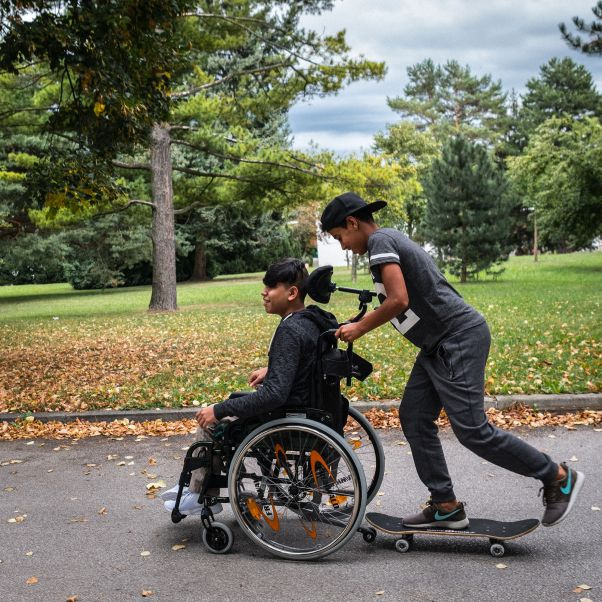
The Committee on the Rights of Persons with Disabilities today commemorated the twentieth anniversary of the adoption of the Convention on the Rights of Persons with Disabilities under the theme “CRPD at 20: The Committee’s Journey, Current Challenges and Future Directions”. It also concluded its thirty-fifth session.
Miyeon Kim, Committee Chairperson, said that during the session, the Committee had adopted concluding observations on the reports of Qatar, Chile, Lithuania, Slovakia and Sri Lanka, as well as general comments no. 9 and no. 10 on article 11, and general comment no. 11 on article 29. Several guidelines and statements relating to disability and the Convention were also adopted.
At the beginning of the meeting, the Committee held an event commemorating the twentieth anniversary of the adoption of the Convention.
Opening the discussion, Awa Dabo, United Nations Deputy High Commissioner for Human Rights, said over the past two decades, the Convention had transformed the global understanding of disability, shifting the conversation from charity and welfare towards rights, equality and inclusion. It had inspired legal reforms, strengthened advocacy and created new opportunities for persons with disabilities to claim their rights and participate in decisions affecting their lives. Yet implementation remained the central challenge and gaps persisted.
Peggy Hicks, Director of the Thematic and Special Procedures Division of the Office of the High Commissioner for Human Rights; Mirriam Ntenge, Senior Manager, speaking on behalf of the President of the International Disability Alliance; Paul van Trigt, Assistant Professor of Social History at Leiden University; and Ola Abualghaib, Director of the Secretariat of the United Nations Global Disability Fund, also gave opening remarks.
In the second part of the discussion on the Committee’s contribution to the implementation of the Convention, statements were made by several former and current Committee members on how the Committee’s general comments had helped advance the implementation of the Convention.
The third part of the discussion on crossroads: interaction of the Committee with other mechanisms, included statements made by a former Committee member, and representatives of the Anti-Personnel Mine Ban Convention and the World Intellectual Property Organization.
In the fourth part of the discussion entitled partnership, statements were made by a representative from the Centre for the Human Rights of Users and Survivors of Psychiatry, the Permanent Representative of the Republic of Korea to the United Nations Office at Geneva, and representatives from the International Disability Alliance, the United Nations Office for Disaster Risk Reduction, and the President of Portugal’s National Mechanism for Monitoring the Implementation of the Convention.
In her closing remarks, Ms. Kim said that 20 years ago, the international community had adopted the Convention and made a historical promise that persons with disabilities were rights holders, equal in dignity and entitled to autonomy, participation and full inclusion in society. The anniversary of the Convention could not just be a celebration, but a commitment to what would actually change.
Closing remarks were also provided by Loreley Drees, a student at the University of Washington, and Céline van Till, Paralympic medallist and Member of the Grand Council of the Republic and Canton of Geneva.
Summaries of the public meetings of the Committee can be found here, while webcasts of the public meetings can be found here. The programme of work of the Committee’s thirty-fifth session and other documents related to the session, including the Committee’s concluding observations, can be found here.
The dates of the Committee’s thirty-sixth session are not available. Information will be available on the Committee’s website.
Commemoration of the Twentieth Anniversary of the Convention on the Rights of Persons with Disabilities
Opening Statements
AWA DABO, United Nations Deputy High Commissioner for Human Rights, said it was a privilege to join the Committee to mark the twentieth anniversary of the Convention on the Rights of Persons with Disabilities. Over the past two decades, the Convention had transformed the global understanding of disability, shifting the conversation from charity and welfare towards rights, equality and inclusion. It had inspired legal reforms, strengthened advocacy and created new opportunities for persons with disabilities to claim their rights and participate in decisions affecting their lives. First steps in legal capacity reforms could be seen in Peru, Colombia, Costa Rica and Spain.
Yet implementation remained the central challenge. Work needed to be done to remove barriers that continued to restrict independent living and hindered participation in the community. Engagement with States and United Nations country teams showed that many barriers were rooted in wider structural challenges, including governance, data, public services and participation. The recommendations of the Committee and other human rights mechanisms could make a decisive difference when translated into national priorities, development plans and concrete action.
Looking ahead, the bridge between global human rights standards and national and local realities needed to be strengthened. This meant integrating disability inclusion across policies and planning from the outset, examining the systems that determined whether rights were enjoyed in practice, and ensuring the meaningful participation of persons with disabilities and their representative organizations. It required sustained engagement with governments, national human rights institutions, United Nations partners and organizations of persons with disabilities. Disability inclusion also needed to be reflected in country analysis, cooperation frameworks and broader efforts to advance sustainable development, social cohesion and human rights for all.
PEGGY HICKS, Director of the Thematic and Special Procedures Division of the Office of the High Commissioner for Human Rights, said it was an honour to celebrate 20 years of the Convention. The United Nations Disability Inclusion Strategy had been adopted in 2019 as a landmark achievement. Its implementation had been challenging, but it had mobilised the work of the Office, and the results and impact were visible. The Office’s main achievements, which were published in its 2025 report, included exceeding requirements in seven indicators; meeting requirements in two areas; and approaching requirements in six. The 2024–2027 Organization Management Plan integrated disability inclusion across all six pillars of work, both as a specific focus and a cross-cutting objective. The United Nations Disability Inclusion Strategy 2.0 was adopted this year, and work was being done towards the first baseline report to be submitted in 2027. This was a time to take stock, look towards the next 20 years, and celebrate two decades of progress and collective effort.
MIRRIAM NTENGE, Senior Manager, speaking on behalf of the President of the International Disability Alliance, said 20 years ago, the Convention was adopted, establishing one of its most innovative obligations: the effective and meaningful engagement of persons with disabilities through their representative organizations. This gave greater power to the voices of 1.6 billion persons with disabilities and made clear that, after 2006, excluding them from decision-making was no longer acceptable. Organizations of persons with disabilities consistently stated how meaningful it was to contribute directly to the Committee’s work and see their concerns reflected in its dialogue with States.
Through alternative reports, private sessions and the precedence given to organizations of persons with disabilities, the Committee had created meaningful opportunities for their voices to shape its work. The Committee’s role in holding States accountable and developing jurisprudence was also recognised. Looking ahead, it was important to protect the gains already achieved. This required a fully functional and adequately supported Committee, including sufficient meeting time and accessibility services during both official and intersessional work. It was also vital to prepare for emerging challenges and opportunities, including technology, climate action and the role of international cooperations in realising the Convention’s vision.
PAUL VAN TRIGT, Assistant Professor of Social History at Leiden University, congratulated the United Nations on the adoption of the Convention on the Rights of Persons with Disabilities 20 years ago. He would share a few highlights from the history of the Convention, based on his book “Progress from the Margins”. The international discussion on disability rights had a remarkable early moment at a 1967 conference in Stockholm, where parents and allies of people with intellectual disabilities called for rights, including the right to choose where to live, vote, marry and have children. This revolutionary request helped set the tone, although persons with disabilities themselves would only later gain a meaningful place on international platforms.
A second important point was that disability was long understood primarily as an issue of social development rather than human rights. Since the 1970s, development policies were seen as the key to improving the lives of persons with disabilities. The United Nation’s 1981 World Programme of Action reflected this approach. Disappointment with the Programme later encouraged self-advocates and their allies to pursue a human rights convention. This history was reflected in the Convention itself, which gave particular attention to structural inequalities, development and the participation of persons with disabilities in implementation.
Finally, it was crucial to recognise the role of self-advocates with a disability. From the late 1990s, they had helped develop and advance the human rights model of disability, building coalitions across groups and countries. Their efforts had contributed to important innovations, including article 12 on equal recognition before the law. The history of the Convention was not simply the story of a marginalised group gaining recognition, but of a diverse coalition creating innovative human rights law from which all humanity could benefit.
OLA ABUALGHAIB, Director of the Secretariat of the United Nations Global Disability Fund, said 20 years was more than an anniversary; it was a generation. For millions of persons with disabilities, rights were still too often recognised by law but not experienced in daily life. Persons with disabilities continued to face exclusion in health, education and other areas of life. The Committee’s work had been essential in making gaps visible. Its concluding observations offered countries a roadmap for reform. However, the world lacked the systems, partnerships and resources to implement the Convention at scale.
This was where international cooperation came into play; connecting global standards with national reforms and local realities. The United Nations Global Disability Fund had shown this was possible. However, successful pilots were not enough. Only sustainable financing could achieve results over time. There needed to be disability inclusion implemented across national budgets and international financing. The twentieth anniversary should be a celebration, as well as a moment for honest assessment and commitment.
Part Two - The Committee’s Contribution to the Implementation of the Convention
Past and present members of the Committee presented how the Committee’s general comments had helped advance the implementation of the Convention. Speakers, amongst other things, congratulated the Committee for its vital work implementing the Convention. Twenty years ago, the Convention had changed the global understanding of disability from charity and medical approaches to affirming persons with disabilities as rights-holders. It was a groundbreaking treaty for the universal human rights system, persons with disabilities worldwide, their representative organizations and their communities.
The last 20 years had proved that it was never too late. Disability had become a visible human rights issue, with its own treaty and its own treaty body. The Committee had brought the human rights model of disability into the practice of the other treaty bodies. National human rights institutions in the monitoring system had helped implement the Convention at home, and its strong participation standards had turned the international disability movement into a powerful human rights movement.
The Convention described unique forms of violence against women with disabilities and intersectional discrimination based on disability and sex. Twenty years on, States had made reforms to recognise this kind of violence and prohibit this explicitly. One speaker said that in August 2026, the Committee had adopted guidelines on identifying and addressing intersectional discrimination on girls, women and older women with disabilities, which was one of the greatest achievements of the Committee. These guidelines expanded upon and clarified the definition of intersectional discrimination and were a product of extensive consultation with civil society. They provided practical guidelines to States parties and other duty bearers on how to implement the Convention in order to address intersectional discrimination against women with disabilities of all ages.
Another speaker noted that the Committee had implemented the Convention through the development of general comment no. four which addressed one of the most fundamental rights of persons with disabilities: the right to education, and, more specifically, the right to inclusive education. The Convention became the first legally binding international instrument to expressly recognise the concept of quality inclusive education. The general comment identified nine core features of inclusive education and provided detailed guidance on the measures that States parties should take to implement them, aiming to lead to better laws and policies and real transformation in the education systems.
During the pandemic, the Committee had considered the appalling conditions in which persons with disabilities continued to be segregated in institutions, and the Committee had therefore developed the guidelines on deinstitutionalisation, including in emergency situations, in consultation with persons with disabilities. These guidelines stated that States parties must put an end to all forms of institutionalisation because they violated the Convention, and recognised that institutionalisation on the basis of disability was a form of violence and discrimination. The guidelines were a useful tool for all States parties to establish a process of deinstitutionalisation that provided the dignified, autonomous and independent life that all persons with disabilities deserved.
Another speaker noted that while persons with disabilities enjoyed the right to vote, in many nations they had not been able to venture into parliament and have a seat at the table and voice where it mattered. Less than one per cent of persons with disabilities were represented in parliament; this must be corrected. Greater emphasis needed to be placed on the right of participation in political and public life of persons with disabilities. This was why it was monumental for the Committee to have adopted general comment 11 on article 29. The general comment highlighted issues that States parties must take into consideration to guarantee this right for persons with disabilities.
Another speaker spoke about the Committee’s development of general comment no. eight on work and employment, which highlighted that disability inclusion in employment was not a favour, a welfare measure, or a special programme at the margins, but a human rights obligation. The general comment was adopted in 2022, and emphasised that States must remove barriers, prohibit discrimination, ensure reasonable accommodation, and transform labour markets so that persons with disabilities could participate equally. The general comment also challenged practices that continued to exclude persons with disabilities from ordinary working life.
Additionally, article 11 of the Convention addressed the exclusion of people with disabilities from mitigation plans, preparedness planning, emergency response and reconstruction efforts and reparation mechanisms. There were two general comments which had been drafted to support this article: general comment no. nine, which aimed to clarify the standards and obligations of States parties under article 11 and its application to international law in the protection of persons with disabilities in situations of risk and humanitarian emergencies; and general comment no. 10, which identified measures needed to implement the standards and obligations of article 11. These general comments sought to address the fragmentation of international law and to apply the standards and principles of the Convention.
One speaker emphasised the importance of the Committee’s communications procedure, which served as a tool to exert justice to individuals all over the world who faced violations of their human rights as a person with a disability.
However, despite all that had been achieved over the past 20 years, much needed to be accomplished. Only about two-thirds of States had ratified the Optional Protocol, and many entered reservations on the right to legal capacity. Twenty years on, there was real progress but insufficient momentum. Nearly every disability-related Sustainable Development Goal indicator was off track, and structural exclusion in education, employment, health, technology and social protection persisted, worsened by wars, climate disasters and inequality.
The focus must shift from standard-setting to implementation. The next 20 years needed to deliver measurable change. Priorities should include aligning
national labour laws, disability laws and social protection systems with the Convention; making reasonable accommodation practical, timely and funded;
investing in inclusive education, skills development, digital inclusion and school-to-work transitions; and collecting disability-disaggregated employment data, including data on women with disabilities.
Public institutions, the private sector, trade unions, development partners and civil society must work together to ensure inclusive recruitment, workplace cultures, flexible work arrangements, anti-harassment measures and opportunities for career progression. Where new standards were still being written, disability must be included, including in two conventions now being drafted: the Convention on the Rights of Older Persons, and the Crimes against Humanity Convention.
Part Three - Crossroads: Interaction of the Committee with other Mechanisms
In the discussion, speakers, amongst other things, said when the Convention was adopted in 2006, it represented something extraordinary. It was not merely another international treaty. It was a declaration to the world that persons with disabilities were full and equal holders of human rights. Twenty years since its adoption, the Convention marked a paradigmatic and global shift in the recognition of persons with disabilities, regardless of their impairment, age, sex, gender, or the type and intensity of support they required. The Convention explicitly recognised persons with disabilities as full subjects of the international human rights system.
By ratifying the Convention, States committed themselves to dismantling structural and systemic patterns of ableism and disability-based discrimination and to take all necessary measures to ensure the full respect, protection and fulfilment of the rights of persons with disabilities. Over the past 20 years, considerable efforts had been made by States parties to implement the Convention; however, much remained to be done to translate its principles and obligations into lived realities.
Children with disabilities continued to face systematic and structural denial of their rights across the world, depriving them of equality with other children, and requiring particular respect, protection and recognition. Structural and systemic discrimination continued to channel them into segregated pathways that separated them from their peers and denied them equal opportunities to grow, develop, participate and exercise their rights on an equal basis with other children.
It was in this context that it was important to recall the joint position of the Committee and the Committee on the Rights of a Child, which in 2022 called upon States parties to embrace the human rights model of disability and to ensure the full implementation of key provisions concerning the rights of children with disabilities. Two key elements included the right to inclusive education and the right to family life, which constituted fundamental pillars for the practical realisation of the rights of children with disabilities. The Committee was encouraged to consistently reaffirm and bring this important joint statement to the attention of States parties to use it, with the Convention, as a key framework for the full realisation of the rights of children with disabilities.
One speaker stated that the Convention had been one of the most transformative forces in the history of humanitarian disarmament. When the 1997 Mine Ban Convention was adopted, it broke new ground by committing its States parties to provide assistance to victims. The Anti‑Personnel Mine Ban Convention was the first disarmament Convention to include dedicated provisions for the victims of the very weapon it prohibited. However, the Convention gave those commitments their full meaning, fundamentally reshaping victim assistance and the way support to survivors was understood and delivered.
Today, because of the Convention, victim assistance was embedded in national health systems, rehabilitation and assistive‑technology services, social protection frameworks, inclusive education policies, employment strategies and national disability laws. The Convention had made assistance sustainable, equitable and aligned with national priorities, and anchored it in the broader human rights architecture of States to ensure that survivors must be involved in decisions affecting their lives.
Another speaker said that the Convention was a key reference for the Marrakesh Treaty to Facilitate Access to Published Works for Persons Who Are Blind, Visually Impaired or Otherwise Print Disabled, of which the foundation was anchored in the Convention’s key principles. The Marrakesh Treaty created exceptions in copyright law so that accessible-format books, including braille, audio and digital texts, could be produced by authorised entities and shared across borders without the need to request permission from the copyright owner. Such exceptions were created for the benefit of people who were blind, visually impaired or print disabled.
For centuries, the world's publications were not available to people who were blind or visually impaired, until the creation of braille 200 years ago. It was currently estimated that fewer than 10 per cent of all published works were made available in accessible formats. The Committee was acknowledged for making recommendations on country reports in relation to article 24 on education and treating the provisions under article 24 as a braille literacy obligation, emphasising the teaching, learning and use of braille, as well as the shortage of inclusive education teachers and specialist support staff trained in braille.
Speakers concluded by stating that as the world commemorated 20 years of the Convention, it was important to reaffirm the shared promise where all persons with disabilities could live, participate and thrive on an equal basis with others, and to advocate for all persons with disabilities.
Part Four - Partnership
In the discussion, speakers, amongst other things, said 20 years ago, the international community made a fundamental choice: to see persons with disabilities not as objects of charity or protection, but as rights holders, equal in dignity and entitled to participate fully in society. The Convention clearly outlined that persons with disabilities were rights holders. Partnership was key to promote and ensure the participation of national organizations of persons with disabilities in the work of the Committee, said a speaker. For many of these organizations, participation at the Committee reviews had been a turning point in their advocacy path.
One speaker noted that the work of the Committee had been crucial in establishing conclusively that the Convention prohibited psychiatric detention and forced interventions, while creating a framework for social model supports and entitlement to full economic, social, cultural, civil and political rights without any discrimination. This was emphasised in the Committee’s general comment no. 1, which called for the abolition of forced mental health treatment regimes as a form of substitute decision-making and violation of the right to legal capacity. The Committee’s guidelines on the right to liberty and security of the person and the guidelines on deinstitutionalisation added to this normative framework.
The Committee was also recognised for the way it had integrated the principles and priorities of the Sendai Framework for Disaster Risk Reduction in its reporting guidance and engagement with States parties, and for how it had integrated the disaster risk reduction in its concluding observations to States parties. The Sendai Framework had served as a benchmark in the Committee's interpretations on article 11, which demonstrated the power of bringing together legally binding human rights obligations with global policy frameworks, such as the Sendai Framework, to strengthen implementation and accountability. The Committee's work remained pivotal in monitoring implementation, giving guidance, strengthening accountability and ensuring that the voices, rights, and leadership of persons with disabilities and their organizations were at the centre of efforts to reduce disaster risk.
Another speaker said the next decade must be about turning the rights in the Convention into reality in schools, workplaces, public life, communities and digital spaces. As artificial intelligence and digital transformation reshaped societies, persons with disabilities must participate fully and equally in shaping that future. Technology could expand opportunities, but it could also create new barriers if they were excluded from its design. Accessibility, universal design and meaningful participation must therefore be built in from the outset.
Every State party must create an independent monitoring framework in line with the Paris Principles, said one speaker. This would monitor how the Convention was implemented, improve laws and public services and ensure the active participation of persons with disabilities and representative organizations in monitoring their own rights. These bodies needed to be independent, have operational autonomy and have strong technical capacity.
Closing Statements
LORELEY DREES, student at the University of Washington, said she was only one and a half years old when the Convention was adopted. The Convention recognised the rights of young people like herself to education, to a career, to make decisions about bodies and relationships, and to live freely and equally with their peers. At a time when human rights were under threat, and persons with disabilities were disparaged by those in positions of power, it gave hope that the principles of the Convention had been recognised by so many. But there was still much work to do.
Ms. Drees said she was one of too few young persons with disabilities who had access to education, sufficient food and health care, and a safe environment. She was also one of even fewer preparing for a career in law and studying international human rights in Geneva. Young persons with disabilities must be recognised as leaders in the feminist, climate justice, racial justice, humanitarian and reproductive justice movements.
Ms. Drees thanked everyone who had helped bring the Convention into being and who continued to advocate for its principles. Young people were ready to take up the work of the Committee, so that 20 years from now, there would be two more decades of progress. The Convention had provided a strong foundation, language and a reference point from which to build.
CÉLINE VAN TILL, Paralympic medallist and Member of the Grand Council of the Republic and Canton of Geneva, said she was born in 1991 and in 2008, she was involved in a horse-riding accident that left her with a partial disability following a traumatic brain injury. She had had to relearn the simple actions of daily life, specifically, how to speak and walk. Today, she was an elite athlete: a two-time world champion in para-cycling, a three-time double European champion, and a two-time Paralympic silver medallist. She had also been elected to the Parliament of the Republic and Canton of Geneva in 2023.
Twenty years ago, in 2006, the United Nations had adopted the Convention on the Rights of Persons with Disabilities, which was a significant milestone. Since then, there had been many changes, including projects and initiatives, but perhaps the greatest change was the way society viewed people with disabilities today. There had been a shift from integration to inclusion, particularly in sport. Para-sport had gained momentum over the years. The Paris 2024 Paralympics were an exemplary example. Paris 2024 had demonstrated that attitudes towards disability had shifted and that society had entered a new era. Over time, disability had gained increasing prominence, which was welcome, yet there was still a long way to go. It was vital to continue to champion the place of people with disabilities in society and ensure that society was inclusive in every respect.
MIYEON KIM, Committee Chairperson, said 20 years ago, the international community had adopted the Convention and made a historical promise that persons with disabilities were rights holders, equal in dignity and entitled to autonomy, participation and full inclusion in society. Over the past 20 years, the Committee had worked to turn the words of the Convention into meaningful change in people’s everyday lives. Beyond every recommendation of the Committee lay the fundamental question: had the Convention made a real difference in the life of a person with disabilities? The anniversary of the Convention could not just be a celebration, but a commitment to what would actually change.
Before concluding, Ms. Kim expressed gratitude to everyone who had joined the event. She said that during the session, the Committee had adopted concluding observations on the reports of Qatar, Chile, Lithuania, Slovakia and Sri Lanka, as well as general comments no. 9 and no. 10 on article 11, and general comment no. 11 on article 29. Several guidelines and statements relating to disability and the Convention were also adopted.
___________
Produced by the United Nations Information Service in Geneva for use of the media;
not an official record. English and French versions of our releases are different as they are the product of two separate coverage teams that work independently.
CRPD26.013E