

Committee on the Rights of Persons with Disabilities Holds Event to Celebrate World Down Syndrome Day and the Twentieth Anniversary of its Convention
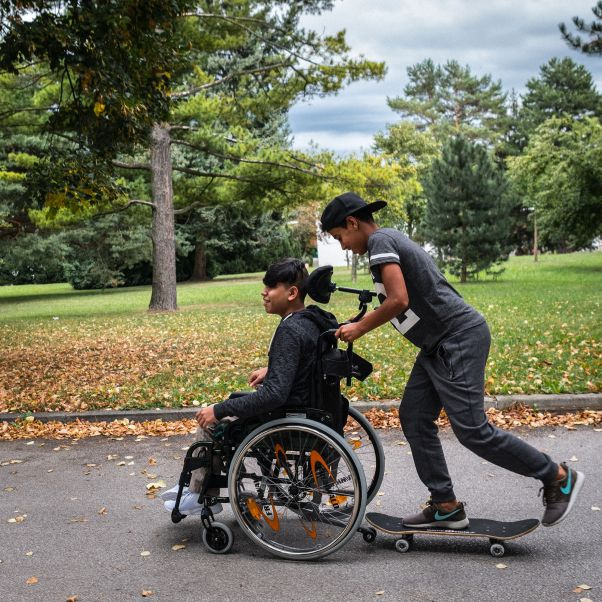
The Committee on the Rights of Persons with Disabilities today held an event in celebration of World Down Syndrome Day and the twentieth anniversary of the Convention on the Rights of Persons with Disabilities. The theme of the event was “ending loneliness through inclusion, dignity and empowerment, especially for persons with Down syndrome.”
Opening the event, Miyeon Kim, Committee Chair, said that too often, the lives of persons with Down syndrome were shaped by isolation, low expectations and exclusion. Loneliness was the result of battles created by society. The Convention called on society to eliminate these battles and to ensure participation, inclusion and respect for difference. The event challenged the world to recognise the voices of persons with Down syndrome and ensure that they were fully included in all aspects of life, she said.
Ettore Balestrero, Permanent Observer of the Holy See to the United Nations Office at Geneva, said in opening remarks that all persons with Down syndrome needed to fully enjoy their human rights and participate meaningfully in every aspect of society and have every opportunity to flourish. He called on the international community to continue to build a culture of life and humanity where every person, including those with Down syndrome, was welcomed with dignity and respect.
In opening remarks, Si-jin Song, Deputy Permanent Representative of the Republic of Korea to the United Nations Office at Geneva, said this year’s theme was a reminder that inclusion was not about policies or institutions but also about human connection. True inclusion meant creating opportunities for meaningful relationships and participation in education and community life, while recognising the equal dignity of every individual, Mr. Song said.
Jean-Marie Le Méné, President of the Jérôme Lejeune Foundation, said in an opening statement that this year, the theme of the event was particularly well chosen. Loneliness often accompanied persons with intellectual disabilities because disability, illness and old age isolated them. There was work to be done to ensure that policies and social behaviours did not artificially create additional loneliness, he said.
The event featured two panel discussions: the first featuring self-advocates for the rights of persons with Down syndrome, and the second on promoting dignity and rights through healthcare, research and early inclusion.
In the first panel discussion, speakers presented testimonies stressing the importance of respecting differences, building equal and inclusive societies, and accepting persons with Down syndrome as full members of the human family. Speakers said that the twentieth anniversary of the Convention was an opportunity for the international community to renew its commitment to the Convention, dignity and inclusion.
Speaking as self-advocates in the panel discussion were Foucauld de Vivier (France), Mariam Dhiab (Kuwait), Laia Martí Santiago (Spain), and Omer Alshami (United Arab Emirates). Antonio Rosique, President of European Union for Trisomy 21, also spoke.
In the second panel discussion, speakers discussed the link between health issues and social isolation, and the need for early treatment and investment in health care to prevent those issues; the role of the World Health Organization’s Disability Health Equity Network in promoting inclusive and equitable health systems and combatting exclusion; the need for increased tolerance for the births of children with Down syndrome; and initiatives to support persons with Down syndrome.
Speaking in the panel discussion were Guillaume Duriez, Director of the Jérôme Lejeune Institute; Kaloyan Kamenov, World Health Organization; Danielle Moyse, Associate Doctor of Philosophy and Associate Researcher at the Interdisciplinary Research Institute on Social Issues; and Michel Veuthey, Order of Malta.
In closing remarks, Ms. Kim expressed sincere gratitude to all participants and persons who had contributed to the event, particularly the young self-advocates with Down syndrome who shared their experiences. Their contributions were truly inspiring and were at the heart of the Committee’s work, she said.
Summaries of the public meetings of the Committee can be found here, while webcasts of the public meetings can be found here. The programme of work of the Committee’s thirty-fourth session and other documents related to the session can be found here.
The Committee will next meet in public at 5 p.m. on Thursday, 26 March, to close its thirty-fourth session and issue concluding observations on the reports of Guinea-Bissau, Lesotho, Liberia, Marshall Islands, Pakistan and Samoa, which were considered during the session.
Opening Statements
MIYEON KIM, Committee Chair, said the event aimed not only to raise awareness but to reaffirm a simple truth that persons with Down syndrome were rights holders who were equal in dignity, humanity and rights. Too often, their lives were shaped by isolation, low expectations, and exclusion. Loneliness was not an individual condition; it was the result of battles created by society. The Convention called on society to eliminate these battles and to ensure participation, inclusion and respect for difference. Inclusion was not act of kindness; it was a legal and moral obligation. The event stemmed from the need for inclusion. It challenged the world to recognise the voices of persons with Down syndrome and ensure that they were fully included in all aspects of life.
ETTORE BALESTRERO, Permanent Observer of the Holy See to the United Nations Office at Geneva, said that through untrained eyes, persons with Down syndrome could appear lonely. However, they were not alone. Their presence at the event gave it greater meaning. Mr. Balestrero thanked all speakers for their courage, authenticity and generosity.
Down syndrome was more than a diagnosis or a condition. All persons with Down syndrome possessed the same inherent dignity and sacred value, intentionally and lovingly imprinted by the Creator from the very moment of conception. They held fundamental rights like everyone else. They needed to fully enjoy their human rights and participate meaningfully in every aspect of society and have every opportunity to flourish. Discriminatory and eugenic practices linked to prenatal screening and selective termination of pregnancies targeting babies diagnosed with Down syndrome needed to be firmly rejected.
On this special day, the international community paid tribute to the many professionals and institutions around the world that were committed to continuing care for persons with Down syndrome and their families. The value of a person’s life should not be measured by utility or performance, but by the simple fact that they were human. The international community needed to continue to build a culture of life and humanity where every person, including those with Down syndrome, was recognised as unique and unrepeatable, and welcomed with dignity and respect.
SI-JIN SONG, Deputy Permanent Representative of the Republic of Korea to the United Nations Office at Geneva, thanked all persons who had contributed to organising the event. This year’s theme, “Together Against Loneliness”, was a reminder that inclusion was not about policies or institutions but also about human connection. Persons with Down syndrome experienced isolation due to social barriers and misconceptions. The call to move from loneliness to inclusion invited the international community to build communities where everyone felt welcomed, valued and connected.
True inclusion meant creating opportunities for meaningful relationships and participation in education and community life, while recognising the equal dignity of every individual. When societies embraced diversity and removed barriers, they took important steps toward building stronger and more compassionate communities. The Republic of Korea was pleased to join partners across the United Nations and civil society to work to ensure that persons with Down syndrome lived with dignity, opportunity and a strong sense of belonging. In closing, Mr. Song noted that the event was being held in a room that normally hosted meetings on disarmament, and expressed happiness that it could today host a meeting on a less contentious but no less important topic.
JEAN-MARIE LE MÉNÉ, President of the Jérôme Lejeune Foundation, said the convening of this event showed the high level of interest that the Committee had in intellectual disabilities, which were sometimes somewhat forgotten in the vast world of disability. This year, the theme was particularly well chosen. Loneliness often accompanied such persons because disability, illness and old age isolated them. There was work to be done to ensure that policies and social behaviours did not artificially create additional loneliness. The Jérôme Lejeune Foundation worked for increased inclusion for people with Down syndrome from a scientific point of view, funding research with a therapeutic aim, and from a medical point of view, financing the consultation service offered by the Jérôme Lejeune Institute.
The remarks that would be heard at this event would form part of the long and rich jurisprudence of the Committee, which was based on the Convention. Mr. Le Méné said he was looking forward to the twentieth anniversary of the Convention.
A video celebrating World Down Syndrome Day and the twentieth anniversary of the Convention was then screened.
First Panel Discussion on Self-Advocates for the Rights of Persons with Down Syndrome
In the first panel discussion, speakers presented testimonies advocating for the rights of persons with Down syndrome and stressing the importance of respecting differences, building equal and inclusive societies, and accepting persons with Down syndrome as full members of the human family. Speakers argued that Down syndrome should not be used as an excuse for excluding people. They called for protection that empowered persons with Down syndrome rather than isolated them. The international community needed to create a society where all lives were equal, and every person was valued for their inherent dignity. The most effective way to protect the rights of persons with Down syndrome was to give them the ability to advocate for their rights, one speaker said. Speakers said that the twentieth anniversary of the Convention was an opportunity for the international community to renew its commitment to the Convention, dignity and inclusion.
Speakers said loneliness was often a by-product of a society that viewed genetic diversity as a problem to be solved rather than a natural part of the human experience. Persons with Down syndrome could feel lonely even when they were surrounded by others, if they were made to feel that they did not belong. Connections and friendships could change this. When people were included and felt well, loneliness faded away and they started believing in themselves.
Speakers also described initiatives that encouraged persons with Down syndrome to participate in society, such as the Paralympics, the Special Olympics and self-advocacy networks. An initiative to develop a monitoring system to discourage prenatal selection was also presented.
Second Panel Discussion on Promoting Dignity and Rights Through Healthcare, Research and Early Inclusion
In the second panel discussion, one speaker said that for people with Down syndrome, loneliness and isolation often stemmed from health issues that were both preventable and treatable. He discussed the importance of early treatment of the various medical issues that inhibited the social participation of persons with Down syndrome, and the empowerment of families and individuals with Down syndrome. He called on States to design lifelong care pathways specifically tailored to the needs of people with intellectual disabilities and to fund specialised medical networks responsible for care coordination. Investment in health care not only prevented disease but also promoted autonomy and human connection.
One speaker said loneliness was one of the biggest threats for humanity today, and it could be a greater threat to persons with Down syndrome. The speaker said the World Health Organization had recently launched a Disability Health Equity Network, which brought together more than 150 governments, civil society organizations and organizations of persons with disabilities. The network created a space where individuals and organizations could connect to advocate for inclusive health systems and equitable health care, and work to eliminate exclusion. The speaker called on the international community to join the network and to work together to address isolation and loneliness.
Another speaker argued that the practice of terminating pregnancies when the foetus had Down syndrome was a form of selectionism and eugenics that was influenced by ideological and social pressures. She noted with concern that a large percentage of such pregnancies resulted in medical terminations, and that future parents of children with Down syndrome were isolated by the fear that their child would not be like “everyone else”. She called for increased tolerance for the births of children with Down syndrome. Society should focus on eliminating the syndrome but not its patients, she concluded.
One speaker presented initiatives organised by the Order of Malta to support persons with disabilities, including health and social care facilities for persons with Down syndrome that involved families in treatment and used innovative therapies; a pilgrimage from Poland to Lebanon in support of persons with disabilities; and an international summer camp for young persons with disabilities held in Spain.
Concluding Remarks
JEAN-MARIE LE MÉNÉ, President of the Jérôme Lejeune Foundation, said there were no better advocates for persons with Down syndrome than persons with Down syndrome themselves, who knew best what it meant to live with the syndrome. No one had the right to prejudge their happiness. Down syndrome should not be linked with unhappiness — doing so led to voluntary exclusion and solitude. Mr. Le Méné expressed gratitude to the Committee for organising the event. After 20 years of progress towards inclusion guided by the Convention, the next 20 years needed to be just as promising, and they would be if the Committee remained attentive to persons with disabilities, to those who took care of them and families, and to technological developments that could have positive or negative effects on their lives.
Mr. Le Méné said that a great German philosopher Jürgen Habermas died less than a week ago. One of his books entitled “The Future of Human Nature” was of direct interest to today’s theme. Worried about the rise of biotechnology, Habermas criticised “liberal eugenics” and recalled the need to consider an “ethics of the human species”. An optimist, he appealed to reason and “staying the course”. Although some of his arguments were debatable, this great philosopher dared to ask questions that most societies now did not have the courage to address.
Concluding, Mr. Le Méné commended the quality of the presentations delivered at the event, which encouraged the international community to move forward with the support of the Committee.
ETTORE BALESTRERO, Permanent Observer of the Holy See to the United Nations Office at Geneva, said that the existence of Down syndrome was a sign of humanity. Humanity needed to be protected in all its realities and dimensions. Mr. Balestrero thanked all those who had contributed to the event.
MIYEON KIM, Committee Chair, expressed sincere gratitude to all participants and persons who had contributed to the event, particularly the young self-advocates with Down syndrome who shared their experiences. Their contributions were truly inspiring and were at the heart of the Committee’s work.
___________
Produced by the United Nations Information Service in Geneva for use of the media;
not an official record. English and French versions of our releases are different as they are the product of two separate coverage teams that work independently.
CRPD26.006E