
Human Rights Council Adopts Resolution Extending Mandates of Fact-Finding Mission and Special Rapporteur on Iran and Calling for an Urgent Investigation into Human Rights Violations in Iran in the Context of the Protests Beginning 28 December 2025
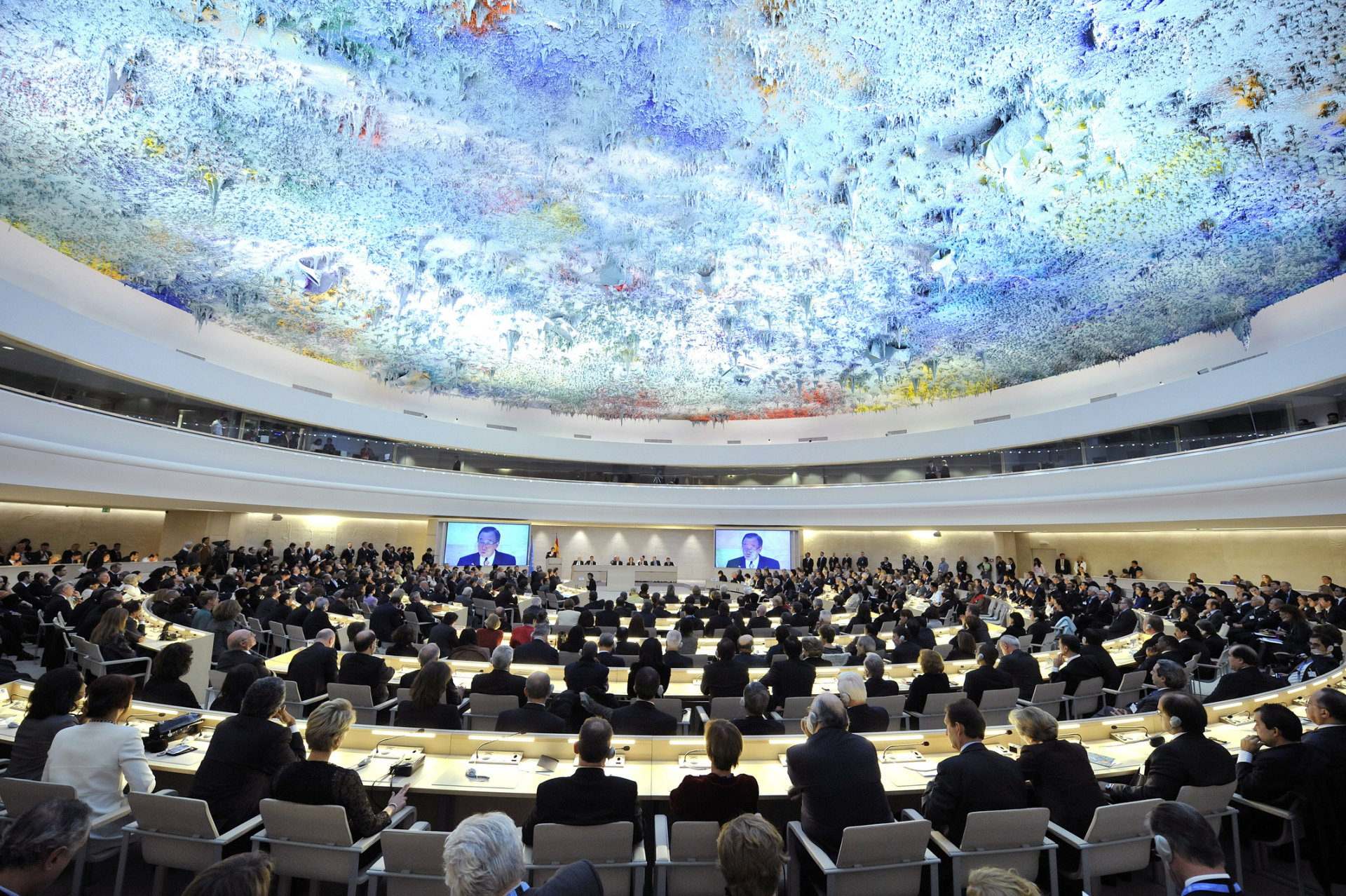
The Human Rights Council this afternoon held its thirty-ninth special session on the deteriorating human rights situation in the Islamic Republic of Iran, adopting a resolution in which it extended the mandate of the Independent International Fact-Finding Mission on Iran for two years, and the mandate of the Special Rapporteur on the situation of human rights in Iran for one year. The resolution also called for an urgent investigation by the Fact-Finding Mission, in the context of the repression of nationwide protests beginning 28 December 2025.
In the resolution, which was adopted by a vote of 25 in favour, 7 against and 14 abstentions, the Council strongly deplored the violent crackdown of peaceful protests resulting in the deaths of thousands of persons, including children, and large numbers of injured individuals, as well as the arrest of thousands in connection with the nationwide protests that started on 28 December 2025. It urged the Government of the Islamic Republic of Iran to respect, protect and fulfil its human rights obligations and to take all measures necessary to stop and prevent extrajudicial killing, other forms of arbitrary deprivation of life, enforced disappearance, sexual and gender-based violence, arbitrary arrest and detention, incommunicado detention and torture and other cruel, inhuman or degrading treatment or punishment, including against peaceful protesters.
The Council extended the mandate of the Independent International Fact-Finding Mission on Iran, for a further period of two years, and requested it to conduct an urgent investigation into allegations of recent and ongoing serious human rights violations and abuses and crimes perpetrated in relation to the protests that began on 28 December 2025, including for potential future legal proceedings in line with its mandate. The mandate of the Special Rapporteur on the situation of human rights in Iran was also extended for a further period of one year.
Opening the session, Volker Türk, United Nations High Commissioner for Human Rights, said the brutality in Iran continued, with thousands of people, including children, killed in a security crackdown that intensified on 8 January, with the use of live ammunition by security forces against demonstrators. Mr. Türk called for the top leadership in Iran to end their brutal repression, including summary trials and disproportionate sentences; immediately release all those arbitrarily detained; implement a complete moratorium on the death penalty; end the internet and communications shutdown; and for independent investigations into all human rights violations, consistent with international standards, among other measures.
Mai Sato, Special Rapporteur on the situation of human rights in the Islamic Republic of Iran, also speaking on behalf of the Coordination Committee of the Special Procedures, said on 28 December 2025, severe economic hardships ignited demonstrations across Iran that became a nationwide movement, with men and women from diverse ethnic and religious groups demanding political change. Iranian authorities had responded with violence and the situation deteriorated dramatically on 8 January 2026, with authorities implementing a near-total internet and telecommunications shutdown. Authorities had reported over 3,000 deaths including security forces, while some civil society estimated up to tens of thousands, though these figures could not be verified due to the internet shutdown.
Sara Hossain, Chair of the Independent International Fact-Finding Mission on the Islamic Republic of Iran, said unprecedented levels of violence had been witnessed in the Islamic Republic of Iran in the past three weeks, marking what appeared to be the deadliest crackdown against its people since the Revolution of 1979. The Fact-Finding Mission on Iran had been interviewing witnesses and gathering evidence which pointed to severe human rights violations. Reports suggested that security forces unleashed extensive lethal force against protesters, including with assault rifles and heavy machine guns, leading to a staggering number of deaths. Images of grieving relatives searching for their loved ones at the makeshift Kahrizak morgue in Tehran city, among what appeared to be hundreds of body bags piled on top of another, were haunting.
Payam Akhavan, Professor and civil society representative, said the savagery of the past days was unprecedented. Authorities initially claimed that 5,000 had been killed but reduced the figure to 3,000 two days ago, which was a gross underestimate. Although the exact number may not be known due to the internet blackout, by any plausible estimate, this was the worst mass-murder in the contemporary history of Iran. Mr. Akhavan said that as a prosecutor at the International Criminal Tribunal in The Hague, he had helped draft the indictment for the Srebrenica genocide in which some 8,000 Bosnian Muslims were massacred during July 1995. By comparison, at least twice that number had been killed in Iran in half the time. This was an extermination.
Iran, speaking as the country concerned, said the sponsors of this session had never genuinely cared for the human rights of Iranians, otherwise, they would not have imposed sanctions which impacted the lives of Iranians and supported Israel’s war against the State. When the protests began on 28 December 2025, Iran had recognised the right of people to peaceful protests, but these had transformed into organised violence, including terrorist attacks, against law enforcement. Iran did not recognise the legitimacy or validity of the special session or its subsequent resolution.
In the discussion, some speakers, amongst other things, welcomed the convening of the special session and expressed solidarity with the people of Iran. Many speakers strongly condemned the violations committed by the Iranian authorities since 28 December, including the brutal repression of peaceful protests across Iran, and the use of violence by security forces against these demonstrators. Other speakers affirmed solidarity with the Government of Iran, following violent protests which were encouraged by foreign actors. They did not support convening of the special session of the Council. The session was an example of double standards which continually occurred in the Council.
After the resolution was adopted, the draft report of the session was also adopted.
Speaking in the discussion were Iceland, on behalf of a group of countries, Estonia, on behalf of a group of countries, European Union, on behalf of a group of countries, North Macedonia, Slovenia, Spain, Iraq, France, Republic of Korea, Switzerland, Egypt, Japan, Albania, Brazil, United Kingdom of Great Britain and Northern Ireland, Thailand, Cyprus, China, South Africa, Ghana, Pakistan, Colombia, Cuba, Netherlands, Angola, Ethiopia, Bulgaria, Chile, Italy, Ecuador, Czechia, Kenya, Bolivia, Germany, Luxembourg, Ireland, Ukraine, Belarus, Australia, Austria, Venezuela, Paraguay, Belgium, Oman, Uruguay, Eritrea, Liechtenstein, Malta, Zimbabwe, Slovakia, Greece, Republic of Moldova, Montenegro, Russian Federation, New Zealand, Argentina, Democratic People's Republic of Korea, Portugal, Burkina Faso, Sri Lanka, Mali and Canada.
Also speaking were International Federation for Human Rights Leagues, Ensemble contre la Peine de Mort, United Nations Watch, Human Rights Watch, Amnesty International, Association of Iranian Short Statured Adults, Association for Defending Victims of Terrorism, Pars Non-Trading Development Activists Co., Iran Human Rights Documentation Centre, The Institute for Protection of Women's Rights, Coordination des Associations et des Particuliers pour la Liberté de Conscience, Jameh Ehyagaran Teb Sonnati Va Salamat Iranian, payamavaran hamyari (chatra, Article 19 - International Centre Against Censorship, The
CIVICUS - World Alliance for Citizen Participation, Baha'i International Community, Organization for Defending Victims of Violence, Alliance internationale pour la défense des droits et des libertés, Maloca Internationale, International Rehabilitation Council for Torture Victims, andImam Ali’s Popular Students Relief Society.
The webcast of the Human Rights Council meetings can be found here. All meeting summaries can be found here. Documents and reports related to the Human Rights Council’s thirty-ninth special session can be found here.
The Council is scheduled to hold its sixty-first regular session from 23 February to 2 April 2026.
Resolution
In a resolution (A/HRC/S-39/L.1) on the situation of human rights in the Islamic Republic of Iran, especially in the context of the repression of nationwide protests starting on 28 December 2025, as orally revised, adopted by a vote of 25 in favour, 7 against and 14 abstentions, the Council strongly deplores the violent crackdown of peaceful protests resulting in the deaths of thousands of persons, including children, and large numbers of injured individuals, as well as the arrest of thousands in connection with the nationwide protests that started on 28 December 2025; urges the Government of the Islamic Republic of Iran to respect, protect and fulfil its human rights obligations and to take all measures necessary to stop and prevent extrajudicial killing, other forms of arbitrary deprivation of life, enforced disappearance, sexual and gender-based violence, arbitrary arrest and detention, incommunicado detention and torture and other cruel, inhuman or degrading treatment or punishment, including against peaceful protesters; decides to extend the mandate of the Independent International Fact-Finding Mission on the Islamic Republic of Iran, for a further period of two years, and requests the Fact-Finding Mission to present a report to the Council at its sixty-fourth and sixty-seventh sessions during an interactive dialogue and to present an oral update, to be followed by an interactive dialogue, on the implementation of the mandate to the General Assembly at its eighty-first and eighty-second sessions; requests the Fact-Finding Mission to conduct an urgent investigation into allegations of recent and ongoing serious human rights violations and abuses and crimes perpetrated in relation to the protests that began on 28 December 2025, including for potential future legal proceedings in line with its mandate, and to present a report on its findings to the Council at its sixty-third session, during an interactive dialogue, and to provide an oral briefing update to the General Assembly, during a joint interactive dialogue with the Special Rapporteur at the eighty-first session of the Assembly; and decides to extend the mandate of the Special Rapporteur on the situation of human rights in the Islamic Republic of Iran, for a further period of one year, to order to continue to monitor the ongoing situation of human rights in the country, including civil, political, economic, social and cultural rights, and to measure progress in the implementation of recommendations, and requests the Special Rapporteur to submit a report to the Council at its sixty-fourth session, during a joint interactive dialogue with the Fact-Finding Mission and to the General Assembly at its eighty-first session.
The results of the vote were as follows:
In favour (25): Albania, Benin, Bolivia, Bulgaria, Chile, Colombia, Cyprus, Czechia, Dominican Republic, Ecuador, Estonia, France, Ghana, Iceland, Italy, Japan, Marshall Islands, Mexico, Netherlands, North Macedonia, Republic of Korea, Slovenia, Spain, Switzerland, and the United Kingdom
Against (7): China, Cuba, India, Indonesia, Iraq, Pakistan, and Vietnam.
Abstentions (14): Angola, Brazil, Burundi, Côte d’Ivoire, Democratic Republic of the Congo, Egypt, Ethiopia, Gambia, Kenya, Kuwait, Malawi, Mauritius, Qatar, South Africa, and Thailand.
Opening Statements
VOLKER TÜRK, United Nations High Commissioner for Human Rights, said the brutality in Iran continued, creating conditions for further human rights violations, instability and bloodshed. Thousands of people, including children, were killed in a security crackdown that intensified on 8 January, with the use of live ammunition by security forces against demonstrators. Specific facts were difficult to verify due to the communications shutdown on 8 January, and the Office’s lack of access to Iran. Peaceful protestors had reportedly been killed in areas, including universities and medical facilities. The Office had indications that security forces made mass arrests in several cities, even pursuing injured people into hospitals, and detaining lawyers, human rights defenders, activists, and ordinary civilians.
The Tehran Prosecutor’s Office had reportedly opened criminal cases against athletes, actors, cafe owners and others, on charges of supporting the protests. Worryingly, Iran remained among the top executioner States in the world, with at least 1,500 people reportedly executed in 2025, a 50 per cent increase on the previous year. Contradictory statements from the Iranian authorities about whether those detained in connection with the protests would be executed were deeply concerning. The broadcast by State media of nearly 100 forced confessions by those detained raised grave concerns over the rights to due process and a fair trial.
The internet shutdown, the longest recorded in Iran, had severely restricted access to information and communication, leaving Iranians unable to speak to each other and people outside the country, including those who were detained. The recent protests, sparked by soaring prices, against the backdrop of a serious economic crisis, were initially responded to by authorities by a call for dialogue, which tragically gave way to the old pattern of killings and arrests. The only way out was through dialogue based on the human rights of all Iranians.
Mr. Türk had seven messages for the top leadership in Iran: to end their brutal repression, including summary trials and disproportionate sentences; immediately release all those arbitrarily detained; implement a complete moratorium on the death penalty; end the internet and communications shutdown; hold independent investigations into all human rights violations, consistent with international standards; and for authorities to initiate reforms, engaging with the Office of the High Commissioner, the Independent International Fact-Finding Mission and the Special Rapporteur. Beyond Iran, the international community needed to take immediate steps to address the impact of sanctions on the human rights of the Iranian people.
MAI SATO, Special Rapporteur on the situation of human rights in the Islamic Republic of Iran, also speaking on behalf of the Coordination Committee of the Special Procedures, said on 28 December 2025, severe economic hardships had ignited demonstrations across Iran that became a nationwide movement, with men and women from diverse ethnic and religious groups demanding political change. Iranian authorities had responded with violence and the situation deteriorated dramatically on 8 January 2026, with authorities implementing a near-total internet and telecommunications shutdown, preventing the international witnessing of atrocities and causing anguish for families inside and outside of Iran unable to confirm their loved ones’ safety.
The death toll remained contested due to the shutdown, which enabled authorities to control information flow. Authorities had reported over 3,000 deaths, including security forces, while some civil society estimated up to tens of thousands, though these figures could not be verified. The staggering discrepancy demonstrated how the shutdown had obscured the true scale of events. Ms. Sato had received reports that authorities were coercing families to falsely claim deceased relatives were Basij members allegedly killed by protesters, as well as forcing payments for body retrieval. The dangerous rhetoric labelling peaceful protesters as ‘terrorists’, ‘rioters’, or ‘mercenaries’ sought to justify brutal crackdowns. The use of excessive force and the death penalty against peaceful protesters demonstrated clear disregard for the right to freedom of assembly and expression, and the right to life.
Tens of thousands of individuals, including schoolchildren, had reportedly been detained nationwide without legal counsel or family contact, with raids also conducted in hospitals. Information had been received of detainees being coerced into making false confessions broadcast on television, reinforcing the State’s narrative that protesters were dangerous criminals. Civic space had faced further restrictions, including media closures and intimidation of lawyers, journalists, and activists. Ms. Sato said she would continue monitoring the situation and provide an update at the next Council session. She reiterated her request for a country visit. She urged the Council to empower the Fact-Finding Mission to investigate these protest-related violations to ensure accountability. The Iranian people had shown extraordinary courage and now the international community must respond with the urgency and commitment this situation demanded.
SARA HOSSAIN, Chair of the Independent International Fact-Finding Mission on the Islamic Republic of Iran, said unprecedented levels of violence had been witnessed in the Islamic Republic of Iran in the past three weeks, marking what appeared to be the deadliest crackdown against its people since the Revolution of 1979. The protests that started on 28 December, sparked by an economic crisis and deteriorating living conditions, quickly spread to all 31 of Iran’s provinces. After the Government initially adopted a conciliatory tone, the State response devolved into increasing violence. The Fact-Finding Mission on Iran had been interviewing witnesses and gathering evidence which pointed to severe human rights violations, including unnecessary and disproportionate use of force, resulting in arbitrary killings, torture, sexual violence, arbitrary arrests and detentions, and forced confessions.
The Government of Iran had briefed the Mission on the situation and provided reports with its perspective on the events, including allegations of external interference. Threat or acts of unilateral military intervention by third States were contrary to international law. This, however, did not absolve any State of its obligation to respect, protect and ensure the enjoyment of human rights.
The Government of Iran had avoided an open account of the crisis, including by imposing a complete shutdown of the Internet and mobile services since 8 January, which remained in place. Reports suggested that security forces unleashed extensive lethal force against protesters, including with assault rifles and heavy machine guns, leading to a staggering number of deaths. Images of grieving relatives searching for their loved ones at the makeshift Kahrizak morgue in Tehran city, among what appear to be hundreds of body bags piled on top of another, were haunting. The Government claimed at least 300 members of its security forces were among those killed, and public and private property was damaged. Under international law, intentional lethal force could only be used when it was strictly unavoidable to protect life against an imminent threat.
Despite the communications blackout, the Mission had collected witness and victim accounts and assessed digital material appearing to show security forces firing lethal ammunition into crowds that did not present an imminent threat to life. This included metal pellets fired deliberately into victims’ faces, recalling the pattern of blinding protesters during the 2022 protests. On 10 January alone, approximately 500 protesters with pellet injuries to their eyes appeared to have been admitted to one hospital in Isfahan. Around 24,000 protesters appeared to have been detained, including children, journalists, and human rights defenders. The judiciary had urged punishment for detained protesters “as quickly as possible,” “without leniency,” and threatened to prosecute “rioters” for moharebeh, the offence of “enmity against God” which carried the death penalty.
There was urgent need to act, including through gathering evidence, and establish whether human rights violations and crimes under international law, had occurred. Perpetrators and the State structures enabling the violence needed to be identified and held to account, and victims must receive urgent assistance and protection. It was only through accountability and breaking the cycle of impunity that such abuses could be prevented from occurring again.
PAYAM AKHAVAN, Professor and civil society representative, shared the story of a family who spent three days searching for their son, who had left home to protest in the streets of Tehran but never returned. His parents went next to the notorious morgue in Kahrizak. They searched among countless bodies in black plastic bags, mutilated by bullet wounds, dumped on the floor like piles of garbage, where they found their son, still alive. He had miraculously survived severe bullet wounds, lying motionless inside the body bag for three days, pretending to be dead to avoid execution. However, for most, there was no such miracle, with most searches ending in grief.
The savagery of the past days was unprecedented. Authorities initially claimed that 5,000 had been killed but reduced the figure to 3,000 two days ago, which was a gross underestimate. Although the exact number may not be known due to the internet blackout, by any plausible estimate, this was the worst mass-murder in the contemporary history of Iran. Mr. Akhavan said that as a prosecutor at the International Criminal Tribunal in The Hague, he had helped draft the indictment for the Srebrenica genocide in which some 8,000 Bosnian Muslims were massacred during July 1995. By comparison, at least twice that number had been killed in Iran in half the time. This was an extermination.
It was imperative to renew the mandate of the Independent International Fact-Finding Mission for an additional period of two years to ensure continuous monitoring of this alarming situation, and to ensure that the Mission had sufficient resources for its investigative function. It was also necessary to preserve and collate evidence to ensure accountability. It was hoped that one day, in the not-too-distant future, in a democratic Iran, those most responsible for these crimes against humanity would be prosecuted before an independent and impartial special court. Attempts to portray the protests among millions as a foreign conspiracy was an insult to the memory of those who have sacrificed their lives for freedom. The collective pain and suffering of the Iranian people had only increased determination to put an end to this nightmare. One day, Iran would celebrate its freedom and they would remember those who stood with them in their hour of need.
Statement by the Country Concerned
ALI BAHREINI, Permanent Representative of Iran to the United Nations Office at Geneva, speaking as the country concerned, said Iran was here to state facts and defend its people. The sponsors of this session had never genuinely cared for the human rights of Iranians, otherwise, they would not have imposed sanctions which impacted the lives of Iranians and supported Israel’s war against the State. The inclusion of a panellist who did not have any relation to Iran was evidence of this. When the protests began on 28 December 2025, Iran recognised the right of people to peaceful protests, but these protests had transformed into organised violence, including terrorist attacks against law enforcement.
According to Iran’s verified figures, a total of 3,117 lives were lost, of which 2,427 were killed as a direct result of terrorist operations. Iran did not recognise the legitimacy or validity of the special session or its subsequent resolution. Iran possessed specific mechanisms for acts of violence and terrorism, and it had been announced that these were under investigation by the State. Those found guilty of offences relating to the riots would face full accountability. Iran had never accepted colonial rule and did not submit to foreign pressure. It was ironic that States whose history was stained with genocide and war crimes now attempted to lecture Iran on social governance and human rights.
Discussion
In the discussion, many speakers, among other things, welcomed the convening of the special session and expressed solidarity with the people of Iran who had voiced their legitimate aspirations for a better life, freedom and dignity. The serious and ongoing deterioration of the human rights situation in Iran, particularly in the context of the peaceful protests that began on 28 December 2025, and their violent and brutal repression by the security forces, was deeply concerning. Credible reports of excessive use of force by the security forces, and reports of arbitrary executions and thousands of cases of arbitrary arrests and detentions, including of minors, were in flagrant violation of Iran’s international obligations. The loss of lives in Iran, including of minors, was deeply affecting and speakers expressed condolences to their families. Light should be shone on this brutal repression and justice needed to be delivered for victims.
Many speakers strongly condemned the violations committed by the Iranian authorities since 28 December, including the brutal repression of peaceful protests across Iran, and the use of violence by security forces against these demonstrators. Reports and images indicating countless deaths, thousands of injuries, and massive arbitrary arrests were alarming, and many Iranians were missing. Witnesses had described streets drench in blood and families searching for their loved ones among piles of body bags.
The excessive, disproportionate and lethal use of force against peaceful protesters, which had resulted in thousands of deaths and mass injuries, was deplorable and in clear violation of international human rights law. The widespread arbitrary arrests and detentions, including of children, and the risk of the arbitrary application of the death penalty against recently arrested protesters, was deeply disturbing, with many speakers condemning these acts. All these violations and abuses must immediately stop. There should have been more urgency by the Council to stop deaths related to the protests, a speaker said. The cost had been Iranian lives.
Speakers said they were appalled by reports that Iran had in the past used the death penalty against protestors. The death penalty was a cruel, inhumane and degrading treatment which should never be used. Allegedly, an average of six people were executed every day in Iran. Speakers condemned any use of the death penalty and other harsh punishments as a means to suppress internal dissent. The Iranian authorities were urged to stop all executions and pursue a consistent policy towards the abolition of capital punishment. There had been a record number of executions carried out in 2025.
The severe restrictions on freedom of assembly, association and expression, aggravated by the near-total blocking of the internet and communication services, had hindered access to information and essential services. Internet shutdowns undermined fundamental freedoms, hindered independent monitoring, and exacerbated the suffering of the population. The nationwide communications blackout imposed for over two weeks now was unacceptable and incompatible with human rights. The Iranian authorities were urged to restore all communications, including full access to the internet, and to ensure the right to free access to information for all, and enable independent human rights monitoring.
Some speakers emphasised that the work of the Council should be guided by the United Nations Charter, being objective, impartial and nonselective, refraining from politicisation and double standards. The right to peaceful assembly was guaranteed to all, and the ultimate responsibility lay with States in promoting human rights and protecting them. The creation of Human Rights Council mechanisms and the expanding of existing mandates must be done based on the consent of the countries concerned. There was a persistency to impose mandates on States, even in the absence of their consent and cooperation, which was questionable. The value of imposed mandates without the consensus of Iran remained dubious.
Multiple speakers reiterated their condemnation of unilateral coercive measures against Iran which exacerbated the country’s challenges and served as a backdrop to the current situation. Some acknowledged positive steps already taken by Iran, including repeated invitations for dialogue, commitments to investigate allegations transparently, and engagement with international partners.
Some speakers affirmed solidarity with the Government of Iran, following violent protests which were encouraged by foreign actors. They did not support convening of the special session of the Council; this was a matter of internal affairs which should be decided on by the Iranian people themselves. The session was an example of double standards which continually occurred in the Council. This was another attempt by a group of States to put pressure on Iran’s authorities, said another speaker, and the proposed resolution promoted intervention in Iran’s internal affairs. Observations showed that the protests began peacefully, and many people were simply expressing social and economic complaints.
Another speaker expressed regret that the special session had been convened on piecemeal narratives, which ignored causes and distorted the facts on the ground. Some speakers said they opposed any attempt to use the geopolitical situation of Iran for coercive measures. The primary responsibility for human rights rested with Government. The Human Rights Council should serve as a platform for dialogue, rather than confrontation; it needed to support Iran based on respect for the State’s sovereignty and territorial integrity.
Some speakers said the recent events were deliberately manipulated to transform peaceful protests into armed insurgence. Media reports and eyewitnesses indicated the presence of trained individuals operating among the crowds, who coordinated acts of sabotage and violence. Video evidence showed firearms being used indiscriminately, turning peaceful gatherings into scenes of chaos and fear. This represented foreign interference and organised violence, which undermined the safety of ordinary people. The organised violence, terrorist attacks and blatant foreign interference that accompanied these recent events constituted a direct attack on Iran’s sovereignty and a clear violation of the United Nations Charter.
Some speakers stressed the urgent need to ensure accountability and end impunity for serious human rights violations and all crimes under international law. The Iranian Government was urged to conduct thorough and impartial investigations into all allegations of serious human rights violations. Transparency as to the number of victims was essential, and families must know the whereabouts of their loved ones. The Iranian authorities were called upon to fully adhere to Iran’s international obligations and fully uphold international law, including the rights to freedom of expression, peaceful assembly and association. All individuals arbitrarily detained for peacefully exercising these rights must be released immediately. Many speakers expressed support for the extensions of the mandates of the Independent International Fact-Finding Mission on Iran, and the Special Rapporteur on the situation of human rights in Iran.
The use of force was only harmful to human rights. The people's legitimate grievances and aspirations must be addressed through dialogue, not violence. Speakers called for a peaceful resolution of the current situation in Iran and looked forward to advancing the human rights situation through engagement with Iran and the human rights mechanisms. They reaffirmed the rights of all Iranians to life, liberty, and security of person, as well as their rights to freedom of expression, association and peaceful assembly. It was important to send a strong signal of solidarity for all those suffering from human rights violations in Iran. The international community needed to exert pressure on the Iranian Government to halt the vast number of human rights abuses taking place in the country.
___________
Produced by the United Nations Information Service in Geneva for use of the media;
not an official record. English and French versions of our releases are different as they are the product of two separate coverage teams that work independently.
HRC26.002E